

“Aren’t modular homes and manufactured homes the exact same thing?”
At Zook Cabins, we are used to hearing that question when they first call us. Especially when it comes to the first round of questions that people have about our products.
But knowing which one fits your needs the best, can be a little difficult. In this blog we will hel pyou understand the difference between the two. But first a quick vocab lesson.
When we say manufactured home, we mean a home built to meet HUD standards.
When we say modular home, we mean a home that has been built in a factory to IRC building code.
If you are not interested in all the details, take a look at this quick comparison guide to see which one works best for you.
| Modular Homes | Manufactured Homes | |
|---|---|---|
| Building Code | Local/state IRC building code | Federal HUD Code |
| Chassis | None, built in sections, craned into place | Permanent steel chassis with axles and wheels |
| Foundation Required | Permanent crawl space or basement; bolted down | Concrete slab minimum + tie-downs |
| Property Classification | Real estate from day one | Often personal property unless on a permanent foundation + owned land |
| Resale Value | Appreciates like a site-built home | The structure itself does not appreciate, but the land and infrastructure will |
| Electrical Service | 200 amps standard | 100 amps standard (upgradeable to 200 amp) |
| Insurance | Standard homeowners policy after certificate of occupancy (builder’s risk during construction) | Mobile home policy |
| Typical Cost | Higher upfront | Less Upfront |
| Delivery | Semi-truck + crane set onto foundation | Semi-truck + on-site leveling equipment |
| Install Speed | A few days – though smaller models may be done in a day | Usually done within one day |
| Build Quality | Built to local IRC standards | Built to HUD standards |
| Best For | Buyers who want real estate treatment, design flexibility, and a permanent foundation | Buyers who want the lowest upfront cost and fastest install |
What Is The Main Difference Between Modular Homes and Manufactured Homes?

The main differences between modular homes and manufactured homes are in the way they are built. Modular homes are built to your area’s IRC standards. This means that your home will be built off-site in modules that comply with your local building code, then delivered and assembled on your prepared foundation. For all intents and purposes, this means that a modular home is just as good as an on-site home.
On the other hand.
HUD Certification stands for U.S. Department of Housing and Urban Development Certification. This means your home is built to meet HUD’s required construction and safety standards.
One of the most important characteristics of a HUD-certified home is that it is built on a permanent chassis. Traditionally, this means the home is not separated from the chassis, allowing it to be relocated to a new site if needed. This style is typically what people think of when someone mentions a “mobile home” or “trailer”.
Put simply, a modular home is built offsite to local codes. Manufactured homes are built to HUD codes.
Do Manufactured Homes and a Modular Home require the same foundation?
No.
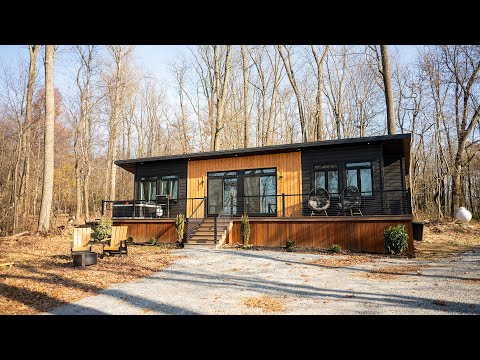
A manufactured luxury mobile home, such as our Sonoma HUD or Willow HUD models, requires a concrete slab foundation as a minimum. In addition, you will need concrete blocks and shims for leveling and hurricane tie-downs.
Modular homes require a crawl space or basement foundation. This is because, unlike a manufactured home, a modular home is not built on a chassis and must be permanently bolted to your foundation for stability.
Pro tip: A manufactured home can be placed on a crawl space or basement foundation. However, this isn’t required and can add a sizable cost to the overall home setup process.
Typically, homeowners choose this option when they want their home to have the opprotunity to appreciate in value more, similar to a site-built or modular home. This has begun to increase in popularity related to the 21st Century Road to Housing Act.
Do Modular Homes or Manufactured Homes Have A Better Resale Value?
Traditionally, modular homes have a better resale value than manufactured homes. This is because all modular homes need to be placed on a permanent foundation. In turn, your home becomes a piece of real estate rather than simply a shelter.
On the other hand, manufactured homes are often not placed on a permanent foundation. Without being tied to a permanent foundation on owned land, your manufactured home typically will not increase in value, since there is no real value associated with the home itself.
However, if your home is on private land with the associated utilities in place, you may feel like your manufactured home is increasing in value when, in reality, your land with utilities is what is appreciating
Do Modular and Manufactured Homes Have Placement Regulations?
Yes. Modular and manufactured homes are subject to different regulations when it comes to placement. Some requirements come from state laws, while others come from local zoning ordinances and municipalities.
Because these regulations vary depending on where you live, we recommend checking our state-by-state regulations page to learn more about the requirements in your area.
Do Modular Homes Or Manufactured Homes Require More Electricity?

Manufactured homes require less electricity than modular homes do. At Zook Cabins, all of the manufactured homes we sell require only 100 amps of electrical service, while modular homes require 200 amps of service. Generally speaking, 100 amps of service is enough for daily living needs. However, if you desire extras like a hot tub, sauna, or EV charger, you may find that 100 amps of service may not meet your needs.
However, at Zook Cabins, we have a solution! All of our manufactured homes can be upgraded to 200-amp service, creating a housing solution that fits your needs.
Are Modular Homes and Manufactured Homes Built To The Same Standard?

No, but that isn’t necessarily a bad thing.
As we mentioned earlier, modular homes are built to your local building and zoning requirements as defined by the IRC. Manufactured homes, on the other hand, are built to the standards established by HUD.
In some cases, the requirements for a HUD-certified home may differ from the IRC requirements in your area. However, because HUD standards are federally regulated, they take precedence over local IRC requirements for manufactured homes.
Neither standard is inherently better than the other; they’re simply different building systems designed for different types of homes.
Are Modular Homes and Manufactured Homes Financed The Same Way?

No, modular homes and manufactured homes are not financed in the same way. To better understand the differences, we talked with Zook Cabins’ lending manager Tim Brazil to learn more about how these homes are financed.
Modular Homes
Types of loans
A big distinction is that modular homes are considered real estate, and are permanently secured to the property with a foundation. So how does that factor into financing?
“[Modular homes] usually require a mortgage product such as a Home Construction Loan or a Renovation Loan,” Brazil shares.
Home Construction Loans are used for modular homes built on vacant land, he explains, while Renovation Loans are used for modular ADUs built on property with an existing home or dwelling.
“Both of these loans use ‘After-Market Value’ appraisals to determine the project’s maximum loan limit,” Brazil continues. “This is the property’s value after the modular home or ADU project is completed.”
Finding the right lender
To make the process easier and save yourself some time, Brazil says finding the right lender for these loans is important.
“It can be tricky,” he says. “Most lenders only offer construction loans for ‘Ground-Up Construction’ projects, or ‘Stick-Built Homes’, built outside of a climate-controlled factory. They don’t even know what a modular home is.”
He says it’s important to let the lender know upfront that you are financing a factory-built modular home, not a ground-up home.
“Show the lender the specifications, floor plans, and pictures of your home,” Brazil encourages. “There is nothing worse than wasting months applying with the wrong lender, only to find they don’t accept modular homes right before closing. We see this quite often.”
Getting started
To keep your project on schedule, Brazil recommends asking your sales rep about Zook Cabins’ Approved Modular Home Lenders.
“There’s no need to risk using the wrong lender who doesn’t understand modular homes,” he explains. “Zook Cabins also partners with home equity lenders and unsecured lenders (non-mortgage loans that offer same-day approvals), so customers don’t always need a Construction Loan to finance their dream cabin.”
Manufactured Homes
Flexible financing
When it comes to financing, Tim Brazil says manufactured homes typically offer more flexibility than modular homes.
“Both are factory-built homes, but Manufactured Homes (colloquially called Mobile Homes) are built on a permanent steel chassis or frame that includes axles, wheels, and a towing hitch and may also be known as a ‘trailer’,” he explains.
“Since the home is on a trailer, the manufacturer must issue a Manufacturer’s Certificate of Origin (or MCO),” he continues. “This is where manufactured homes get their flexibility from.”
You can find more information about the difference between modular homes and manufactured homes here.
We know this is a lot of information to understand all at once. To help make it easier, our sales team can help you understand all the avenues of financing or get you in touch with Tim directly. To do this, simply fill out a quote form, and your designated sales rep will be able to get you pointed in the right direction.
Is there a difference between Modular Homes and Manufactured Home Insurance?

Yes, modular homes and mobile homes differ in policy coverage and usage.
For example, mobile home insurance covers your home and the contents within it. However, because a mobile home is not typically an appreciating asset, many times the policy may not cover the total purchase price of your home, as they traditionally lose value over time.
Modular homes, on the other hand, are typically covered by standard homeowners insurance. However, there may be a period between when the home is set on the foundation and when the certificate of occupancy is issued.
During this time, lenders may require a policy known as builder’s risk insurance (sometimes referred to as risk insurance). This coverage protects the home’s value while construction and final inspections are being completed, before the home becomes eligible for traditional homeowners insurance, which is issued after the certificate of occupancy is awarded.
Are Modular Homes or Manufactured Homes More Affordable?
Generally speaking, manufactured homes are more affordable than modular homes. This comes down to the cost of building the home itself as well as the type of foundation that it needs.
Let’s take a look at this at a basic level.
At Zook Cabins, all of our luxury mobile homes are built to withstand a 40 lbs of snow load. This is in compliance with HUD home building standards. Allowing your home to be approved for our delivery zones.
On the other hand, modular homes are built to meet whatever your local building code requires. For example, in Maine, the IRC building code requires that roofs qualify for snow loads of 50 pounds. Because of this, more materials are required to build a stronger roofing system. This in turn, causes the cost of the structure to increase.
This is just one of the many examples that lead to a price differential between the IRC and HUD building specs that will result in different price points.
Can Modular Homes and Manufactured Homes Be Placed Anywhere?

Yes, they can be.
This is where modular homes and mobile homes overlap in their similarities. Because modular and mobile homes are delivered via semi most of the time, either home can be delivered almost anywhere. However, because crane setting is included in the price of your modular homes, there may be a bit more flexibility in how the home can be set in place, allowing what may seem like a difficult home setting to be done easily.
One thing to keep in mind is site accessibility. So long as your property is accessible via semi-truck, there should be no issue in having your home delivered. If you are concerned about delivery, reach out to your sales team representative and discuss your concerns.
Are modular homes and manufactured homes delivered the same way?
At first glance, modular and manufactured homes arrive at your property in much the same way. Both are transported on a semi-truck to your prepared homesite. Once they arrive, however, the installation process looks quite different.
Manufacturers typically place manufactured homes on a prepared foundation using specialized equipment to position and level the home on-site.
Modular homes, on the other hand, are set onto a permanent foundation using a crane. This process lets crews carefully position and secure each section according to the home’s plans and site requirements.
Are Modular Homes or Manufactured Homes Built Better?

Generally speaking, modular homes are built to more robust standards than manufactured homes. This is because all modular homes must comply with the IRC building codes in your local area.
However, this is not to say that manufactured homes are built poorly; in fact, quite the opposite. In many cases, at Zook Cabins, you would have a hard time telling the difference between a Zook Cabins manufactured home and a modular home in terms of quality.
Is a Manufactured Home or Modular Home Faster to Install?
Generally, installing a manufactured home is faster than installing a modular home. When you install a manufactured home, it is all on 1 level and has a simple marriage line to tie the two homes together. On the other hand, a modular home can have multiple levels and modules that need to be connected at different points. This, in turn, will make your home project take a bit longer, as the homes need to be connected at multiple points along the marriage lines.
However, one perk of working with Zook Cabins is that we have several modular homes that can be set in one day on a permanent foundation, allowing a faster install, and built to your local building code instead of HUD code.
Conclusion…
By the end of this blog, we hope you will find it easier to understand the differences between modular and manufactured homes. In a nutshell, both homes styles are built off-site, while manufactured homes are built on a chassis with axels and wheels, their modular counterparts are built in sections and placed on a permanent foundation. We know that, at the end of the day, there are still many questions that may need to be answered to fully understand how either of these structures will fit your needs and wants. To better assist you, please fill out a quote form, and one of our sales reps will be able to help you determine which home is best for you.
