

Welcome to the exciting world of affordable housing! Luxury manufactured homes are gaining popularity and Zook Cabins is excited to be a part of helping provide lower cost homes that don’t compromise on beauty and craftsmanship. If you are thinking about placing a luxury mobile home in Ohio, it is important to understand the rules before you buy land or order a gorgeous new home.
At Zook Cabins, we want to make that process easier by giving you clear information about how luxury mobile homes are regulated in Ohio. This guide covers the basics of what these homes are, where they may be allowed, what permits may be needed, and what local zoning rules you should check before moving forward. Let’s dive right in!
Are Luxury Mobile Homes Allowed in Ohio?
Yes, luxury mobile homes are allowed in Ohio, but they must meet the right requirements. In most cases, what people call a luxury mobile home is legally treated as a manufactured home if it is built to HUD standards. Ohio does not ban manufactured homes simply because they are manufactured homes. If the home qualifies as a permanently sited manufactured home, townships generally cannot prohibit it from areas where single-family homes are allowed.
This is exciting news for homeowners who want options for where to place their home. Our top recommendation is to start connecting with all your local departments as soon as possible since they will be governing most of the regulations, not state or federal rules.
What is A Luxury Mobile Home in Ohio?
A luxury mobile home is a higher-end manufactured home with upgraded finishes, modern layouts, and more residential-style features than a basic mobile home. They are also known as HUD-certified manufactured homes which adhere to specific guidelines laid out by the federal government.
For the basic federal HUD definition, a manufactured home must be transportable in one or more sections and measure at least 8 body feet wide or 40 body feet long in travel mode, or provide at least 320 square feet when installed on-site. It also has to be built on a permanent chassis and designed to be used as a dwelling when connected to utilities.
For Ohio, there is a bigger requirement if the home is being considered a permanently sited manufactured home. In that case, the home must be at least 22 feet wide at one point, at least 22 feet long at one point, and have at least 900 square feet of living area, not counting garages, porches, or other attachments. Ohio also requires it to be on a permanent foundation, connected to utilities, have a minimum 3:12 roof pitch, conventional residential siding, and a 6-inch minimum eave overhang. These are state standards that make it clear for homeowners looking for manufactured homes that fit the description.
Does Zook Cabins Offer Single-Wide and Double-Wide Luxury Mobile Homes?

We do! Check out the large and comfortable Willow HUD home, a beautiful double wide with outside porch space. Or if you need a smaller single-wide, Zook Cabins also provides our inaugural model, the Sonoma HUD!
What is the Difference Between a HUD Home & a Modular Home?

The main difference between a HUD home and a modular home is how they are built and regulated. A HUD home, also called a manufactured home, is built to federal HUD standards and is usually built on a permanent steel chassis.
A modular home is built in sections inside a factory, but it must meet the same state and local building codes as a traditional stick-built home. Once installed, a modular home is typically treated more like a regular site-built house, while a HUD home is regulated under manufactured housing rules.
Can Mobile Homes Be Moved in Ohio?
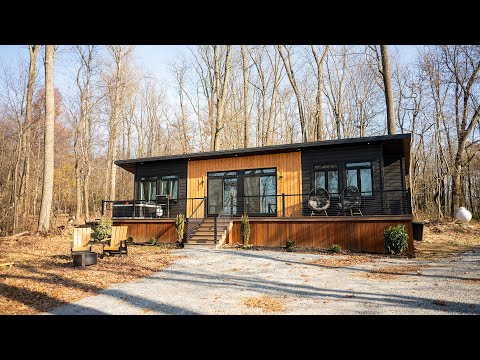
Yes, this is a detailed process, but one of the perks of owning a mobile home. First, you will need to obtain a permit from the department of transportation, then arrange for professional transport. You will also need to ensure you have the zoning permits for the new location you are moving to. Happy moving!
How Close Can a Mobile Home Be to Property Lines?
This depends mostly on where the home is being placed. If it is going on private land as a permanently sited manufactured home, there usually is not one statewide setback number. Instead, the home must follow the same local front, side, and rear yard setbacks that apply to other single-family homes in that zoning district. Manufactured home parks have clearer statewide spacing rules under Ohio Administrative Code. Here is a list of what to expect:
- Private land setback: Usually based on the local zoning district, not one statewide Ohio number. Check with your local zoning department to see what the requirements are for single-family dwellings.
- Park property line setback: At least 10 feet from the manufactured home park property line for parks constructed or substantially altered after June 30, 1971.
- Public road, street, or vehicle right-of-way setback: At least 15 feet in newer or substantially altered manufactured home parks.
- Older manufactured home parks: Some older parks may have smaller minimums, such as 5 feet from the park property line and internal park roads, depending on when the park was constructed.
What Size Luxury Mobile Homes Does Zook Cabins Have to Offer?

Zook Cabins offers luxury mobile homes in a range of practical sizes, from smaller Sonoma HUD layouts around 665–923 square feet to larger 3-bedroom, 2-bathroom models like the Willow HUD at 1,494 square feet.
Do You Need A Permit For A Luxury Mobile Home in Ohio?
Yes, you will definitely need to obtain all necessary permits before you install your new luxury mobile home. As with most regulations, permits are handled locally, usually at your local building department.
The permit process typically starts with a general building permit then moves into permits for electric, septic, plumbing, etc. Depending where the property is located, you may also need permits for floodplain or environment concerns.
What Features are Included in a Luxury Mobile Home from Zook Cabins?
Step aside boring mobile homes. These brand new homes are stylish and modern, with many features homeowners love. Here are some of our personal favorites:
- Modern open floor plans
- Quality exterior siding
- Low-E windows that improve energy efficiency and bring in natural light.
- Stylish kitchen layouts with shaker-style cabinets, modern countertops, and practical storage.
- Recessed lighting
- Comfortable bedroom and bathroom layouts
- Customization options so homeowners can choose a layout and finish package that fits their style and needs.
- A finished look inside and out that feels more like a modern home than a traditional mobile home.
Does Zook Cabins Have Luxury Mobile Homes with Multiple Bedrooms and Bathrooms?
Yes, you sure can. If you like the style of the Sonoma model, you can choose it in either a 1 bedroom, 1 bathroom option or a 2 bedroom, 2 bathroom model. Still need more space? The Willow has a beautiful 3 bedroom, 2 bathroom layout perfect for a larger family.
Can A Luxury Mobile Home from Zook Cabins be Customized?
Whether it’s the color of the siding, floor plan, or amazing upgrades, Zook Cabins is here to give you options to make this new house truly feel like your home. Need more recessed lighting? We can personalize that for you! Do you like brown siding more than the original black? Not a problem for our team.
There are multiple choices for you in the personalization process and we are happy to walk you through those. Call today!
Are Mobile Homes a Good Investment?
Contrary to the old narrative that mobile homes lose value as soon as they are on the land and continue to depreciate, luxury manufactured homes have come a long way. The quality of materials, craftsmanship, and the modern luxury interior of the home make a huge difference. Now, with the improved construction standards and options, luxury mobile homes can be a great investment. They offer lower upfront costs while still retaining the feel of a traditional home.
Remember that land ownership always improves the quality of the investment. Whenever possible, always pursue that route instead of a rented lot in a manufactured home community.
Do Luxury Mobile Homes Have a Good Resale Value?
That depends on multiple factors. Since luxury manufactured homes are newer on the market, there isn’t as much data specifically for resale value. However, here are several things that are true about luxury mobile homes and resale value:
- Land ownership makes all the difference. In many cases, the land holds or gains value better than the home itself, so owning the property can improve the overall investment.
- Quality matters. A well-built luxury mobile home from a reputable builder will usually hold value much better than a poorly constructed home.
- Permanent installation can help. A home placed on a proper foundation with approved utility hookups is viewed more favorably than one that feels temporary.
Luxury Mobile Home Regulations by Ohio County
Does Adams County, OH, Allow Luxury Mobile Homes?
Yes it does! Adams County allows luxury manufactured homes, but the county-level public information is more limited than in places like Allen County.
At the state level, a manufactured home has to meet several numbers to qualify as a permanently sited manufactured home. It must be on a permanent foundation, connected to appropriate facilities, at least 22 feet wide at one point, at least 22 feet long at one point, and at least 900 square feet of living area, not counting garages, porches, or attachments. It also needs a minimum 3:12 roof pitch, conventional residential siding, 6-inch minimum eaves with guttering, and it must have been manufactured after January 1, 1995.
At the county level, Adams County’s Auditor gives homeowners several important administrative rules. Manufactured homes must be registered with the County Auditor within 30 days after locating in Adams County, and failure to register may result in a $100 fine. If the home is moved on a public road, the owner needs a relocation notice from the Auditor’s Office. The relocation notice costs $5, all taxes must be paid, and failure to get the notice may result in a $100 fine for the homeowner and a separate $100 fine for the person moving the home.
For placement on land, Adams County homeowners should contact the township, village, or municipal zoning office for the exact parcel before buying the home or land. The staff there can provide exact parcel regulations for you.
Does Allen County, OH, Allow Luxury Mobile Homes?
It does. Allen County is a good example of why homeowners should not stop at the county name. The Lima-Allen County Regional Planning Commission keeps zoning documents for many local jurisdictions, including American Township, Bath Township, Amanda Township, Auglaize Township, Shawnee Township, Perry Township, Richland Township, Lima, and several villages.
American Township is one of the clearer examples. Its zoning resolution treats manufactured homes, modular homes, mobile homes, and manufactured-home parks separately. For manufactured-home parks, American Township requires a minimum park size of 20 acres, a minimum lot size of 6,200 square feet, a recreation area of at least 10% of the gross park area, and at least 1,050 square feet of living space. The home also needs skirting to ground level with the tongue removed.
American Township’s regular residential zoning numbers can also matter for a luxury manufactured home placed as a dwelling. In areas with central water and public sewage, R-1 and R-2 single-family lots generally start at 7,800 square feet with 65 feet of frontage, 35-foot maximum structure height, 10-foot side yards in many cases, a 25-foot rear yard, and minimum floor areas of 1,300 square feet for 1 to 1½ story homes or 1,600 square feet for 2 to 2½ story homes. With private well and septic, the same residential districts jump to 108,900 square feet, or 2.5 acres, for the minimum lot size.
The next step for an Allen County homeowner is to identify the exact township for the parcel, then ask that zoning office whether the home is being reviewed as a permanently sited manufactured home or part of a manufactured-home park. Those categories can lead to very different answers.
Does Ashland County, OH, Allow Luxury Mobile Homes?
Yes, Ashland County can allow luxury manufactured homes, but the rules are very local. Homeowners should check the city, village, or township before assuming a manufactured home can go on a specific lot. Ashland County has several examples where the numbers change depending on whether the home is being placed on an individual lot or inside a manufactured-home park.
The City of Ashland has an R-M Mobile Home Residential District with specific park-related numbers. In that district, mobile-home park plots must be at least 40 feet wide and at least 3,000 square feet. The city also uses a 30-foot front yard requirement, 15-foot side yards, and a 15-foot rear yard for mobile-home parks and trailer-sales lots. The R-M district does not list a separate residential floor-area minimum, which makes the zoning district more focused on placement and layout than on “luxury” features.
Green Township is stricter for manufactured-dwelling parks and subdivisions. Its zoning standards require at least 10 acres, no more than 4 manufactured dwellings per gross acre, at least 25 sites available at first occupancy, a minimum development width of 300 feet, and a 60-foot right-of-way with a 30-foot paved roadway for access. It also requires two-car off-street parking with at least 400 square feet per lot or space, 3-foot paved walkways, foundation footers below frost line, solid perimeter walls, tie-downs, and taxation as real property.
For Ashland County homeowners, the next step is to confirm the parcel’s jurisdiction and zoning district. Ask whether the home is allowed as a permanently sited manufactured home, only in a manufactured-home park, or only under certain residential district standards.
Does Ashtabula County, OH, Allow Luxury Mobile Homes?
Generally, yes, but Ashtabula County is one of those places where the township name matters a lot. The county provides zoning documents for local townships, and it also notes that Monroe, Richmond, and Windsor townships do not have township zoning resolutions.
Andover Township is a good example of a more flexible approach. In the R-1 district, single-family and two-family dwelling units may be site-built, modular, or manufactured housing. For a one-family dwelling in R-1, the lot must be at least 20,000 square feet with sewer or 40,000 square feet without sewer. Minimum lot width is 100 feet with sewer or 200 feet without sewer. The required setbacks are 50 feet in front, 15 feet on each side, and 15 feet in the rear. Andover also lists a 900-square-foot minimum floor area, 35-foot maximum building height, and 50% maximum lot coverage.
Plymouth Township handles manufactured homes much more narrowly in its manufactured-home park district. Its rules state that manufactured-home uses are only permitted in the MHP district. A manufactured-home park must have at least 30 gross acres, each manufactured-home lot must be at least 5,000 square feet, and each home must have at least 1,200 square feet of floor area. The township also uses spacing rules, including 70 feet from a building, public roadway, street, or alley; 80 feet from the park property line; and 30 feet of clear spacing between homes in several directions. Recreation space must equal at least 20% of the park area, not including streets or parking.
Before buying land, homeowners should ask the local zoning inspector whether the parcel allows a permanently sited manufactured home, what lot size and setbacks apply, and whether sewer or septic changes the minimum lot size.
Does Athens County, OH, Allow Luxury Mobile Homes?
Absolutely. However, the clearest rules in Athens County come from the township or city. Athens Township is a strong example because it separates ordinary “mobile homes” from manufactured homes that are placed on a permanent foundation and treated as real estate.
In Athens Township, mobile homes are only permitted in licensed mobile-home parks in the R-3 district. However, a manufactured home on a permanent foundation and considered real estate by the Athens County Auditor is considered a dwelling and may be permitted in any district. The township defines a permanent foundation as a continuous perimeter wall made of cinder block or poured concrete, placed below frost line. The ordinance lists the minimum frost-line depth as 32 inches.
The township’s manufactured-home application outside a manufactured-home park also gives homeowners some process numbers. The application fee is $25, the permit is valid for one year, and the work must be completed within two years or a new permit is required. Inside the City of Athens, zoning permits are handled through the Office of Code Enforcement, and the city lists an $80 application fee for zoning permit applications.
For Athens County, the next step is to confirm whether the property is in Athens Township, the City of Athens, another township, or a village. This will provide you with the right direction to ask for more clarity.
Does Auglaize County, OH, Allow Luxury Mobile Homes?
It does. Auglaize County can allow luxury manufactured homes, but homeowners should expect the details to come from township or city zoning. This county has several local examples where manufactured homes are regulated through manufactured-home park districts rather than one countywide rule.
The City of St. Marys has some of the most detailed numbers. A mobile-home park must be at least 10 acres and served by public water and sanitary sewer. At least one-third of the lots must be completed and ready for occupancy before the first occupancy is allowed. Each mobile-home lot must be at least 5,000 square feet and at least 50 feet wide, with no more than 6 mobile homes per gross acre. The city also lists a 600-square-foot minimum floor area, 15-foot maximum mobile-home height, and 40% maximum lot coverage.
St. Marys also regulates spacing and site layout. A mobile home must have a 15-foot front yard along a public street or alley, or 10 feet from an interior street or common drive. Side yards are 3 feet, and rear yards are 10 feet, or 20 feet if the lot backs up to an exterior park boundary. Homes must be spaced at least 20 feet side-to-side, 15 feet end-to-side, and 10 feet end-to-end. The main entrance drive must be at least 36 feet wide, interior streets must have at least 24 feet of usable travel width, common walkways must be at least 3 feet wide, and each lot needs two paved parking spaces.
Duchouquet Township is another example of the local approach. Its zoning creates a Manufactured Home Park District for manufactured-home parks. In the general development standards, principal structures use setbacks such as 50 feet from a state highway, 35 feet from a county or township road, 20 feet from the side lot line, and 25 feet from the rear lot line, with a 35-foot maximum height. Moulton Township also regulates manufactured-home parks and requires application plans showing streets, lots, recreation areas, storage, parking, buffers, fencing, utilities, lighting, garbage and trash facilities, and pedestrian walkways.
If you live within Auglaize County, we recommend you go directly to your local zoning office then follow up with county requirements if necessary.
Does Belmont County, OH, Allow Luxury Mobile Homes?
Yes, Belmont County often allows luxury manufactured homes, but Belmont County does not have one countywide zoning rule that applies everywhere. The county states that it has not adopted county zoning regulations, so cities, villages, and townships may set their own zoning and permitting rules.
For next steps, contact the Belmont County Department of Development or Planning Commission first, then the city, village, or township where the parcel is located. The local offices can help you with guidance on things like setbacks, permits, and additional regulations.
Does Brown County, OH, Allow Luxury Mobile Homes?
Just like the rest of Ohio, Brown County can allow luxury manufactured homes, but the exact approval path depends on the local township. Brown County has a Building Department that handles inspections for manufactured homes, but zoning can still be local.
Perry Township and Lake Lorelei show how specific the process can get. Lake Lorelei’s building packet requires a plot plan showing the home, setbacks, driveway, and septic system; a survey by an Ohio surveyor with 1/2-inch by 2-foot metal stakes marking the corners; a Brown County permit; a Perry Township zoning permit; and a performance bond. Its materials also mention a culvert pipe with a 15-inch minimum diameter and 30-foot maximum length.
Before buying land in Brown County, homeowners should contact the Brown County Building Department, then the township or village zoning office. If the property is in a private lake community or HOA, check those rules too because they may add extra steps on top of county and township permits.
Does Butler County, OH, Allow Luxury Mobile Homes?
Yes, but Butler County has some of the clearer restrictions in Ohio, especially for manufactured-home parks. In the Butler County Rural Zoning Resolution, manufactured homes used as living quarters are generally directed into manufactured-home parks, and a manufactured-home park must be in an R-MHP district.
The county’s R-MHP rules require at least 10 acres for a manufactured-home park. At least 40% of the sites must be completed and ready before occupancy. Each manufactured-home site must be at least 5,000 square feet, and park density cannot exceed 7 homes per gross acre.
Reily Township gives another local example. In Reily Township, a mobile-home park must be at least 7 acres in an R-MHP district or 10 acres in an A-1 district. Each mobile-home site must be at least 5,000 square feet, with a 10-foot front yard, 15-foot side yards, 20-foot rear yard, 36-foot main entrance drive, and 24-foot minimum street travel width.
Homeowners should contact Butler County Development or the local township zoning office before ordering the home. Ask whether the parcel is under county rural zoning, township zoning, or city/village zoning, because Butler County rules can change quickly by jurisdiction.
Does Carroll County, OH, Allow Luxury Mobile Homes?
Most likely, yes, but Carroll County is not a county with a county-wide manufactured-home ordinance. The county’s Regional Planning Commission handles subdivision regulations, comprehensive planning, county house numbering, and development review, while the Village of Carrollton handles its own building and zoning permits.
Carroll County’s older comprehensive planning materials said the county did not require a housing permit for new construction at that time, and that septic permits, well permits, and house-numbering requests were often the first indicators of new housing activity. Because that document is older, homeowners should not rely on it as the final answer today.
For next steps, start with the Carroll County Regional Planning Commission for unincorporated land. If the property is in Carrollton, contact the Village of Carrollton Building and Zoning office at the municipal building. Also check the Health Department for septic and well approval before assuming the land is buildable.
Does Champaign County, OH, Allow Luxury Mobile Homes?
It appears so. Homeowners will still need to confirm both county permitting and local zoning. Champaign County’s residential building permit application says a $40.40 application fee is required and that zoning approval and Health Department approval are needed where applicable before a permit is issued.
The City of Urbana gives a useful local example. Urbana’s mobile-home park rules require individual mobile homes inside the park to have at least 900 square feet of floor area. Mobile-home parks must also meet all local and state requirements that apply.
Salem Township is another example of how the definition can matter. Its zoning defines a manufactured or mobile home park as land with 3 or more manufactured or mobile homes used for habitation, whether free or for revenue. That means one home on a private lot and a multi-home park may be reviewed differently.
For next steps, homeowners should contact Champaign County Building Regulations first, then the local township, village, or city zoning office. This will provide the most clarity.
Does Clark County, OH, Allow Luxury Mobile Homes?
Yes, Clark County allows manufactured homes, but the county has detailed rules for manufactured-home parks and zoning districts. In Clark County’s R-MHP Residential Manufactured Home Park District, manufactured homes require a minimum 5-acre area, 300 feet of frontage, a 50-foot front setback, 30-foot side yard, 60-foot combined side yard, and 50-foot rear setback.
Clark County also requires manufactured-home parks to follow Section 408. Before applying for a zoning certificate for a manufactured-home park, the applicant must first obtain approval from the Ohio EPA and/or the Clark County Combined Health District. Homes in a manufactured-home park must be permanently affixed to the ground and used only for single-family residential purposes.
Springfield Township gives a local example with different numbers. Its manufactured-home park standards require at least 10 acres, public water and sewer for each lot, a 20-foot greenbelt along park boundaries, recreation area equal to at least 8% of the gross park area, 5,000-square-foot minimum manufactured-home sites, 50-foot minimum site width, and 20 feet between a mobile home and another manufactured home or structure.
For next steps, contact the Clark County Community and Economic Development/Zoning office or the specific township zoning inspector. Also contact the Clark County Combined Health District early if the site needs septic, well, or manufactured-home park review.
Does Clermont County, OH, Allow Luxury Mobile Homes?
It sure does! The county directs manufactured or modular home applicants to check the local township or village zoning office first. Miami Township shows why this matters. Its Mobile Home Park District is specifically for mobile homes placed under Ohio manufactured-home park rules, while regular residential districts may use numbers such as 40,000 square feet and 150 feet of lot width in the A District, or 20,000 square feet, 100 feet of width, a 50-foot front yard, 10-foot side yard, and 35-foot rear yard in the R-3 District.
Start with Clermont County Permit Central for building questions, then contact the township or village zoning office for the exact parcel. Manufactured homes also need to be registered with the Clermont County Auditor within 30 days after locating in the county.
Does Clinton County, OH, Allow Luxury Mobile Homes?
In many cases, yes, but Clinton County is permit-driven. In zoned townships, a zoning permit is required before the state building permit. Clinton County’s Rural Residential District gives a useful example: minimum lot size can be 15,000 square feet with public water and sewer, 1 acre with public water only, or 1.5 acres with on-site water and septic. The same district uses a 70-foot minimum lot width with public water and sewer, 150 feet with public water only, and 150 feet with well and septic, plus an 864-square-foot minimum building area.
Wilmington is stricter inside city limits and says manufactured homes need city zoning approval and must be in a Manufactured Home Park District.
Homeowners should contact Clinton County Building & Zoning for county-zoned areas, or the city or village zoning office if the property is inside a municipality.
Does Columbiana County, OH, Allow Luxury Mobile Homes?
Yes! However, it is still very important to remember that in Ohio, the local zoning office is the key stop. Rules can change between townships, villages, and cities. Perry Township is one local example with mobile-home park standards. Its rules says each mobile-home lot must be at least 6,000 square feet, the mobile-home stand must be at least 15 feet from the front and rear lot lines and 8 feet from side lot lines, and density is limited to 5 mobile homes per acre.
Salem gives another example, requiring a mobile-home lot to be at least 5,000 square feet and at least 50 feet wide.
Before buying land, homeowners should contact the township, city, or village zoning inspector, then check with the Columbiana County Health District if septic or well approval is needed.
Does Coshocton County, OH, Allow Luxury Mobile Homes?
Usually, yes, but Coshocton County homeowners need to verify the parcel locally. The City of Coshocton has specific trailer-park rules, including a 40,000-square-foot minimum trailer-park area and 1,500 square feet of lot area per trailer unit. The city also limits trailer occupancy to 25% of the lot, requires one off-street parking space per trailer-park lot plus one additional space for every 4 lots, uses a 10 mph speed limit inside trailer parks, and requires a 10-foot landscaped strip along exterior boundaries.
If the home is inside the City of Coshocton, start with the city Building, Zoning, and Planning office. Outside the city, contact the township or local zoning authority, then the county offices for manufactured-home tax registration and septic review.
Does Crawford County, OH, Allow Luxury Mobile Homes?
Yes, but Crawford County is another county where the city or township decides the practical answer. Galion is one of the clearer examples. In Galion’s R1-D district, one-family individual manufactured homes are allowed if they were built within the last 10 years and placed on a permanent foundation. Galion also has an MH-R Manufactured Home Residential District for manufactured-home communities, with site plan review required for manufactured-home communities. That means the same type of home may be treated differently depending on whether it is on an individual lot or in a manufactured-home community.
Homeowners should contact the zoning office for Galion, Bucyrus, Crestline, New Washington, or the specific township where the parcel is located before ordering the home.
Does Cuyahoga County, OH, Allow Luxury Mobile Homes?
Potentially. Cuyahoga County may allow luxury manufactured homes, but the rules are mostly city-by-city or suburb-by-suburb. Cleveland gives a strong example of how urban zoning can narrow placement. Cleveland’s code says manufactured homes that do not meet the city’s manufactured-home standards may not be used as dwellings unless they are located in a manufactured-home park or a plat zoned for that use. Cleveland’s Manufactured Home Park District requires a park area of at least 5 acres, a 35-foot maximum height standard, 25-foot landscaped yards along lot lines and street rights-of-way, and a license to operate the manufactured-home park.
For more information, homeowners should contact the building or zoning department for the specific city or suburb, such as Cleveland, Parma, Euclid, Lakewood, Strongsville, or another local municipality.
Does Darke County, OH, Allow Luxury Mobile Homes?
Absolutely, but the first question in Darke County is who controls zoning for the parcel. Darke County Planning and Zoning administers zoning for 9 of the county’s 20 townships, plus the Village of Wayne Lakes, while other cities, villages, and townships may handle their own rules. Greenville Township gives a useful manufactured-home park example: mobile homes must be set back 50 feet from perimeter lot lines, 15 feet from any other mobile home in the park, 50 feet from any community building, and 15 feet from a public or private street inside the park. Each mobile-home site also needs two paved off-street parking spaces of at least 200 square feet each.
We suggest you start with Darke County Planning and Zoning if the parcel is in a county-zoned township; otherwise, contact the local township, city, or village zoning office. If the home is being moved on public roads, check with the Darke County Auditor about the relocation permit.
Does Defiance County, OH, Allow Luxury Mobile Homes?
Yes, Defiance County can allow manufactured homes, but the parcel location controls the answer. Defiance Township gives one local example, with a 600-square-foot minimum floor area for individual mobile homes in a manufactured-home park. County subdivision rules can also matter for land buyers. In Defiance County, a minor subdivision of 5 acres or less needs at least 150 feet of road frontage and a depth-to-frontage ratio no greater than 2.5 to 1. A division from 5.01 to 20 acres needs at least 250 feet of frontage and a depth-to-frontage ratio no greater than 3 to 1.
Homeowners should contact the City of Defiance zoning office if the parcel is in the city. For land outside the city, start with the Defiance County Planning Commission and the township zoning office, then confirm driveway access, septic, and building requirements before purchasing land.
Does Delaware County, OH, Allow Luxury Mobile Homes?
Yes, but Delaware County is very parcel-specific. A luxury manufactured home is most likely to work when it qualifies as a permanently sited manufactured home and meets the same zoning standards as other single-family homes in that district. Kingston Township is a helpful example because it allows single-family dwellings in its Farm Residence District, including permanently sited manufactured homes. In one Kingston Township development standard, lots may be no smaller than one-half acre, with at least 100 feet of lot width.
Concord Township takes a similar approach by requiring permanently sited manufactured homes to meet the same lot-size, setback, and zoning rules imposed on single-family dwellings in the district.
For more clarity, homeowners should contact the township zoning office first, then the Delaware County Regional Planning Commission or Delaware Public Health District if the property needs septic review.
Does Erie County, OH, Allow Luxury Mobile Homes?
Yes, but Erie County homeowners need to check the city, village, or township that controls the parcel. Erie County publishes zoning contact information for its local jurisdictions, which is the right starting point. Ridgefield Township gives a simple example: a mobile home lot is listed at 6,000 square feet with 60 feet of frontage, while manufactured-home parks are governed by state and county health rules.
The City of Sandusky has more detailed mobile-home park lot requirements, including a 10-by-40-foot concrete pad and two off-street parking spaces measuring 10 by 20 feet each for each mobile-home lot.
Before purchasing land, contact the local zoning office, then verify septic, floodplain, driveway, and manufactured-home park rules with the county or city office that applies.
Does Fairfield County, OH, Allow Luxury Mobile Homes?
It looks like it does! The county says zoning is handled by individual townships, cities, and villages, so the exact parcel matters. Greenfield Township is one of the stronger examples. Its manufactured-home community standards require at least 10 acres, individual manufactured-home lots of at least 4,000 square feet, no more than 6 dwelling units per acre, 300 feet of minimum community width, 30 feet of minimum individual lot width, 35 feet of front yard for the community, 50-foot side and rear yards for the community, 10-foot side and rear yards for individual lots, 45% maximum lot coverage, and 20% common recreation/open space.
Bloom Township uses similar numbers, including 10 acres and 200 feet of frontage for a manufactured-home park, plus 4,000 square feet and 50 feet of frontage for a manufactured-home lot in a park.
To move ahead, homeowners should contact the township or municipal zoning office first, then the Fairfield County Regional Planning Commission for subdivision or lot-split questions.
Does Fayette County, OH, Allow Luxury Mobile Homes?
Yes, Fayette County allows manufactured homes, but homeowners should expect the rules to depend on whether the property is in a township, village, or Washington Court House. The county zoning office reviews site plans for compliance with the applicable zoning code. Washington Court House gives a clear local example with its R-4 Mobile Home Residential District. A mobile-home community must be at least 10 acres, with maximum density of 6 mobile homes per acre.
Individual mobile-home lots must be at least 2,500 square feet and 30 feet wide. The community must have at least 250 feet of width, 35-foot front, side, and rear yards for the overall community, 8-foot side yards and 10-foot rear yards for individual lots, 15% common recreation space, 10% outdoor living area per individual lot, 25-foot maximum building height, and two parking spaces per mobile home.
We recommend that you start with Fayette County Zoning if the parcel is outside city limits, or Washington Court House zoning if it is inside the city.
Does Franklin County, OH, Allow Luxury Mobile Homes?
It depends where you live. Franklin County is highly local because Columbus and the suburbs have their own zoning systems. The Franklin County Zoning Resolution mainly applies to unincorporated areas, so homeowners should not assume one countywide rule. Columbus is the best example for urban Franklin County. Its Manufactured Home Park District limits manufactured-home park density to no more than 6 manufactured homes per acre.
Franklin County zoning materials also treat manufactured-home park development as a specific regulated use, while some rural manufactured/mobile home uses are treated more narrowly, including temporary-residence situations.
For next steps, contact the Franklin County zoning office that controls the parcel. In Columbus, start with the city zoning office; outside Columbus, verify whether the property is under township, municipal, or county zoning before ordering the home.
Does Fulton County, OH, Allow Luxury Mobile Homes?
It does, but Fulton County has both county and local examples that homeowners should check carefully. The Fulton County Rural Zoning Code includes manufactured-home park standards stating that manufactured-home lots must be at least 5,000 square feet, while double-wide lots must be at least 6,000 square feet. It also limits gross density in a manufactured-home park to 7 manufactured homes per acre and lists minimum yards of 15 feet on the entrance side, 5 feet on the non-entrance side, 15 feet in front, and 10 feet in the rear.
West Unity is another local example. Its manufactured home park rules require at least 10 acres, maximum density of 6 homes per gross acre, 300 feet minimum park width, 35-foot front setbacks, 20-foot side and rear setbacks, 10% recreation/open space, and a 20-foot grass buffer with an 8-foot privacy fence.
Homeowners should contact the Fulton County Planning/Zoning office and the local township or village zoning office before buying land.
Does Gallia County, OH, Allow Luxury Mobile Homes?
It is likely. Gallia County is generally more flexible in unincorporated areas, but that does not mean there are no approvals. Gallia County’s planning materials state that there are no county zoning or building permits required in the unincorporated area of the county. However, the same county material tells property owners to call and verify requirements, including a building notice for work exceeding $2,000, and to contact village or City of Gallipolis officials if the property is inside a municipality.
The City of Gallipolis handles construction and zoning review through its Code Enforcement office, which reviews and permits construction and zoning projects in the city. Homeowners should start by confirming whether the parcel is unincorporated or inside Gallipolis, Centerville, Rio Grande, Vinton, or another village. You can then check the specific requirements with those local offices.
Does Geauga County, OH, Allow Luxury Mobile Homes?
Yes, Geauga County can allow luxury manufactured homes, but the home’s placement depends heavily on the township and zoning district. Bainbridge Township is a good example of how specific the rules can get. In its R-5A Rural Open Residential District, single-family detached manufactured homes must be permanently sited, and the district uses a 5-acre minimum lot size, 250-foot minimum lot width, 100-foot front yard, and 50-foot side yard. At the county level, manufactured homes must also be registered with the Geauga County Auditor within 30 days after locating in the county, and failure to register can result in a $100 fine. If the home is moved on a public road, the relocation notice costs $5, and failing to get it can bring a $100 fine.
The next step for homeowners is to contact the township zoning inspector, then confirm registration and relocation paperwork with the Geauga County Auditor.
Does Greene County, OH, Allow Luxury Mobile Homes?
Greene County is generally open to manufactured housing, but the local jurisdiction makes the real decision. Beavercreek is one of the clearest examples. Its R-5 Manufactured Home Residential District requires a manufactured-home development to be at least 10 acres with at least 30 home sites. Individual manufactured-home sites must be at least 5,000 square feet, with a minimum 40-foot shortest lot line, 15 feet of clearance between manufactured homes, two paved parking spaces of at least 200 square feet each, a 10-by-30-foot concrete patio, and recreation area equal to at least 1 acre or 10% of the development, whichever is larger.
Xenia Township uses a different style of regulation, including a 600-foot minimum road frontage requirement for a Mobile Home Park/Community District. Homeowners should contact the city or township zoning office first, then Greene County Public Health for septic or manufactured-home park issues.
Does Guernsey County, OH, Allow Luxury Mobile Homes?
It is very likely. Guernsey County homeowners should be careful because Cambridge and the unincorporated areas do not follow the exact same process. In the City of Cambridge, the zoning code has a Manufactured Park District, and the city also has a separate chapter for manufactured-home installation regulations. Cambridge defines a permanently sited manufactured home using the Ohio-style numbers, including at least 22 feet in width at one point, 22 feet in length at one point, and at least 900 square feet of living area.
In Cambridge’s SF-2 Single-Family Residential District, single-family dwellings must have at least 1,000 square feet of living area, not counting garages, eaves, porches, balconies, terraces, or outside enclosures. Cambridge also says a manufactured home more than 10 years old may not be placed on property within the city.
Outside the city, homeowners should contact the Guernsey County Zoning Board or applicable township office, and also notify the County Auditor and Treasurer within 14 days after installation.
Does Hamilton County, OH, Allow Luxury Mobile Homes?
Yes, but Hamilton County is very local, especially because Cincinnati, suburbs, and townships all have separate zoning systems. Anderson Township gives one strong example. Its MHP Mobile Home Park District is limited to mobile homes, manufactured homes, and customary accessory uses, and a mobile-home park plan must cover at least 10 acres. The plan is reviewed by the township and regional planning process and must also comply with Ohio manufactured-home park rules and Hamilton County Health Department requirements.
Columbia Township uses a similar county-style approach and says no manufactured-home park may be approved in an MHP District with less than 10 acres. Green Township also warns homeowners that the northeastern section is handled by the township, while other areas are handled by the Hamilton County Zoning Department.
Before buying land, homeowners should identify whether the property is in Cincinnati, a village, a city, a township zoning area, or Hamilton County zoning jurisdiction.
Does Hancock County, OH, Allow Luxury Mobile Homes?
Just like the rest of Ohio, Hancock County allows luxury manufactured homes, but local township or city zoning controls the placement details. Eagle Township gives a useful example which says a mobile-home park must be at least 10 acres, density cannot exceed 6 mobile-home lots per gross acre, each mobile home must be set back 15 feet from any property line and 50 feet from any street, and each mobile home must have at least 980 square feet of floor area and be placed on a concrete pad. Eagle Township also requires recreation space equal to at least 10% of the gross park area.
Jackson Township has another example, requiring mobile-home spaces of at least 7,500 square feet, 60 feet of width, 100 feet of depth, 25% maximum lot coverage, and a common recreation area of at least 250 square feet per mobile-home space.
Homeowners should contact the local township zoning office or the City of Findlay zoning office, then register the home with the Hancock County Auditor within 30 days after it acquires situs in the county.
Does Hardin County, OH, Allow Luxury Mobile Homes?
It appears so! Within the county, Blanchard Township requires each mobile home to be permanently attached to a concrete foundation at least 14 feet wide by 70 feet long, with at least 6 anchors and tie-downs. The home must also be skirted with rigid material enclosing the bottom section within 60 days after placement. Blanchard Township’s agricultural rules also show how land size can matter: one new residential lot may be eligible with at least 200 feet of road frontage and at least 2 acres, but additional building lots can trigger larger acreage requirements.
Jackson Township gives a different local example, requiring every mobile home to be on a lot of at least 4,000 square feet.
For moving ahead, we suggest that homeowners start with the township zoning office for the parcel, then confirm manufactured-home registration requirements with the appropriate Hardin County offices.
Does Harrison County, OH, Allow Luxury Mobile Homes?
Yes, but Harrison County homeowners need to check the local jurisdiction, not just the county name. Cadiz gives a useful example of how local rules can work. In Cadiz, a principal residential structure must connect to approved water and sewer lines, use an approved foundation, have no side of the main structure shorter than 24 lineal feet, and sit on a lot of at least 5,000 square feet.
If the property is in Cadiz, start with the village zoning or building office. If it is elsewhere in Harrison County, contact the township or village first, then use the Harrison County Auditor’s office for manufactured-home conveyance or relocation paperwork.
Does Henry County, OH, Allow Luxury Mobile Homes?
Yes, Henry County can allow manufactured homes, but Washington Township shows how detailed the rules can become. Its manufactured\ home park rules require a 20-acre minimum site, spaces of at least 6,000 square feet and 65 feet wide, 40 feet between homes, a 900-square-foot minimum floor area, and a 14-foot minimum home width. It also requires 20-foot paved driveways, 100-amp electric service, a 4-inch sewer trap, garbage cans within 300 feet, and recreation area based on the number of spaces. New homes placed in the park must be less than 2 years old.
Homeowners should contact Henry County Planning for subdivision questions and the township zoning inspector for the exact parcel.
Does Highland County, OH, Allow Luxury Mobile Homes?
Generally, it is very likely, but Highland County homeowners should separate county rules from city rules. Hillsboro says manufactured homes do not go through the city building department like regular houses; instead, they require manufactured-home permitting and inspections through the proper state or third-party process, plus city zoning approval if located inside city limits. Hillsboro also says manufactured homes still require a zoning permit. Its older house-trailer rules are restrictive for occupied trailer-style housing, generally keeping occupied house trailers off ordinary lots unless they are in a licensed park.
If the property is inside Hillsboro, contact the city zoning office. Outside Hillsboro, start with the Highland County Commissioners or the applicable local zoning office.
Does Hocking County, OH, Allow Luxury Mobile Homes?
Yes, but Logan is the big local example to know. Hocking County says zoning regulations are in place in the City of Logan, while the county mainly has subdivision regulations. In Logan, manufactured homes are permitted only in manufactured-home parks within an approved Residential Manufactured Home Park District. The city also says attaching a manufactured home to a permanent foundation or making it taxable as real estate does not automatically make it zoning-compliant. Countywide, the Health Department says a building placement permit is required before new construction or replacing a home, along with a site evaluation by a sanitarian.
To take the next step, homeowners should contact Logan zoning if inside the city, or Hocking County Regional Planning and the Health Department if outside it.
Does Holmes County, OH, Allow Luxury Mobile Homes?
It definitely does! but Holmes County homeowners need to check the local village or township before assuming every piece of land will work. Within Millersburg, the trailer and mobile-home rules allow use as a permanent dwelling only if several conditions are met. It must be at least 4,000 square feet per site, have off-street parking for at least two automobiles, perimeter skirting, connection to the village sanitary sewer and water system, a village permit with a $10 fee, and at least 10 feet from property lines or other buildings.
Millersburg also tells property owners to confirm zoning with the zoning inspector before relying on the online map. Outside Millersburg, contact the township or village and verify septic, access, and manufactured-home tax/title requirements.
Does Huron County, OH, Allow Luxury Mobile Homes?
Yes, but Huron County’s local examples show that parks and individual lots may be treated differently. In Norwalk, manufactured-home parks are limited to the MHP Manufactured Home Park District. Bronson Township gives more specific numbers, stating parks need at least 10 acres, at least 10 mobile-home stands, at least 20 lots completed and ready before first occupancy, no more than 7 mobile homes per gross acre, and a 12-foot greenbelt with a 6-foot obscuring screen where side or rear yards abut another district.
Homeowners should contact the city, village, or township zoning office first, then check Huron County health and subdivision requirements before buying land.
Does Jackson County, OH, Allow Luxury Mobile Homes?
Yes, Jackson County can allow luxury manufactured homes, but the answer depends on whether the land is in unincorporated county territory, Jackson, Wellston, Oak Hill, or another local jurisdiction. The county has building regulations for one-, two-, and three-family dwellings, including mobile homes, so homeowners will need to verify locally.
Wellston is a useful local example and says that permanently sited manufactured homes are allowed in any zoning district that allows single-family residential dwellings. Mobile homes are handled more narrowly and are generally limited to the mobile-home district, with special treatment only for older parcels that already had a mobile home as of April 7, 2002; if such a parcel has been empty for 10 years or more, that eligibility can be lost.
For more information, start with the local city or village zoning office, then contact the Jackson County Planning Commission for unincorporated issues and county-level direction.
Does Jefferson County, OH, Allow Luxury Mobile Homes?
It does! Wintersville shows how detailed the rules can get. Its mobile-home park standards require at least 10 acres, at least 120 feet of frontage on a public street with a right-of-way of at least 50 feet, and park density no higher than 6 mobile homes per acre on average, with no specific acre over 7 homes. It also requires a 25-foot perimeter yard where no homes, buildings, parking, structures, or storage can sit, plus common recreation space equal to at least 10% of the gross park area.
Homeowners should contact the zoning office for Steubenville, Wintersville, Toronto, Mingo Junction, or the specific township before buying land, then use Jefferson County Regional Planning for subdivision and development questions.
Does Knox County, OH, Allow Luxury Mobile Homes?
Yes, but Knox County homeowners should check township zoning first because nearly all townships have their own zoning process. Liberty Township is a strong example. Its mobile-home park rules require a 10-acre minimum park area, 5,000 square feet per home-site, 50 feet of lot width, at least 30 feet between neighboring homes, a concrete slab at least 8 by 10 feet and 4 inches thick, and recreation space of at least 300 square feet per mobile-home space. The same rules require at least 150 gallons of water per day per mobile home and list interior road widths of 21 feet for one-way streets with parking on one side, 30 feet for two-way streets with parking on one side, and 20 feet for two-way streets without parking.
We suggest you start with the township zoning inspector, then confirm health, water, sewer, and building requirements with the appropriate county offices.
Does Lake County, OH, Allow Luxury Mobile Homes?
Yes, but Lake County is not a one-rule county for manufactured housing. Painesville Township gives a clear local example through its MH Manufactured Home District. A manufactured-home park is treated as a tract with 3 or more manufactured or mobile homes, and the park must contain at least 10 acres. The township also requires a 50-foot separation from the manufactured-home park boundary and from public or dedicated road right-of-way, except for limited entry and exit drives. The zoning permit process requires a preliminary plot plan and detailed engineer’s drawing, and the minimum zoning permit charge for a mobile-home park is $400.
For more clarity, homeowners should contact the city or township zoning office first, then Lake County Planning for township zoning and land-use questions, and Lake County Building Inspection for permit requirements.
Does Lawrence County, OH, Allow Luxury Mobile Homes?
Generally yes, especially in unincorporated areas, but Lawrence County needs a careful location check. Ironton has a mobile-home park chapter that adopts state mobile-home park regulations. There is a lack of publicly available information about manufactured homes in this county so for next steps, contact the city or village if the parcel is inside one. You can also contact the county building office for unincorporated land, and contact the Lawrence County Auditor for manufactured-home tax and title questions.
Does Licking County, OH, Allow Luxury Mobile Homes?
Yes, but Licking County has some strict local examples. Newark allows occupancy of a manufactured home outside an approved manufactured-home park only after getting a zoning permit from the zoning inspector, and it generally does not allow unoccupied manufactured-home storage for more than 10 days except on approved sales lots.
Etna Township’s Manufactured Home Park District is more detailed, and says parks must be at least 10 acres and no more than 50 acres, with density capped at 4 manufactured homes per acre overall and 6 homes per acre in any specific area. The park must be at least 250 feet wide, have a width-to-depth ratio no greater than 1:5, keep a 25-foot perimeter yard, stay under a 35-foot height limit, use at least 6 tie-down rings, place homes on a concrete pad at least 6 inches thick, and add skirting within 90 days after placement.
If you are more interested in a private land option or these regulations don’t apply where you live, we recommend you contact your city or township zoning inspector first, then Licking County Planning for subdivision and development review questions.
Does Logan County, OH, Allow Luxury Mobile Homes?
Yes, Logan County can allow luxury manufactured homes, but the exact answer depends on whether the property is in Bellefontaine, a village, or one of the county’s 17 townships. Bellefontaine gives a good example of local rules, stating that factory-built housing must be attached to a foundation below frost line, conveyance parts must be removed, the home must meet the district’s yard and setback rules, and it must be served by required utilities. Bellefontaine also treats mobile homes more narrowly, generally limiting them to approved mobile-home parks.
At the county level, manufactured homes must be registered with the Logan County Auditor within 30 days after being placed on a property. Homeowners should start with the city, village, or township zoning office, then contact the Logan County Building Department and Auditor before buying land or moving the home.
Does Lorain County, OH, Allow Luxury Mobile Homes?
Definitely. However, it is important to note that Lorain County is very local. Some areas may allow permanently sited manufactured homes under normal single-family standards, while mobile homes or non-permanently-sited units may be restricted more tightly. New Russia Township is one example where the zoning code distinguishes mobile homes and manufactured homes that do not qualify as permanently sited manufactured homes, directing those to Manufactured Home Park zoning districts. Its residential standards also include numbers such as 10,000 square feet for a single- or two-family dwelling lot.
In the City of Lorain, permanently sited manufactured homes outside manufactured-home parks must meet HUD manufactured-home standards rather than the city’s ordinary 7.5-foot interior ceiling-height rule for dwelling units.
Homeowners should contact the township, city, or village zoning office first, then verify Lorain County building, septic, floodplain, and auditor requirements.
Does Lucas County, OH, Allow Luxury Mobile Homes?
Yes, but Lucas County homeowners need to verify the township or city first because Toledo, Sylvania, Spencer Township, and other jurisdictions do not all handle manufactured homes the same way. Spencer Township’s zoning ordinance states that no mobile home, manufactured home, trailer, or similar portable residence may locate in the township except in a Manufactured Home Park District. For an MHP district, the Lucas County Plan Commission staff materials list standards such as a minimum 10-acre site and use of public water and sanitary sewer.
The City of Toledo and Lucas County townships also rely on official zoning maps maintained through the Toledo-Lucas County Plan Commission. Before purchasing land, homeowners should call the Toledo-Lucas County Plan Commission or the local zoning office and ask whether the parcel allows a permanently sited manufactured home, a manufactured-home park, or neither.
Does Madison County, OH, Allow Luxury Mobile Homes?
It appears so! Madison County can allow manufactured homes, but the county zoning region and local municipality also. Madison County’s Outer Region Zoning Resolution gives specific mobile-home park standards, including individual mobile-home spaces at least 25 feet wide, a 10-foot front yard from internal access roads, and at least 15 feet of clearance between mobile homes. London is another important example because its code places manufactured-home parks only in the R-MH Manufactured Home Park District, meaning a rezoning may be needed if the parcel is not already in that district.
Homeowners should contact Madison County Planning & Zoning for county-zoned land, or the city zoning office if the property is inside London, West Jefferson, Plain City, Mount Sterling, or another municipality.
Does Mahoning County, OH, Allow Luxury Mobile Homes?
Yes, but like other Ohio counties, Mahoning County is one of those counties where township rules can be very different from one another. Austintown Township has a specific R-4 Mobile Home Park District. In that district, a mobile-home park must be at least 10 acres and no more than 20 acres, have at least 100 feet of frontage, and provide mobile-home lots of at least 4,500 square feet. Austintown also requires a 50-foot front or side-street setback, 20-foot side and rear perimeter yards, and recreation area equal to at least 5% of the park land area.
In contrast, Boardman Township takes a different approach for permanently sited manufactured housing, requiring it to meet the Ohio definition and comply with the same zoning rules as a single-family dwelling in the district.
To clarify exact regulations, homeowners should contact the township zoning office first, then Mahoning County Building Regulations for manufactured-home installation outside manufactured-home parks.
Does Marion County, OH, Allow Luxury Mobile Homes?
It is likely, but the rules can be strict depending on the local jurisdiction. Marion Township allows mobile-home parks only with detailed development standards. A minimum park size of 10 acres, 300 feet of tract width at the public street, a 50-foot minimum tract front yard, and 50 feet between each mobile-home site and the interior property lines of the tract.
The City of Marion is stricter for parks, requiring a minimum 40-acre mobile-home park, maximum density of 6 units per acre, 300 feet of tract width, a 30-foot minimum front yard, two parking spaces per mobile-home site, recreation space of at least 10% of the tract, individual sites of at least 4,000 square feet and 45 feet wide, and a 575-square-foot minimum floor area.
To find out more, we suggest you contact Marion County Regional Planning or the local city/township zoning office before purchasing land.
Does Medina County, OH, Allow Luxury Mobile Homes?
Yes, but Medina County placement depends heavily on local zoning. Guilford Township is a strong example of park-style regulation. Its mobile-home park standards require each park boundary to be at least 200 feet from permanent buildings outside the park unless separated by a natural or artificial barrier. Mobile-home spaces must be at least 5,000 square feet, at least 50 feet wide, and 40 feet deep.
The rules also require 30 feet of clearance between mobile homes, 20 feet from any building inside the park, 15 feet from the park property line, driveways at least 20 feet wide in pavement, garbage cans no farther than 300 feet from a space, two parking spaces per mobile home, and a minimum 400-square-foot living area.
Our recommendation for homeowners is that you contact your local zoning office first, then check Medina County building and highway requirements.
Does Meigs County, OH, Allow Luxury Mobile Homes?
Yes, Meigs County can allow luxury manufactured homes, but homeowners need to check the local municipality or township before placing one. Middleport gives one of the clearest local examples. Its luxury mobile home rules require at least 5,000 square feet for one mobile home, with a lot at least 50 feet wide and 100 feet deep. The home must be at least 20 feet from existing structures on adjacent properties, at least 5 feet from one side property line and 10 feet from the other side, with a 20-foot front setback from the street curb and a 15-foot rear yard.
Meigs County also handles manufactured-home relocation notices through the Auditor’s Office; the notice costs $5, taxes must be paid, and failure to get the notice can lead to a $100 fine for the owner and mover. Homeowners should contact the local zoning office first, then the Meigs County Auditor and Health Department for other pertinent questions.
Does Mercer County, OH, Allow Luxury Mobile Homes?
Yes, Mercer County can allow luxury manufactured homes, especially when the home qualifies as a permanently sited manufactured home. Where Mercer County zoning applies, a permanently sited manufactured home is treated as a single-family dwelling if it is on a permanent foundation, connected to utilities, at least 22 feet wide, at least 22 feet long, at least 900 square feet, and was manufactured after January 1, 1995.
Mercer County also has an R-4 district where mobile-home parks may be allowed by conditional use, with a 3-acre minimum park area, 150-foot minimum lot width, 50-foot front setback, 30-foot side setback, 40-foot rear setback, and 40% maximum lot coverage.
Homeowners should contact Mercer County zoning first if the property is outside a city or village, or the local zoning office if the property is in Celina, Coldwater, St. Henry, Fort Recovery, Rockford, or another municipality.
Does Monroe County, OH, Allow Luxury Mobile Homes?
Probably, but homeowners will need to confirm by specific parcel so it is hard for us to provide clear regulations. Manufactured homes must be registered with the Monroe County Auditor within 30 days after purchase, and failure to report the home can bring a $100 penalty and taxes assessed up to 5 years in arrears. If the home is moved, a relocation permit costs $5, and failing to get one can result in a $100 penalty for both the owner and the mover.
For placement rules, homeowners should contact their local zoning office first, then the Monroe County Auditor for title and relocation paperwork.
Does Montgomery County, OH, Allow Luxury Mobile Homes?
Yes, but Montgomery County is very local, especially because Dayton and the surrounding cities and townships each have their own zoning process. Miamisburg is one clear example. Its PMH Planned Manufactured and Mobile Home Residential District allows manufactured-home parks, mobile-home parks, mobile homes, and modular or sectional homes. Individual units in that district must have at least 600 square feet of floor area, and each manufactured or mobile-home park must have at least 5 acres.
Dayton’s parking table gives another practical number: a manufactured home requires 2 parking spaces per dwelling unit, while a mobile-home park requires 2 spaces per dwelling unit plus 1 additional space for every 4 dwelling units.
For more clarity, homeowners should contact the city or township zoning office first, then submit building-related questions through Montgomery County Building Regulations if the county serves that jurisdiction.
Does Morgan County, OH, Allow Luxury Mobile Homes?
Potentially. Morgan County is generally more flexible outside municipalities, but it is not a free-for-all. The county states that development currently requires permits in three major areas which are floodplain, sewage disposal, and driveway access. It also says zoning applies in municipalities such as McConnelsville, Malta, Stockport, and Chesterhill, and in certain subdivisions with their own zoning rules.
If the property is unincorporated and not in a subdivision with zoning, no formal county zoning applies at the county level. In this case, homeowners should start with the Morgan County Engineer’s development office, then confirm local village rules before placing the home.
Does Morrow County, OH, Allow Luxury Mobile Homes?
Yes, Morrow County has some of the clearest county zoning limits in this batch. County zoning applies only to certain townships; Cardington, Westfield, Lincoln, Chester, and South Bloomfield have their own zoning inspectors, while Perry, Franklin, and Peru townships are currently unzoned and do not require a zoning permit.
In Morrow County-zoned areas, manufactured or mobile homes generally need at least 1,100 square feet of living area, cannot be more than 10 years old from the date of manufacture when relocated into the county, and must have approved septic and water service. Homes under 1,100 square feet must be in an existing mobile/manufactured housing park. The county also lists residential zoning certificate fees at $50 plus $0.35 per square foot of living space, while a mobile/manufactured housing park zoning certificate is $1,000 initially and $100 annually.
Homeowners should contact Morrow County Zoning or the correct township zoning inspector before buying land.
Does Muskingum County, OH, Allow Luxury Mobile Homes?
Absolutely. However, just like the rest of Ohio, Muskingum County is still heavily township-driven. The county’s zoning materials explain that county-administered zoning can apply township by township and some townships may keep or create their own zoning instead. Wayne Township is a useful example. There, manufactured or mobile homes that are not permanently sited are generally prohibited except in manufactured home parks or under limited conditional situations.
For those conditional cases, the home must have a Muskingum County Health Department site evaluation, running water, toilet facilities connected to an approved sewage system, at least 720 square feet of floor space, proper setbacks, and skirting around the foundation. The Board of Zoning Appeals may deny the request if two or more property owners within a half-mile object, or if less than 10% of existing structures within a half-mile are manufactured homes.
To take the next best step, homeowners should contact the township first, then Muskingum County Planning, the Health Department, and the floodplain office if needed.
Does Noble County, OH, Allow Luxury Mobile Homes?
Yes, but Noble County homeowners should start with the county planning process because zoning coverage is not uniform. The county’s permit guidance points homeowners to the areas with zoning, including Buffalo Township, Wayne Township, and Noble Airpark, and also lists septic, driveway, floodplain, zoning, location-address, and utility-related steps as items to check.
If you live within Wayne Township, any mobile homes used as dwellings must have at least 600 square feet, not counting open or screened porches or decks. Noble County subdivision rules also apply to land splits in unincorporated areas, so a “buildable” parcel should be verified before purchase. To move ahead, we recommend that homeowners contact the Noble County Planning Commission first, then the township zoning where you are based.
Does Ottawa County, OH, Allow Luxury Mobile Homes?
Yes, Ottawa County can allow luxury manufactured homes, but the rules change by township, village, or city. Harris Township is a useful example. Its R-5 Residential District allows manufactured-home parks with at least 10 acres, at least 25 manufactured-home spaces available at first occupancy, 250 feet of minimum park width, a 1:5 width-to-depth ratio, 700 square feet of minimum floor area per home, 30-foot maximum height, and a 15-foot perimeter greenbelt or 5-foot wall/fence.
Salem Township uses a similar R-5 manufactured-home park setup, but lists a 600-square-foot minimum floor area. Homeowners should contact the Ottawa County Building Inspection Department and the township or village zoning office for the exact parcel before ordering the home.
Does Paulding County, OH, Allow Luxury Mobile Homes?
It sure does! The key here for Paulding County homeowners, is that they hould check the township or village before assuming the home can go anywhere as rules can vary. Crane Township gives a strong local example. It says manufactured and industrialized homes are permitted on individual lots where single-family dwellings are allowed.
For mobile homes, Crane Township has more detailed rules. Mobile-home parks are conditional uses in the AR District, homes in a park need at least 600 square feet, double-wide mobile homes need a minimum width of 24 feet, and single-wide mobile homes must be at least 70 feet long and 14 feet wide. Crane Township also says a mobile home placed or replaced on a lot cannot be more than 8 years old based on the titled year.
We recommend you start with the township zoning inspector, then check the Paulding County Health Department for water and septic approval.
Does Perry County, OH, Allow Luxury Mobile Homes?
It looks like it does! Perry County can allow luxury manufactured homes, but the township rules matter. Thorn Township gives one example for individual home placement. Within this township, single-family nonfarm dwellings require at least 3.5 acres, or a larger size if required by the Perry County Health Department, and a minimum lot width of 300 feet. Thorn Township also says modular homes certified by the State of Ohio are subject to the same standards as site-built homes.
Reading Township gives a practical permit-fee example: a new home or double-wide manufactured home zoning fee is $250, while a new or exchanged single-wide manufactured home is $125. To move ahead or to pursue private land ownership, homeowners should contact the township zoning office first, then the Perry County Health Department for septic and water review.
Does Pickaway County, OH, Allow Luxury Mobile Homes?
Yes, but Pickaway County is very local. Madison Township is a good example of how the terms matter. It says permanently sited manufactured homes are permitted in any district that allows single-family dwellings. Manufactured homes that do not meet the permanently sited standard are handled separately, and mobile homes are not listed as a permitted or conditional use in any zoning district.
Circleville Township takes a different approach and allows manufactured-home communities if the lot has public water and sewer and the Board of Zoning Appeals approves a development plan.
Homeowners should contact the township or City of Circleville zoning office before buying land, then check Pickaway County Building Department and the Health District for permits, septic, and water. If you don’t live in either of these municipalities, we recommend you go directly to your local zoning office to find out more.
Does Pike County, OH, Allow Luxury Mobile Homes?
It does! Pike County has a direct county process for this in unincorporated areas. The Pike County Planning Commission says it handles building permits and mobile-home placement permits for unincorporated parts of the county. That office also handles address requests with the Engineer’s Office, and new surveys and parcel splits must be approved and stamped through the Planning Commission after review by the Property Map Office.
Because the county process is central here, homeowners should start with the Pike County Planning Commission before purchasing land or moving a home. Then confirm septic, driveway access, floodplain status, and utility connections.
Does Portage County, OH, Allow Luxury Mobile Homes?
Yes, but Portage County homeowners need to work through the local zoning office or park rules. Portage County’s own manufactured-home guidance says that for a mobile or manufactured home inside a mobile-home park, the required community zoning permit varies.
Ravenna Township gives a local example for homes outside that setting, stating that manufactured homes must be located on a permanent foundation, comply with county building requirements, be skirted from the ground to the floor with material having no more than 10% openings, and cannot remain on the lot if not used as a dwelling.
To take the next step, you can contact the city or village zoning office first, then Portage County Building and Health departments for installation, septic, and occupancy requirements.
Does Preble County, OH, Allow Luxury Mobile Homes?
Definitely. Thankfully for homeowners, Preble County has clear manufactured-home park standards. Its PMH Planned Manufactured Home Residential District allows mobile-home parks with mobile homes and manufactured homes. Individual homes in the PMH District need at least 600 square feet of floor area. Each park must have at least 10 gross acres, density cannot exceed 6 dwelling units per acre, and each park must be served by public water and sewer.
The county also requires 20 feet between homes, or 10 feet end-to-end, 50 feet from community buildings, 20 feet from public or private streets in the park, 10% usable open space, and two paved 200-square-foot parking spaces per home site.
Homeowners should contact Preble County Planning & Zoning before purchasing land. If you are more interested in a private land option, we suggest you reach out directly to your local zoning office and ask about the requirements for your parcel.
Does Putnam County, OH, Allow Luxury Mobile Homes?
Yes, but Putnam County homeowners should check the local township or village rules first. Liberty Township gives one manufactured-home park example, requiring at least 10 acres and limiting density to no more than 8 mobile homes per net acre.
At the county level, the Putnam County Auditor handles relocation notices. The relocation notice costs $5, manufactured-home taxes cannot be delinquent, the current year must be paid in full, and the notice must be obtained before moving the home to avoid a $100 penalty. The Auditor also says the location where the home will be installed is needed before a permit can be issued, and the owner or installer should make sure the lot is adequate for the home.
Our recommendation is that you start with the local zoning office, then the Putnam County Planning Commission and Auditor.
Does Richland County, OH, Allow Luxury Mobile Homes?
It does, although township standards vary for Richland County. Troy Township gives a useful example because it follows Ohio’s permanently sited manufactured-home definition. A qualifying home must be on a permanent foundation, connected to utilities, at least 22 feet wide at one point, at least 22 feet long at one point, and at least 900 square feet, or whatever larger living area the zoning district requires for single-family homes.
If you are more interested in a manufactured home park or don’t live within Troy Township, we recommend you connect with your local zoning office. They can provide the most clarity for you.
Does Ross County, OH, Allow Luxury Mobile Homes?
Yes, Ross County can allow luxury manufactured homes, but the first question is whether the property is in unincorporated Ross County, Chillicothe, or another village. Ross County’s Building Department says manufactured homes require a building permit in unincorporated areas, and the Planning Commission handles development issues such as subdivision review, access management, and floodplain-related planning.
Chillicothe is a useful city example as permanently sited manufactured homes are treated as permitted wherever single-family dwellings are allowed, while manufactured-home parks are handled through the city’s manufactured-home residential zoning.
To move ahead, homeowners should start with the Ross County Building Department or Ross County Planning & Development, then contact Chillicothe zoning if the parcel is inside the city.
Does Sandusky County, OH, Allow Luxury Mobile Homes?
In some areas, yes! Just like many Ohio counties, luxury mobile home regulations vary by township and village. For example, Ballville Township allows permanently sited manufactured homes where single-family dwellings are permitted, but they must meet the same lot area, setback, height, utility, foundation, and real-property taxation rules for that district. York Township also provides very specific numbers for interested homeowners. In the A and R-1 districts, a manufactured home on its own lot needs at least 1 acre, 150 feet of lot width, a minimum 14-foot home width, at least 840 square feet, and a masonry or poured-concrete foundation at least 8 inches thick.
For moving ahead, we recommend you start with the township zoning inspector, then contact Sandusky County Regional Planning for land splits, floodplain, and county planning questions.
Does Scioto County, OH, Allow Luxury Mobile Homes?
Yes! Scioto County is a good example of why the exact city or township matters, as regulations vary across the county. Portsmouth’s zoning code is restrictive and states that a dwelling generally must be on a permanent foundation, and mobile homes are only allowed as dwellings in the Rural District. Valley Township gives another local number, requiring single-family dwellings to have at least 1,200 square feet of floor area.
If the property is inside Portsmouth, contact the city zoning office first. If it is in Valley Township, Clay Township, or another township, contact the township or Scioto County Planning Commission before assuming the home can be placed there.
Does Seneca County, OH, Allow Luxury Mobile Homes?
Yes, Seneca County has manufactured-home options, but local zoning still controls placement. Tiffin has an MHP Manufactured Home Park District, which means manufactured-home parks are treated as their own zoning category rather than just another ordinary residential use. Seneca Public Health also states that the manufactured-home program covers installation of manufactured homes and the licensing and regulation of manufactured-home park operators, installers, dealers, brokers, salespeople, and inspectors.
To find out more, homeowners should contact the City of Tiffin zoning office if the parcel is in Tiffin or local zoning office, then check with Seneca Public Health for manufactured-home installation or park questions.
Does Shelby County, OH, Allow Luxury Mobile Homes?
Absolutely. Within Shelby County, there are several local examples. Cynthian Township allows mobile or manufactured-home parks as a conditional use in certain districts, but the applicant must obtain the required state health license and file a site development plan showing the site size, location, and number and size of lots. Salem Township has some districts that list mobile or manufactured homes and parks as conditional uses, and its A-1 district shows a 1,200-square-foot minimum floor area, with an 840-square-foot figure for mobile-home upgrades.
For the next step, contact the township zoning inspector first, then the Shelby County Auditor if the home will be moved and needs relocation paperwork.
Does Stark County, OH, Allow Luxury Mobile Homes?
Yes, but Stark County has some very specific township-level examples. Canton Township’s mobile-home park standards require a 12-acre minimum park area, 5,000 square feet per mobile-home lot, 200 feet of park lot width and frontage, 50-foot front yard, 25-foot rear yard, 50-foot side yard, and 25 feet of clearance between individual mobile homes or trailers. Perry Township uses similar manufactured-home park numbers, including a 12-acre park minimum and 5,000-square-foot lots.
If you don’t live within either of these towns or you are more interested in the private land route, we recommend you reach out to your local zoning department to get the process started. Once you purchase the home, you will need to register it with the Stark County Auditor within 30 days after it acquires status in the county.
Does Summit County, OH, Allow Luxury Mobile Homes?
Following the pattern across Ohio counties, Summit County allows luxury mobile homes, but it is heavily municipal and township based. Copley Township reminds residents that a Summit County building permit may be required and that HOA or deed restrictions should also be checked. Tallmadge defines a manufactured-home park as a tract with 3 or more manufactured homes used for habitation. Mogadore shows how some communities handle temporary mobile homes: a mobile home or trailer may be used as a temporary construction office during active construction, and may be used by a guest in a residential district for no more than 72 hours in any 30-day period.
For the most clarity, homeowners should begin with the city or township zoning office, then verify building requirements with Summit County Building Standards.
Does Trumbull County, OH, Allow Luxury Mobile Homes?
Yes, but Trumbull County homeowners should look closely at the township or city code. Bazetta Township is a strong example. Its manufactured-home park rules require each manufactured-home lot to be at least 5,000 square feet, with no manufactured home or permitted structure closer than 50 feet to a front or side-street property line. Each lot also needs two parking spaces, each at least 180 square feet, not counting the access drive.
For a private parcel, contact the township or city zoning office first. For a park or larger development, also check health and county planning requirements before buying land.
Does Tuscarawas County, OH, Allow Luxury Mobile Homes?
It does. Tuscarawas County villages have a detailed review process. The Village of Tuscarawas requires Planning Commission approval before a zoning certificate is issued for manufactured homes or mobile-home parks. Additionally, its mobile-home park standards include group water and sewage facilities, at least 10 lots developed at first occupancy, at least 10% of the gross site area used for open space, and skirting for each unit.
To find out more, interested homeowners can reach out to the village or township zoning inspector first, then the Tuscarawas County General Health District for manufactured-home park and septic questions.
Does Union County, OH, Allow Luxury Mobile Homes?
Yes it does! However, the specific regulations depend on the township and whether the home is going on an individual lot, in a subdivision, or in a manufactured-home park. Union Township says that a mobile-home park must be at least 5 acres. Darby Township’s zoning materials define mobile-home parks as sites with 3 or more mobile homes or manufactured buildings used for habitation.
Union County also publishes local zoning officials, which is important because homeowners need the township contact before they buy land. Our recommendation for homeowners is that you start with the township zoning inspector, then contact Union County Building Regulations or Regional Planning for permits and development questions.
Does Van Wert County, OH, Allow Luxury Mobile Homes?
Yes, but cities and townships within Van Wert County handle luxury mobile home regulations differently. In the City of Van Wert, mobile-home parks are a conditional use in the R-3 High Density Residence District, while R-1 and R-2 districts focus on single-family, two-family, and other residential uses rather than listing mobile-home parks as ordinary permitted uses. That means city placement may require zoning-board review depending on the parcel.
In rural townships, we recommend you check the township zoning code directly before buying land. The safest path is to contact the City of Van Wert zoning office for city parcels or the Van Wert County Regional Planning office and township zoning inspector for unincorporated parcels.
Does Vinton County, OH, Allow Luxury Mobile Homes?
It appears so. Vinton County is generally workable for manufactured homes, but public countywide zoning numbers are limited. It is known that manufactured homes must be registered with the Vinton County Auditor within 30 days after locating in the county, and failing to register can result in a $100 fine. If the home is moved on a public road in Ohio, a relocation notice is required, costs $5, and all taxes must be paid before it is issued; failure to get the notice can mean a $100 fine for both the owner and the mover.
For placement and setback regulations, start with the Vinton County Auditor, the Vinton County Development Department, the local township or village, and the Health Department for septic and water questions.
Does Warren County, OH, Allow Luxury Mobile Homes?
Yes, but Warren County is strict about zoning and should be checked before any purchase. Warren County’s rural zoning materials follow Ohio’s rule that permanently sited manufactured homes may be required to meet the same zoning standards as single-family residences in the district.
Hamilton Township says that permanently sited manufactured homes must be affixed to a permanent foundation and connected to appropriate facilities. Homeowners should contact Warren County Building & Zoning if the property is under county zoning, or the city zoning office if the parcel is in a local jurisdiction.
Does Washington County, OH, Allow Luxury Mobile Homes?
Yes, but there is a distinction between city zoning and rural placement. In regards to city zoning, Marietta is a good example because its zoning code specifically allows mobile homes and mobile-home parks in the district that also allows R-3 residential uses.
If the property is in Marietta, start with the city zoning office. For land outside the city, contact the township, Washington County Planning and the Auditor before moving the home.
Does Wayne County, OH, Allow Luxury Mobile Homes?
It sure does. Wayne County is actually more flexible than many Ohio counties in unincorporated areas. The county planning department says there is no zoning in unincorporated Wayne County except in Chippewa Township, although issues like building code and floodplain regulations still apply.
Chippewa Township is the big exception as its zoning resolution says trailer parks and mobile-home parks are not permitted uses, and existing parks are treated as nonconforming. Orrville shows another local path, where manufactured-home parks are subject to site-plan review and must follow Ohio manufactured-home park rules.
Homeowners should contact Wayne County Planning first for unincorporated land, or the Chippewa Township, Orrville, Wooster, or local zoning office if the property is inside a zoned jurisdiction.
Does Williams County, OH, Allow Luxury Mobile Homes?
The good news is yes, Williams County allows luxury mobile homes, but homeowners should confirm both zoning and moving paperwork before placement. The county Auditor says any manufactured or mobile home moved on a public road in Ohio needs a relocation notice attached to the rear of the home during transport. The relocation permit comes from the Williams County Auditor after proof that taxes are paid, and failure to obtain it is a minor misdemeanor with a $100 fine to the owner and the mover.
Another local zoning example is West Unity which states that mobile-home park lots must be at least 6,200 square feet, each lot must have a stable base approved by the Commission, and each lot must include a paved concrete patio of at least 100 square feet. Start with the local zoning office, then the Williams County Auditor and Health Department.
Does Wood County, OH, Allow Luxury Mobile Homes?
It does! Wood County has very detailed manufactured-home park and subdivision standards in some townships. In Henry Township, manufactured-home parks must be at least 10 acres, with individual sites of at least 5,500 square feet and at least 30 feet wide. That 5,500-square-foot site size may be reduced by 20% to 4,400 square feet if equal land is dedicated as open space. The park must be at least 50 feet from a public right-of-way, homes must be spaced 15 feet side-to-side, 15 feet end-to-side, and 10 feet end-to-end, and spaces must have a driveway at least 20 feet wide.
If you’re ready to take the next step, our suggestion is to contact the township zoning office, then the Wood County Health Department and Planning Commission for septic, utilities, subdivision, and park questions.
Does Wyandot County, OH, Allow Luxury Mobile Homes?
Yes, but just like all other Ohio counties, homeowners need to prioritize Wyandot County the exact city and village rules. Upper Sandusky is a clear example as its code says a house trailer or mobile home may not be installed or located on any premises inside the municipality except in a regularly established mobile-home park. At the county level, the Auditor handles manufactured-home taxes and relocation notices. A relocation notice costs $5, all taxes must be paid, and failing to get the notice can bring a $100 fine for the owner and a $100 fine for the mover.
For further clarity and for options for private land ownership, homeowners should contact the relevant township office, and the Wyandot County Regional Planning Commission before moving forward.
Can Luxury Mobile Homes be Used for ECHO Housing?
In Ohio, luxury mobile homes may be used for ECHO-style housing only if your local township allows a second dwelling on the property. Unlike some other states, Ohio does not appear to have one statewide ECHO housing program. Instead, the home would usually be reviewed as an ADU or manufactured home, depending on the local zoning code. This would certainly meet the needs that ECHO housing provides.
The main issue is that ECHO housing is usually temporary or accessory, while a luxury mobile home may be treated as a fully manufactured home. The good news is that luxury mobile homes live up to their name and can be removed easily if necessary. Call your local zoning department to see what they have to say for your property.
What Kind of a Foundation Does A Luxury Mobile Home Need?
A luxury mobile home needs a poured-pier foundation, which we explain in more detail in our manufactured home foundations article. Check it out to learn which options you have for keeping your new home safe and secure!
Can Luxury Mobile Homes Be Used As ADUs?
Yes, this is a very real possibility. ADUs, which stands for accessory dwelling units, are extremely popular currently. These compact, cozy units offer so many possibilities, from flexible living space and multi-generational living. Since ADUs come in all shapes and formats and Ohio is open to accessory dwelling units, utilizing one of the luxury home models as an ADU would be perfect.
To learn about size requirements, permits, and more, head over to our ADU regulations in Ohio page to stay informed.
Are There Landscape Ideas for Luxury Mobile Homes?
There definitely are lots of good ideas out there to take an unfinished plot of land with a brand new home and totally transform it into a modern day oasis to rest and rejuvenate in. We recommend starting off with native plants that thrive in your specific grow zone. Find our curated list for Ohio’s grow zones here!
Can My County Deny a Certified Mobile HUD Home?
Yes, but maybe not for the reason you think they are. In Ohio, a county generally cannot deny a certified HUD manufactured home simply because it is a manufactured home if it qualifies as a permanently sited manufactured home and single-family homes are allowed in that zoning district. Ohio law says HUD standards are the exclusive construction and safety standards for manufactured homes, and subdivisions cannot prohibit or restrict permanently sited manufactured homes in zones where single-family homes are permitted.
That said, the county can still deny the placement if the home or property does not meet normal zoning and site requirements applied to other single-family homes. If the land is not zoned for single-family houses, your permit will probably be denied. Or if the luxury mobile home can’t meet the restrictions for things like setbacks, septic, lot size, etc.
To make the process easy, we highly recommend working with a qualified real estate agent in Ohio who specializes in luxury manufactured homes.
Are HUD Homes Built To The Same Standards As Local Code?
No, luxury mobile homes, also known as HUD homes are federally regulated according to the HUD Manufactured Housing Construction and Safety Standards. This is different from traditional stick-built homes which are regulated by local and state building codes.
For more questions, call our team today! We would love to talk more about this in detail.
Looking for a Luxury Mobile Home Builder Serving Ohio?
In this day and age, partnering with a reliable builder who effectively brings your housing vision to reality can be tricky. As a homeowner or interested buyer, you don’t want to spend hours stressing over which luxury mobile home builder will be best for you. Zook Cabins is excited to let you know we offer luxury mobile home services to Ohio!
Zook Cabins has been in business for over twenty years and along the way, our team has crafted a system that works. First, we start by giving you transparent pricing with delivery and setup fees included, all in one free quote! Then we’ll work closely with you to help choose the ideal touches and finishes on your home before you purchase your favorite model and we deliver and set up. From start to finish, our skilled team is here for you.
Interested in more conversation? Call us today or request a free quote! It would be an honor to help you dwell beyond the ordinary.