

Welcome to the rich state of Alabama where both the sun and warm Southern culture shine bright.
Chances are if you reside in Alabama, you’ve wondered before how to keep housing costs down without compromising on quality or beautiful modern design.
Modular homes could be your answer. Crafted in a factory in sections then delivered and installed on site, modular homes offer affordable pricing, sustainable building practices, and quality you can trust.
But then you start the process and realize zoning and regulations make it complicated. We get it. That’s why Zook Cabins has prepared this clear regulations guide so you can feel confident and ready to move ahead with purchasing a new modular home.
Let’s dive right in with county guidelines for modular homes in Alabama!
What are Modular Homes and Are They Allowed in Alabama?

Modular homes are legal in Alabama and are specifically regulated by the Alabama Manufactured Housing Commission, commonly called the AMHC.
A modular home is a house that is constructed in sections inside a manufacturing facility and then transported to your property, assembled, and permanently installed on an approved foundation. Modular homes offer more affordable pricing and less material waste which leads to more sustainable practices without compromising on quality and craftsmanship.
It is important to note that while Alabama regulates modular homes like a single-family dwelling, state approval does not eliminate local land-use rules. Your county or city can still regulate things like zoning setbacks and appearance standards.
That is exactly why we created this county-by-county Alabama guide. You shouldn’t have to decipher dozens of ordinances just to figure out whether your dream home is possible.
If you’re still learning how the construction method works, our guide to how modular homes are built takes you through the process from design and factory construction to delivery and final setup.
Modular Home Requirements by County in Alabama
| Autauga County | Autauga County Property Development |
| Baldwin County | Baldwin County Building Department |
| Barbour County | Barbour County Building Permits |
| Bibb County | Bibb County |
| Blount County | Blount County Staff Directory |
| Bullock County | Bullock County |
| Butler County | Butler County |
| Calhoun County | Calhoun County Licenses |
| Chambers County | Chambers County Code Enforcement |
| Cherokee County | Cherokee County Engineering Department |
| Chilton County | Chilton County Road Department |
| Choctaw County | Choctaw County |
| Clarke County | Clarke County |
| Clay County | Clay County Contact |
| Cleburne County | Cleburne County Commission |
| Coffee County | Zoning |
| Colbert County | Contact Colbert County Government |
| Conecuh County | No Contact information at this time |
| Coosa County | Coosa County |
| Covington County | Covington County |
| Crenshaw County | Crenshaw County |
| Cullman County | Cullman County Commission |
| Dale County | Dale County |
| Dallas County | Dallas County Zoning |
| DeKalb County | They have no website; please refer to your city/town government for more information. |
| Elmore County | Elmore County |
| Escambia County | Escambia County |
| Etowah County | Etowah County |
| Fayette County | They have no website; please refer to your city/town government for more information. |
| Franklin County | Franklin County Zoning Map |
| Geneva County | Geneva County Road & Bridge Department |
| Greene County | Greene County |
| Hale County | Hale County Zoning Map |
| Henry County | Henry County |
| Houston County | Houston County Road & Bridge Department |
| Jackson County | Jackson County Zoning & Building Permits |
| Jefferson County | Jefferson County Building Division |
| Lamar County | They have no website; please refer to your city/town government for more information. |
| Lauderdale County | They have no website; please refer to your city/town government for more information. |
| Lawrence County | Lawrence County Mapping and Appraisal |
| Lee County | Lee County Building Inspections Department |
| Limestone County | Limestone County |
| Lowndes County | Lowndes County |
| Macon County | Macon County |
| Madison County | Madison County Inspection DepartmentMadison County Building Codes |
| Marengo County | Marengo County |
| Marion County | Marion County |
| Marshall County | Marshall County |
| Mobile County | Mobile County Planning & Development |
| Monroe County | Monroe County |
| Montgomery County | Montgomery County Building Department |
| Morgan County | Morgan County |
| Perry County | Perry County |
| Pickens County | Pickens County |
| Pike County | They have no website; please refer to your city/town government for more information. |
| Randolph County | Randolph County |
| Russell County | Russell County Zoning GIS |
| Saint Clair County | Saint Clair County |
| Shelby County | Shelby County Development Services |
| Sumter County | Sumter County |
| Talladega County | Talladega County Permits, Building & Development Department |
| Tallapoosa County | Tallapoosa County Building Department |
| Tuscaloosa County | Tuscaloosa County |
| Walker County | Walker County |
| Washington County | Washington County |
| Wilcox County | Wilcox County |
| Winston County | They have no website; please refer to your city/town government for more information |
Does Autauga County, Alabama Allow Modular Homes?
Autauga County does allow modular homes. It does not have the same countywide residential zoning system homeowners may find inside a city. Alabama’s local-law section for Autauga County zoning and planning is reserved, so unincorporated properties are more likely to be affected by subdivision, road-access, floodplain, septic, and similar development requirements. Autauga County specifically tells homeowners planning to build a house to contact the County Engineer to determine whether flood-zone requirements apply to their property.
Inside Prattville, zoning becomes much more specific. Prattville’s R-1 district requires a minimum 15,000 sq. ft. lot, 100-foot lot width, 40-foot front setback, 45-foot rear setback, and 15-foot side setbacks. R-2 reduces the minimum lot to 10,500 sq. ft., with a 35-foot front, 40-foot rear, and 10-foot side setbacks. These are Prattville standards, not countywide requirements.
For unincorporated property, contact the Autauga County Engineering Department at 334-361-3761. Property inside Prattville or another municipality should be verified with that city’s planning or zoning department.
Does Baldwin County, Alabama Allow Modular Homes?
Yes it does. Baldwin County is unusual because some unincorporated areas are zoned while others are not. Homeowners should check the Baldwin County Parcel Viewer using the City Limits, County Zoning, and County Planning District layers, then request formal zoning verification through CitizenServe when needed. In county-zoned RSF-1 areas, for example, the minimum lot is 30,000 sq. ft. with a 100-foot lot width, 30-foot front and rear setbacks, 10-foot side setbacks, and a 35-foot maximum building height.
Baldwin County also specifically regulates modular-home installation. The permitting process can require a site plan, approved modular plans, an engineered foundation and anchoring plan, and installation by an appropriately licensed installer. Municipal rules may be different, so homeowners inside cities such as Fairhope, Daphne, Foley, or Gulf Shores need to check directly with that municipality rather than relying on county zoning standards.
Contact Baldwin County Planning & Zoning at 251-580-1655 and use the county Parcel Viewer to identify the parcel’s jurisdiction and zoning district before selecting a home or finalizing a site plan.
Does Barbour County, Alabama Allow Modular Homes?
It does, but there are not clear numbers to work with. Barbour County’s local-law zoning and planning section is reserved, so homeowners in unincorporated areas should not expect a countywide R-1-style zoning system like they would find inside Eufaula. That does not mean there are no development requirements. Road access, septic approval, floodplain rules, and other site-specific requirements can still affect whether and where a modular home can be placed.
Eufaula provides a useful example of how municipal rules can change the picture. Its R-1 district requires at least 15,000 sq. ft., 100 feet of lot width at the building line, a 35-foot front setback, 40-foot rear setback, and 10-foot side setbacks. The ordinance permits single-family dwellings while separately prohibiting mobile homes in R-1, so homeowners using a modular home should have the Building and Planning Department confirm how the proposed home will be classified before ordering it.
For property inside Eufaula, contact Building/Planning to learn more. For unincorporated property, start with Barbour County and the County Engineer/Road & Bridge Department to determine which county requirements affect the site.
Does Bibb County, Alabama Allow Modular Homes?
It sure does! Bibb County’s local-law zoning and planning section is reserved, so unincorporated property does not operate under a countywide residential zoning district system comparable to Centreville’s.
Inside Centreville, the rules are much more specific. The city’s R-1 district requires a minimum 15,000 sq. ft. lot, 100-foot width at the building line, a 30-foot front setback, 20-foot rear setback, 10-foot interior side setback, and 25-foot street-side setback. The maximum building height is 35 feet. Centreville also requires a building permit for residential construction and reviews the property’s zoning district as part of that process.
For unincorporated property, we recommend you contact the Bibb County Commission at 205-926-3114 and the Bibb County Health Department at 205-926-9702 when septic is involved. For property inside Centreville, contact City Hall at 205-713-8886 before construction.
Does Blount County, Alabama Allow Modular Homes?
It does and the county provides some useful numbers for planning a modular home. In Blount County, a lot fronting an existing local county road outside a major subdivision generally requires at least 1/2 acre, while lots on an existing numbered county road, farm-to-market road, arterial, or collector require at least 1 acre. The corresponding setbacks are 40 feet front, 25 feet rear, and 15 feet side on local roads, or 50 feet front, 30 feet rear, and 20 feet side on the larger road classifications.
Inside Oneonta, municipal zoning applies instead. Oneonta’s R-1 district allows detached single-family homes and requires a minimum 15,000 sq. ft. lot, 100-foot width, 35-foot front setback, 40-foot rear setback, 15-foot side setbacks, and a 35-foot maximum building height. This is why homeowners should confirm both the property jurisdiction and zoning district before assuming county standards apply.
You can verify exact zoning rules by contacting the Blount County Engineering Department at 205-274-2128 for county subdivision and property-development questions. For property in Oneonta, contact the city’s Planning & Zoning staff at 205-813-7191.
Does Bullock County, Alabama Allow Modular Homes?
It appears so. Bullock County’s state local-law zoning section does not establish a countywide residential zoning system, so homeowners with property outside a municipality should first confirm the parcel’s jurisdiction. Rural sites may still be affected by road access, septic, floodplain, and subdivision requirements even when there is no city-style residential zoning district.
Inside Union Springs, local zoning provides specific requirements. The R-1 district requires a minimum 12,000 sq. ft. lot, 100-foot lot width, 40-foot front setback, 10-foot side setbacks, and a maximum building height of 35 feet. The city’s regulations also require an approved septic system when public sewer is unavailable.
We suggest you contact the Bullock County Road & Bridge Department at 334-738-4466. Property inside Union Springs should be verified with the city’s zoning administrator before choosing a home or finalizing the site plan.
Does Butler County, Alabama Allow Modular Homes?
It does. Butler County regulates modular homes like any other single-family dwelling and each municipality sets its own specific requirements.
Greenville provides a useful example of municipal requirements. Its R-1 district requires a minimum 10,000 sq. ft. lot, 90-foot lot width, 35-foot front setback, at least 10 feet on each side with 25 feet of total side-yard space, and a maximum height of 35 feet. Lots without public sewer may need to be larger if required by the Butler County Health Department for septic installation.
For property inside Greenville, contact Community Development and Planning at 334-382-2647. For unincorporated property, start with Butler County Zoning before finalizing the home and site plan.
Does Calhoun County, Alabama Allow Modular Homes?
It does although regulations can vary. Calhoun County’s current local zoning law does not provide a general residential setback table for ordinary homes, so homeowners should confirm whether their property is inside a municipality. On unincorporated property, road access and right-of-way can be especially important. The County Highway Department specifically notes that right-of-way width varies by road, meaning there is not one road setback number homeowners can safely apply to every parcel.
Anniston is particularly helpful for modular-home buyers because its zoning ordinance specifically defines a modular home as a code-built structure assembled on a permanent foundation and says it is regulated the same as a site-built dwelling. In the city’s SN1 district, the minimum lot is 5,000 sq. ft. with 50 feet of width, a 20-foot front setback, 10-foot side setbacks, 20-foot rear setback, and a 35-foot maximum height.
For unincorporated property, contact the Calhoun County Highway Department to discuss setbacks. Inside Anniston, contact Building & Safety for zoning verification.
Does Chambers County, Alabama Allow Modular Homes?
Chambers County allows modular homes as a single-family dwelling. Municipalities set their own specific zoning setbacks and requirements so verifying locally is always the best way to go.
Inside a town like Valley, municipal zoning is more specific. The R-1 district requires a minimum 15,000 sq. ft. lot, 100-foot lot width, 35-foot front setback, 40-foot rear setback, 10-foot side setbacks, and a maximum building height of 35 feet. The city also requires at least 1,400 sq. ft. for a home in this district.
For unincorporated property, contact the Chambers County Highway Department or County Engineer. If you live within a municipality, check with your local zoning department.
Does Cherokee County, Alabama Allow Modular Homes?
It does. Cherokee County makes the rural rules unusually clear. The county states that there are no zoning regulations or building-permit requirements outside incorporated municipalities. That does not eliminate site requirements, however. Septic systems still require a permit from the Cherokee County Health Department, paid contractors must be properly licensed, and properties in regulated flood areas may require additional county engineering approval.
Inside Centre, city zoning applies. In the R-1 district, a lot generally needs at least 12,750 sq. ft. when served by municipal sewer or at least 15,000 sq. ft. without sewer, with additional land potentially required for septic. The district requires a 40-foot front setback, 10-foot side setbacks, 40-foot rear setback, and a maximum building height of 35 feet. Homeowners should also confirm that the proposed modular home meets Centre’s residential design and building requirements before ordering it.
If you reside on an unincorporated property, contact the Cherokee County Health Department at 256-927-1950 for septic and the County Engineering Department at 256-927-5573 for floodplain or right-of-way questions. For property inside Centre, contact the city at 256-927-5222 for zoning and building permits.
Does Chilton County, Alabama Allow Modular Homes?
Yes. Chilton County’s county-specific zoning and planning section is reserved, so homeowners outside city limits should not assume that a municipal-style residential zoning table applies. The Chilton County Road Department does regulate county road rights-of-way and inspects subdivisions, so road access and subdivision status should still be checked before choosing a building location.
Inside Clanton, the city specifically recognizes modular homes as code-built homes assembled on a permanent foundation. Clanton’s R-1-B district requires a minimum 15,000 sq. ft. lot, 100-foot lot width, 35-foot front setback, 40-foot rear setback, 10-foot side setbacks, and at least 1,400 sq. ft. of heated building area.
For an unincorporated property, we recommend contacting the Chilton County Engineer’s Office at 205-755-0530. If the property is inside Clanton, the city’s Building & Zoning Department can confirm the zoning and permit requirements at 205-755-1105.
Does Choctaw County, Alabama Allow Modular Homes?
Choctaw County’s county-specific zoning and planning section is reserved, so rural homeowners should focus on property-specific issues such as county road access, drainage, floodplain status, and septic approval rather than assuming countywide residential setbacks apply. The county Road & Bridge Department maintains county roads and drainage, while the E911 Office requires the parcel number to issue an address for a new dwelling.
Municipalities can have their own rules. Butler, for example, maintains its own zoning ordinance under Chapter 40 of the town code, so a parcel inside Butler needs to be checked against the town’s zoning map and residential requirements rather than county rules.
Homeowners building in Butler should contact City Hall at 205-459-3795 before selecting a modular home. For rural property, we recommend starting with Choctaw County to confirm road access, addressing, floodplain, and septic requirements.
Does Clarke County, Alabama Allow Modular Homes?
Yes, although exact zoning requirements are determined by the specific municipality.
Jackson shows how much more specific municipal zoning can be. In the city’s R-1 district, a lot with less than a 15% slope requires at least 20,000 sq. ft.; the minimum rises to 30,000 sq. ft. on slopes of 15%–24.99% and 40,000 sq. ft. on slopes of 25%–50%. R-1 also requires 100 feet of lot width, a 40-foot front setback, 35-foot rear setback, 12-foot side setbacks, and a maximum height of 35 feet.
For property inside Jackson, head to the city’s Planning & Zoning staff through City Hall at 251-246-2461. For unincorporated property, homeowners can start with the Clarke County Commission at 251-275-3507 to determine which county departments need to review the site.
Does Clay County, Alabama Allow Modular Homes?
It does. Clay County’s county-specific zoning and planning section is reserved, so homeowners outside incorporated towns should verify any subdivision restrictions that apply to the individual property. Municipal zoning becomes much more important once a parcel is inside Ashland or another incorporated community.
In Ashland’s R-1 district, the minimum lot is 7,200 sq. ft. when municipal sewer is available. Without sewer, the lot must contain at least 15,000 sq. ft. plus any additional area required by the Clay County Health Department. R-1 requires a 40-foot front setback, 45-foot rear setback, 15-foot side setbacks, and a maximum height of 35 feet. The dwelling must also contain at least 960 sq. ft. and be at least 20 feet wide.
If the property is inside Ashland, we recommend confirming the zoning district and proposed modular home with the city before ordering the house. Ashland City Hall can be reached at 256-354-2121.
Does Cleburne County, Alabama Allow Modular Homes?
Yes, Cleburne County is open to modular homes and doesn’t distinguish them from site-built single-family residences.
Heflin is especially clear about modular construction as its ordinance defines a single-family home as either conventional construction or a modular home and specifically separates modular homes from manufactured homes. In the R-1 district, the minimum lot is 12,750 sq. ft. with sewer or at least 0.35 acre without sewer, plus any additional area required for septic. R-1 also requires an 85-foot lot width, 30-foot front setback, 45-foot rear setback, 10-foot side setbacks, and a minimum 1,000 sq. ft. dwelling.
For property within Heflin, we recommend contacting Planning & Zoning at 256-463-2290 before purchasing the property or beginning construction. The city specifically asks property owners to do this so staff can confirm land use and building-permit requirements.
Does Coffee County, Alabama Allow Modular Homes?
Coffee County states that unincorporated areas have no county zoning restrictions or building codes. However, subdivision regulations still apply to land divisions, and development in a floodplain is regulated through the county’s Flood Damage Prevention Resolution. The county also warns that Enterprise’s jurisdiction can extend beyond its city limits, so some properties near Enterprise may still be subject to city requirements.
Inside Elba, residential zoning is much more specific. The R-1 district requires a minimum 10,000 sq. ft. lot, 100-foot lot width, 35-foot front setback, 40-foot rear setback, 10-foot side setbacks, and a maximum building height of 35 feet.
For rural property, we recommend contacting the Coffee County Engineer’s Office at 334-894-6112. If the parcel is in or near Enterprise, homeowners should also confirm whether the city’s extended jurisdiction applies. For property inside Elba, contact City Hall at 334-897-2333.
Does Colbert County, Alabama Allow Modular Homes?
Yes, Colbert County permits modular homes. One important requirement is that a driveway or other access connecting to a county-maintained road must receive approval from the County Engineer before it is constructed.
Inside Muscle Shoals, the R-1 district requires a minimum 13,000 sq. ft. lot, 100-foot lot width at the building line, 35-foot front setback, 40-foot rear setback, and 15-foot interior side setbacks. A street-side yard must generally be at least 25 feet or match the required front yard of the adjoining lot, whichever is greater.
For more information on an unincorporated parcel, homeowners can contact the Colbert County Engineer at 256-381-2120. Inside Muscle Shoals, the Building, License & Zoning Department can confirm the property’s zoning and permit requirements at 256-386-9205.
Does Conecuh County, Alabama Allow Modular Homes?
Conecuh County is very limited in actual zoning requirements. That gives rural homeowners more flexibility, but it does not eliminate floodplain, septic, road-access, or state modular-home requirements. Conecuh County participates in the National Flood Insurance Program, so properties in mapped flood-hazard areas should be reviewed before site preparation begins.
Evergreen is different because the city maintains its own zoning ordinance, zoning map, and code-enforcement program. A property inside Evergreen therefore needs to be checked against its municipal zoning district before a modular home, foundation, or site layout is finalized.
If you’re considering property inside Evergreen, we recommend contacting City Hall at 251-578-1574 to confirm the zoning district, setbacks, and permit requirements. For unincorporated property, homeowners can start with Conecuh County to verify floodplain, road, and other site requirements.
Does Coosa County, Alabama Allow Modular Homes?
Yes! Coosa County has historically stated that it does not require county zoning, building permits, or certificates of occupancy for property in its unincorporated areas. However, homeowners should not interpret that as having no development rules. Septic approval still applies, and in September 2025 the County Commission began the process of considering a Floodplain Development Ordinance, making it especially important to verify current requirements for property near a mapped floodplain.
Properties inside incorporated communities such as Rockford may also be subject to municipal requirements rather than county rules. Because those requirements can differ from rural Coosa County, homeowners should confirm the property’s jurisdiction before assuming the county’s lack of zoning applies to their building site.
We recommend contacting the Coosa County Highway Department at 256-377-2261 for questions involving county roads, drainage, rights-of-way, and floodplain development. The County Commission can also be reached at 256-377-1350 for current county requirements.
Does Covington County, Alabama Allow Modular Homes?
Modular homes are allowed in Covington County. If the property lies inside Andalusia, Opp, Florala, or another municipality, the city’s zoning and permitting requirements become important.
Andalusia provides a good example. Its R-1 district requires a minimum 15,000 sq. ft. lot, 100-foot lot width, 40-foot front setback, 40-foot rear setback, and 15-foot side setbacks. A side yard adjoining a street must be at least 40 feet, and the maximum building height is 35 feet.
For an unincorporated property, homeowners can contact the Covington County Engineer’s Office at 334-428-2620. If the property is inside Andalusia, we recommend checking the zoning district and building requirements with the city at 334-222-3312 before finalizing a modular-home site plan.
Does Crenshaw County, Alabama Allow Modular Homes?
Yes, but regulations depend on where you live. For property in unincorporated Crenshaw County, homeowners should first determine whether the parcel is subject to county requirements or falls inside a municipality. Alabama’s county-specific laws do not establish a general Crenshaw County residential zoning ordinance, but that should not be interpreted to mean a rural property has no restrictions. The Crenshaw County Highway Department is located at 243 Justice Avenue in Luverne and can be reached at 334-335-2874 for county-road and development questions.
Brantley shows how much more specific the rules become inside a municipality. The town currently publishes its own zoning ordinance, and its R-1 district requires a minimum 15,000 sq. ft. lot, 90-foot width at the building line, 40-foot front setback, 10-foot side setback, 15-foot street-side setback, no more than 25% building coverage, and a maximum height of 35 feet or two stories. The ordinance also specifically notes that the Crenshaw County Health Department or Alabama Department of Public Health may require a larger lot when an onsite septic system is used.
For a property inside Brantley, we recommend contacting the Town Clerk at 334-527-8624 and confirming the zoning district, setbacks, sewer or septic status, and whether the proposed modular home will be approved as a residential dwelling before finalizing the home. Rural homeowners should confirm requirements with Crenshaw County rather than assuming Brantley’s setback numbers apply countywide.
Does Cullman County, Alabama Allow Modular Homes?
It does. Cullman County is unusually clear about its rules. The County Commission states that it has no zoning ordinances or general zoning permits in the unincorporated areas of the county and does not issue or require certificates of occupancy. It also does not inspect houses for plumbing, electrical, or structural compliance. Properties around Cullman Regional Airport may also face additional restrictions.
Inside the City of Cullman, homeowners do have specific zoning and permitting requirements. In the R-1 Single-Family Detached district, a building lot must contain at least 15,000 sq. ft. and be at least 100 feet wide at the front setback line. The house must be at least 40 feet from the front property line, 40 feet from the rear, and 15 feet from each side. Corner lots also require at least 25 feet from the side-street property line. The city maintains a Building Inspection Department that reviews permits and performs residential foundation, framing, electrical, plumbing, mechanical, and final inspections.
If you’re building outside Cullman city limits, start with the Cullman County Engineering Office at 256-796-2266 to check floodplain, subdivision, driveway, and right-of-way issues. For property inside the City of Cullman, the Building Inspection Department can be reached at 256-775-7203.
Does Dale County, Alabama Allow Modular Homes?
Dale County provides homeowners with a very straightforward answer for rural property. Dale County has no building or zoning codes in unincorporated areas and does not issue certificates of occupancy. The county specifically warns homeowners to check whether their property falls within a municipality’s planning or zoning jurisdiction before assuming those rural rules apply.
Ozark is a particularly useful municipal example because its zoning ordinance specifically distinguishes modular homes from manufactured homes. A modular home is defined as a factory-fabricated building installed on a permanent foundation and bearing an Alabama Manufactured Housing Commission compliance seal. More importantly, Ozark lists modular homes as permitted by right in every residential district from R-1 through R-6. In R-1, homeowners need at least a 14,000 sq. ft. lot, 100 feet of lot width, a 35-foot front setback, 30-foot rear setback, 12-foot side setbacks, no more than 25% lot coverage, and a maximum building height of 35 feet. Manufactured homes are treated differently and require a special exception in certain districts, which is an important distinction for modular-home buyers.
For unincorporated property, homeowners can contact the Dale County Road & Bridge Department at 334-774-5875 to confirm county-road and property-development requirements. If the property is inside Ozark, we recommend contacting the city’s Inspection/Zoning Department at 334-774-9190 before ordering the home or completing the foundation plan.
Does Dallas County, Alabama Allow Modular Homes?
In Dallas County, modular homes are allowed and regulated through municipal zoning requirements.
Dallas County’s current property-development guidance focuses heavily on subdivision and road development rather than publishing one residential setback table that homeowners can apply to every rural parcel. When property is being subdivided, the County Engineer must review the proposed plat, approvals from other state and local regulatory agencies must be provided, and county road-construction standards must be met. At least 10 days’ notice is required before the plat goes to the County Commission, and the County Engineer issues a Permit to Develop after approval. These subdivision procedures generally do not apply to land inside a municipality.
The Engineering Department will install a driveway turnout on a public county-road right-of-way at no charge when requested by the landowner, provided the homeowner purchases and supplies the drainage pipe specified by the county. For a new modular-home site, this makes it worthwhile to involve the Engineering Department before designing the driveway or ordering culvert pipe.
Inside Selma, city zoning provides much more specific numbers. In the R-100 residential district, a one-family lot requires at least 14,000 sq. ft. and 100 feet of width at the building line, with a 40-foot front setback, 45-foot rear setback, 15-foot side setbacks, a 35-foot maximum height, and no more than 25% lot coverage. Selma also requires a building permit before construction begins, and the Building Inspector’s Office determines the property’s zoning and reviews construction plans. We recommend contacting Selma Planning & Development at 334-876-1237 or the Building Inspector at 334-876-1210 before finalizing a modular-home site.
Does DeKalb County, Alabama Allow Modular Homes?
It is likely. DeKalb County does not currently operate under a comprehensive countywide residential zoning system for its unincorporated areas. That does not make rural development unregulated. The county has subdivision regulations, right-of-way requirements, floodplain responsibilities, and other development standards that can directly affect a modular-home property.
For new subdivisions, DeKalb County requires at least 30-foot building setback lines to be shown on the final plat, and subdivision roads generally require a minimum 60-foot right-of-way. Lot size is determined by Alabama Health Department requirements, which becomes especially important for homes using septic systems. A subdivision developer must also apply for a Permit to Develop before beginning construction. These are subdivision standards, however, and homeowners should not automatically apply the 30-foot setback to every existing parcel in unincorporated DeKalb County.
Fort Payne has its own zoning rules. In the city’s R-1 Low Density Residential district, detached single-family homes require at least a 15,000 sq. ft. lot, 100 feet of width at the building line, a 40-foot front setback, 40-foot rear setback, 10-foot side setbacks, no more than 25% lot coverage, and a maximum height of 35 feet or 2½ stories. Because the ordinance uses detached single-family dwelling terminology, modular-home buyers should confirm the proposed home’s classification with the city rather than applying rules written for mobile or manufactured homes.
For rural property, we recommend contacting the DeKalb County Engineer’s Office at 256-845-8584 to review subdivision, right-of-way, and other county development requirements. Inside Fort Payne, the Department of Inspections & Zoning can confirm the zoning district, building permit, and site requirements at 256-845-5180.
Does Elmore County, Alabama Allow Modular Homes?
Yes. Elmore County is very clear about development in its rural areas and states there are currently no zoning restrictions or general building-permit requirements for property in unincorporated Elmore County. That does not mean homeowners can place a modular home anywhere on the property without review. A development permit is required for construction in a regulated floodplain, and new residential access connecting to a county-maintained road must be approved by the Elmore County Public Works Department. Subdivision regulations may also apply if the property is being divided.
Properties inside a municipality follow different rules. Millbrook, for example, requires residential building permits and construction plans showing the foundation, floor plan, electrical, plumbing, and mechanical work. Plans are reviewed by the Building Department, Fire Department, and Zoning Administrator, and inspections are required before a certificate of occupancy is issued. Millbrook currently uses the 2024 International Residential Code and related 2024 building codes, along with the 2023 National Electrical Code.
For rural property, we recommend contacting Elmore County Public Works at 334-567-1162 to confirm road access, floodplain status, and subdivision requirements. If the property is inside Millbrook or another municipality, contact that city’s planning department before finalizing the home’s size, foundation, or placement.
Does Escambia County, Alabama Allow Modular Homes?
Yes it does. The first step should be confirming whether the parcel is actually under county or municipal jurisdiction to clarify regulations for modular homes.
For an unincorporated property in Escambia County, homeowners should not use setback numbers from Atmore, Brewton, or another municipality as though they apply countywide. The County Engineer oversees county roads and related infrastructure, while individual properties may also be affected by subdivision requirements, driveway access, floodplain regulations, and Health Department approval for septic systems.
Inside Atmore, the requirements become much more specific. The city’s R-1 Low Density Residential District requires a minimum 12,000 sq. ft. lot, 100 feet of lot width, a 35-foot front setback, 30-foot rear setback, 10-foot side setbacks, a 35-foot maximum building height, and no more than 25% lot coverage. Atmore also requires a 50-foot setback from the right-of-way for new development along county, state, and federal highways and other designated major arterial roads, which can significantly affect the usable building area of a property.
Before purchasing or preparing a rural site, we recommend contacting the Escambia County Commission at 251-867-0236 and asking for the County Engineer’s guidance on the specific parcel. Inside Atmore, homeowners should confirm the zoning district and modular-home classification with the city’s Building and Zoning staff before ordering the home.
Does Etowah County, Alabama Allow Modular Homes?
It sure does. Etowah County maintains subdivision regulations for property under county jurisdiction, so a rural modular-home site may still be affected by county site requirements even when municipal zoning does not apply. Homeowners should also pay close attention to city boundaries because communities such as Gadsden, Rainbow City, Southside, and Attalla administer their own zoning and building requirements. The county Engineering Department is the appropriate starting point for questions involving subdivisions and county-maintained roads.
Rainbow City is a useful example of the difference. In the city’s R-1 district, a property served by sewer requires at least 12,750 sq. ft., while a lot using an onsite septic system requires at least 15,000 sq. ft. Minimum lot width is 85 feet with sewer and 100 feet without sewer. The district requires a 30-foot front setback, 30-foot rear setback, and 10-foot side setbacks. Where the building code does not establish another height limit, the maximum is 35 feet.
For an unincorporated parcel, contact the Etowah County Engineering Department at 256-549-1444 before completing the site plan. Property inside Rainbow City or another municipality should be reviewed directly with that city’s zoning and building department, especially to confirm that the proposed modular home is treated as a code-built single-family dwelling.
Does Fayette County, Alabama Allow Modular Homes?
Yes, although regulations depend on where the property is located. For property outside the City of Fayette and other municipalities, homeowners should verify county-road access, subdivision requirements, drainage, floodplain status, and septic approval before deciding where a modular home will sit.
A municipal zoning district should not be assumed to apply to rural Fayette County property. If land is being divided or new access to a county road is required, involving county officials early can prevent the site plan from conflicting with road or subdivision requirements.
Inside the City of Fayette, zoning is much more specific. The city’s R-1 Residential District requires a minimum 15,000 sq. ft. lot and at least 100 feet of width at the building line. The minimum width at the front lot line is 70 feet, while both the front and rear setbacks are 40 feet. The maximum building height is 35 feet. Fayette’s current Planning Department continues to identify the city’s zoning ordinance and zoning map as the framework used to regulate property within the city.
For property inside Fayette, homeowners can contact the city’s Planning and Zoning staff through City Hall at 205-932-5367. For an unincorporated parcel, we recommend beginning with the Fayette County Commission at 205-932-4510 and confirming which county departments need to review the proposed access and development.
Does Franklin County, Alabama Allow Modular Homes?
Modular homes are allowed in Franklin County. Franklin County’s Highway Department and County Engineer oversee county roads and publish subdivision regulations for property under county jurisdiction. Municipalities such as Russellville have their own zoning standards, so their residential requirements should not be applied to rural Franklin County property.
Russellville is particularly useful for modular-home buyers because its zoning ordinance contains standards specifically for modular homes rather than grouping them with HUD-code manufactured homes. A modular home must be installed on a permanent foundation, have a width greater than 20 feet, use conventional residential exterior siding, and have a roof pitch of at least 4:12. A modular home constructed outside Russellville generally cannot be brought into the city if it is more than five years old. In locations without applicable subdivision or deed-based architectural standards, placement may also require review of the home’s appearance, foundation, roof, siding, and site plan by the city’s Compatibility Review Committee.
For rural property, contact Franklin County Engineer Jason Baggett’s office at 256-332-8434. If the home will be inside Russellville, we recommend reviewing the exact model and exterior specifications with city zoning staff before purchasing it, particularly because Russellville has modular-specific design requirements.
Does Geneva County, Alabama Allow Modular Homes?
Definitely. Geneva County provides a straightforward answer for homeowners outside municipal limits. The County Road & Bridge Department states that rural Geneva County has no zoning or building regulations and that the county does not issue certificates of occupancy. However, all divisions of land are subject to county subdivision regulations, and work within a county road right-of-way requires a permit.
Inside the City of Geneva, homeowners face specific residential zoning standards. The city’s published R-1 standards require a minimum 15,000 sq. ft. lot, 100 feet of lot width, a 35-foot front setback, 40-foot rear setback, 10-foot side setbacks, and a maximum building height of 35 feet or 2½ stories. Properties without public water or sewer may need additional lot area if required by the Geneva County Health Department. The city continues to maintain R-1 and other residential zoning classifications on its zoning map.
If you’re building in rural Geneva County, we recommend contacting the County Road & Bridge Department before creating a driveway or dividing property. Inside Geneva, the Building Department can be reached to confirm zoning, setbacks, permits, and the proposed modular home’s placement.
Does Greene County, Alabama Allow Modular Homes?
It appears so. Greene County does not publish a simple countywide residential setback chart that homeowners can safely apply to every unincorporated parcel. For a rural modular-home project, the better approach is to verify the individual property’s road frontage and access, floodplain status, septic suitability, subdivision status, and whether it falls within a municipality’s planning jurisdiction. The Greene County Highway Department is responsible for county-road and engineering matters and should be involved when access or county infrastructure affects the site.
Inside Eutaw, the city administers building permits and inspections through its Building Inspector. The city reviews construction for applicable code requirements, so homeowners should have the proposed modular home, foundation, and site layout reviewed before installation. Unlike some Alabama municipalities, Eutaw’s current online materials do not provide a clear, reliable residential dimensional table that we would recommend using for a parcel-specific setback decision. In this case, obtaining the property’s zoning classification and setbacks directly from the city is safer than relying on an older third-party zoning table.
For rural property, contact the Greene County Engineer/Highway Department at 205-372-6962. If the property is inside Eutaw, we recommend contacting City Hall at 205-372-4212 and requesting confirmation of the zoning district, minimum setbacks, and building-permit requirements for the specific parcel.
Does Hale County, Alabama Allow Modular Homes?
Yes. For property in unincorporated Hale County, homeowners should pay particular attention to county-road access, drainage, culverts, rights-of-way, floodplain conditions, and septic approval. The Hale County Engineer and Road Department handles county roads, bridges, drainage, and right-of-way matters, so it is an important stop before finalizing a driveway or house location. Municipal zoning rules apply separately and may impose considerably more specific lot and setback requirements.
Moundville, which extends into Hale County, provides a good example. In the city’s RS-1 Single-Family Residential District, a lot must contain at least 15,000 sq. ft. and have at least 85 feet of width. The front and rear setbacks are both 35 feet. The two side yards must total at least 25 feet, and neither individual side yard can be less than 10 feet. The maximum building height is 35 feet. These are Moundville standards and should not be treated as countywide Hale County requirements.
For an unincorporated site, homeowners can contact the Hale County Engineer and Road Department at 334-624-8110. For a property within Moundville, we recommend contacting City Hall at 205-371-2641 to verify the zoning district and make sure the proposed modular home and foundation meet city requirements.
Does Henry County, Alabama Allow Modular Homes?
Yes. It’s important to note that Henry County explicitly states that property outside city limits has no county zoning laws or land-use regulations. There are still several important rules for modular-home buyers, however. If a larger parcel is divided into parcels smaller than three acres, the division must comply with Henry County subdivision regulations. A driveway connecting to a county public right-of-way requires a county access permit, and onsite sewage systems must be approved through the Henry County Health Department.
Abbeville has much more detailed requirements and, importantly, its ordinance specifically recognizes modular homes. A modular home is defined as a code-built dwelling assembled from factory-produced components and completed on a permanent foundation. Modular homes are permitted by right in the city’s R-1 and several other residential districts. In R-1, the minimum lot is 15,000 sq. ft. with 100 feet of width, a 30-foot front setback, 30-foot rear setback, and 10-foot side setbacks. The maximum building coverage is 30%, and the principal structure can be up to three stories.
For a rural site, we recommend contacting the Henry County Road Department at 334-585-2735, particularly if a new driveway or property division is involved. The Henry County Health Department can be reached at 334-585-2660 for septic approval. Inside Abbeville, confirm the zoning district and site plan with city officials before beginning foundation work.
Does Houston County, Alabama Allow Modular Homes?
It does! Houston County has a more formal permitting process than many rural Alabama counties. residential building-permit application requires an approved Health Department permit for an onsite sewage system when applicable, along with a plot plan or survey showing the footprint of the proposed home. The county currently charges $100 for a building permit. If the property is in a regulated flood zone, homeowners also pay a $50 floodplain permit fee, and the lowest-floor elevation must be checked before wall construction proceeds. Mechanical equipment must also meet applicable base-flood-elevation requirements.
One important distinction is that Houston County states it does not perform building inspections and therefore cannot issue certificates of occupancy. In other words, receiving a county building permit should not be confused with the type of structural inspection program found inside a city.
Municipalities have their own requirements. Inside Dothan, for example, residential zoning applies separately, and the city’s R-1 district requires at least a 12,000 sq. ft. lot. Homeowners should have the city confirm the remaining setbacks and the modular home’s classification for the specific property rather than applying county requirements inside Dothan.
For property in unincorporated Houston County, contact the Road & Bridge Department at 334-792-4149 to review permitting, floodplain, and site requirements. If the property is inside Dothan, we recommend contacting the city’s Planning and Development Department before finalizing the modular home, foundation plan, or building location.
Does Jackson County, Alabama Allow Modular Homes?
Like the rest of Alabama, Jackson County allows modular homes as single-family residences.
Jackson County gives rural homeowners a fairly straightforward starting point. The county currently states that it has no zoning laws and does not require building permits for property outside municipal jurisdictions. However, county requirements can still affect the site. Jackson County administers floodplain development permits, subdivision regulations, and access permits for connections to county roads. For a residential driveway, the county may require 24–40 feet of reinforced concrete pipe or 20–40 feet of approved corrugated pipe, depending on drainage conditions, and the County Engineer determines the required pipe size.
Inside Scottsboro, homeowners face specific zoning standards. In the R-1 district, a home generally needs a minimum 15,000 sq. ft. lot, 100 feet of width at the building line, a 40-foot front setback, 45-foot rear setback, and 15-foot side setbacks for a one-story home. The maximum principal-building height is 35 feet or 2½ stories. Scottsboro also requires residential structures constructed off-site to provide documentation showing inspection and approval by the appropriate Alabama governmental agency.
For rural property, we recommend contacting Jackson County Public Works before installing a driveway or beginning work near a floodplain. For property inside Scottsboro, the City Engineer’s Office at 256-574-3100 can confirm zoning, setbacks, site-plan requirements, and how the proposed modular home should be documented.
Does Jefferson County, Alabama Allow Modular Homes?
Yes. Jefferson County is one of the Alabama counties where homeowners should expect a formal county zoning and permitting process in unincorporated areas. The county’s current zoning resolution specifically defines a modular home as a factory-built home assembled on site that complies with Jefferson County’s adopted building code, and it states that modular homes are not distinguished from single-family dwellings. That is an important protection for homeowners because a qualifying modular home is regulated as a house rather than being placed into the county’s manufactured-home category.
In the county’s R-1 Single Family District, the minimum lot area is 15,000 sq. ft., or 12,500 sq. ft. when all plumbing drains connect to an active sanitary sewer. The minimum lot width is 75 feet, with 35-foot front and rear setbacks and 10-foot side setbacks. A home must contain at least 1,000 sq. ft. of floor area, and the maximum building height is three stories. Before installation, homeowners also need zoning approval, sanitary-waste approval, erosion-control review, and a county building permit.
We recommend confirming that the parcel is actually in unincorporated Jefferson County before relying on these standards, since Birmingham, Hoover, Bessemer, and other municipalities administer their own zoning. Jefferson County Development Services can help determine jurisdiction and permit requirements at 205-325-5321.
Does Lamar County, Alabama Allow Modular Homes?
It is very likely. Lamar County does not currently publish a simple countywide residential zoning and setback table that homeowners can safely use for every rural parcel. Because of that, homeowners should not rely on setback numbers taken from nearby Vernon, Sulligent, or another municipality.
For an unincorporated modular-home site, the practical issues to confirm include county-road access and right-of-way, drainage, floodplain status, septic approval, subdivision restrictions, and any recorded private covenants that affect the parcel.
Municipal requirements can be different once a property is inside Vernon, Sulligent, or another incorporated area. Current county sources provide clear contacts for rural development questions but do not provide a reliable current municipal residential setback chart that we would recommend applying without parcel verification. In a case like this, getting the zoning district and setback requirements directly from the municipality is safer than relying on an older online ordinance or a third-party zoning database.
For rural land, we recommend contacting the Lamar County Engineer’s Office at 205-695-7136 and the Lamar County Health Department at 205-695-9195 when septic is involved. The county Engineer’s Office is the best place to start for road, drainage, and right-of-way questions.
Does Lauderdale County, Alabama Allow Modular Homes?
Lauderdale County’s published land-development rules focus heavily on subdivisions rather than providing one universal residential zoning setback for every unincorporated parcel. The county reviews subdivision plats and regulates matters such as new streets, drainage, and development standards. Its subdivision rules also make clear that property within the territorial jurisdiction of a municipal planning commission may be reviewed under that municipality’s authority instead of the county’s subdivision process.
Florence provides a good example of why jurisdiction matters. The city maintains and enforces its own zoning ordinance and zoning map, which regulate the use of land, building location, yards, density, and other development standards. Florence also reviews zoning, annexation, and subdivision applications through its Department of Planning and Development. Rather than applying one Florence setback to every residential parcel, homeowners need to identify the property’s actual zoning district first because dimensional requirements vary by district.
For property outside municipal jurisdiction, we recommend checking the parcel with Lauderdale County before finalizing the modular home’s location, particularly if subdivision, drainage, or a county road is involved. Inside Florence, homeowners can contact Planning and Development at 256-740-8806 to confirm the zoning classification and exact setbacks before completing the foundation or site plan.
Does Lawrence County, Alabama Allow Modular Homes?
It does, in fact, allow modular homes! Lawrence County is unusually clear about rural development. The County Engineer states that there are no zoning, building, or occupancy permits required in unincorporated Lawrence County. The county does, however, enforce subdivision regulations, a floodplain ordinance, and a pipe/access permit requirement.
Inside Moulton, the rules are much more specific. The city’s published R-1 standards require a minimum 15,000 sq. ft. lot, 100-foot lot width, 40-foot front setback, 45-foot rear setback, and 15-foot side setbacks. Maximum building coverage is 25%, and the maximum height is 35 feet. Moulton also requires a building permit for new construction and performs foundation, rough-in, framing, and final inspections before issuing a certificate of occupancy.
For an unincorporated site, homeowners should confirm access, floodplain, and subdivision issues with the Lawrence County Road Department. If the property is inside Moulton, we recommend contacting the Building Department at 256-974-3875 before ordering the home so the site layout, setbacks, foundation, and permitting process can be reviewed.
Does Lee County, Alabama Allow Modular Homes?
Yes. Lee County has an active residential building-permit process, so homeowners should expect more documentation than in many rural Alabama counties. A new single-family residence requires an address, an approved county-road access permit when applicable, construction plans including the foundation, and Health Department approval when septic is used. The county’s plan-review requirements also call for a site plan showing the proposed building in relation to property lines and other structures.
Subdivision standards can also influence a rural building site, but homeowners should avoid treating subdivision setbacks as universal rules for every existing parcel. Inside Auburn, development standards are much more detailed. For a conventional single-family lot between 10,000 and 19,999 sq. ft., Auburn requires at least 70 feet of lot width, a 25-foot street yard, at least 6 feet on one side with 15 feet of total side-yard width, and a 20-foot rear yard. Corner side yards and Neighborhood Conservation districts can have different requirements.
For property under Lee County jurisdiction, contact Building Inspections at 334-737-7014 before finalizing the site plan; the county also requires applicants to coordinate county-road access separately when needed. If the property is inside Auburn, we recommend checking the parcel’s zoning and subdivision type with the City of Auburn before applying those setback numbers.
Does Limestone County, Alabama Allow Modular Homes?
It does. Limestone County gives homeowners a very clear distinction between rural county property and property inside a city. The county currently states that there is no Planning and Zoning in Limestone County and that no county building inspections are required. However, subdivision regulations, floodplain requirements, septic approval, road access, and addressing can still matter. Before a new dwelling receives an E911 address, the homeowner must provide the parcel number or, for a subdivision lot, the subdivision name and lot number.
Inside Athens, zoning is considerably more specific. Under the city’s current R-1(1) standards, a lot requires at least 15,000 sq. ft. and 100 feet of width, with a 40-foot front setback, 40-foot rear setback, 10-foot side setbacks, and a 15-foot street-side setback. Maximum height is 35 feet or 2½ stories, and impervious coverage is limited to 40%. Properties on major arterial roads require a minimum 50-foot setback, and lots without sewer access can face additional requirements.
For rural property, we recommend contacting Limestone County Engineering at 256-233-6400 to confirm whether subdivision, floodplain, or county-road requirements affect the site. If the parcel is inside Athens, use the city’s zoning map and confirm the applicable residential district before choosing the final home dimensions and foundation location.
Does Lowndes County, Alabama Allow Modular Homes?
Very likely. Lowndes County’s current public information does not provide homeowners with one countywide residential setback chart that can safely be applied to every unincorporated parcel. For rural property, homeowners should instead confirm whether the site has county-road access, whether it lies in a regulated floodplain, whether an onsite septic system is approved, and whether the parcel is part of a recorded subdivision or subject to private restrictions. State modular-home installation requirements still apply even when county land-use information is limited.
Municipalities can add another layer of regulation. Fort Deposit, for example, maintains its own zoning ordinance, so property inside the town should be checked against municipal zoning rather than assuming rural county conditions apply. The town’s current website identifies its zoning ordinance as an active municipal regulation, but it does not provide a sufficiently clear current dimensional table online for us to recommend specific residential setbacks without confirming the parcel directly.
For an unincorporated site, we recommend starting with the Lowndes County Commission at 334-548-2331 and the County Engineer for road and development questions. If the property is inside Fort Deposit, homeowners can contact the town at 334-227-4841 and ask for the property’s zoning district, minimum lot size, setbacks, and modular-home requirements before purchasing the home.
Does Macon County, Alabama Allow Modular Homes?
Yes, Macon County permits modular homes.
For an unincorporated Macon County property, homeowners should confirm the site individually rather than relying on a general county setback number. The Macon County Road & Bridge Department manages rural county roads and rights-of-way, and county records show that work involving public road rights-of-way is subject to county review. Septic approval, floodplain status, subdivision restrictions, and municipal boundaries should also be checked before deciding where a modular home will be installed.
Inside Tuskegee, new residential construction is handled through the city’s Buildings, Codes & Inspections Division. The city’s current building-permit application requires the property’s zoning designation and specifically requires construction to comply with both the city’s building laws and zoning ordinances. That means homeowners should have the site plan and modular-home classification reviewed before beginning foundation work rather than assuming rural Macon County conditions apply inside Tuskegee.
For rural property, we recommend starting with Macon County’s Road & Bridge Department for county-road and right-of-way questions. For a home inside Tuskegee, contact the Buildings, Codes & Inspections Division and ask staff to confirm the property’s zoning, required setbacks, utilities, and permit sequence before the home is ordered or delivered.
Does Madison County, Alabama Allow Modular Homes?
It does. Madison County is a good example of a county that has no general zoning restrictions in its unincorporated areas but still has a substantial building-permit and inspection program. The county states that it does not use zoning to limit construction by district, but structures must comply with applicable building, fire, and trade codes. New residential construction requires a permit, construction plans, a site plan, and septic or sewer approval. Typical inspections include foundation, under-slab plumbing, framing and rough-ins, and a final inspection.
Madison County also publishes useful permit-cost numbers. A new residential building permit is currently at least $150 or $0.17 per square foot under beam, whichever is greater. The county lists a $300 permit for moving a house or modular home, a $50 plan-review fee for projects of 10,000 sq. ft. or less, and a $150 fee for construction in a Special Flood Hazard Area. Electrical, plumbing, and mechanical permits for new homes each carry a $75 minimum or are calculated at $0.025 per square foot.
City limits change the rules considerably. In Huntsville’s R-1A district, for example, the minimum lot is 12,000 sq. ft. with 75 feet of width, a 35-foot front setback from ordinary streets or 50 feet from major arterials, a 40-foot rear setback, and 10-foot side setbacks for a one- to 1½-story home. Maximum height is 35 feet. For rural property, contact Madison County Building Inspection at 256-746-2950; inside Huntsville, we recommend confirming the parcel with Zoning Enforcement at 256-564-8008 before finalizing the site plan.
Does Marengo County, Alabama Allow Modular Homes?
Yes, it does allow modular homes. For property in unincorporated Marengo County, homeowners should first confirm that the parcel is actually under county rather than municipal jurisdiction. Homeowners should not use setback numbers from Demopolis or Linden as though they apply throughout the county.
Inside Demopolis, zoning provides much clearer numbers. In the city’s R-1 Single-Family Residential District, the minimum lot is 10,000 sq. ft. with at least 70 feet of width. A house must be at least 30 feet from the front property line, 30 feet from the rear, and 10 feet from each side. Maximum building height is 35 feet and maximum ground coverage is 25% of the lot. Demopolis also requires permits for new construction, and properties in regulated flood zones must comply with the city’s flood-damage-prevention requirements.
For rural property, we recommend starting with Marengo County at 334-295-2200 and asking for the County Engineer when road access, drainage, or subdivision issues are involved. If the parcel is inside Demopolis, the Building/Zoning Department can confirm the zoning district, setbacks, floodplain status, and building-permit requirements at 334-289-0577.
Does Marion County, Alabama Allow Modular Homes?
It does. Rather than assuming one countywide residential setback applies, homeowners should have the individual parcel reviewed, especially when land is being divided or the house may be near a mapped flood hazard area.
Inside Hamilton, city zoning and building-permit requirements apply. Hamilton requires a building permit for new construction and other substantial improvements. Under the city’s current permit ordinance, residential construction valued over $10,000 is charged at $0.15 per square foot of under-roof construction or remodeling. Certain residential projects of $10,000 or less that request an inspection are charged $55, and permits in the square-footage category include up to three inspections before additional inspections are charged at $50 each. Hamilton also maintains an official zoning map, so the property’s district should be confirmed before determining the home’s final placement.
For an unincorporated parcel, homeowners can contact the Marion County Engineer at 205-921-2115 to discuss subdivision, road, drainage, and floodplain requirements. If the site is inside Hamilton, we recommend confirming zoning and permits with City Hall at 205-921-2121 before the foundation and site plan are finalized.
Does Marshall County, Alabama Allow Modular Homes?
Yes it does.
Marshall County regulates rural development through subdivision, road, drainage, and floodplain requirements rather than relying on a single setback number for every existing parcel. County subdivision standards include a 15,000 sq. ft. minimum lot-size provision for subdivision lots, but homeowners should not automatically treat that as the minimum for every existing rural parcel. Floodplain requirements can add another layer; for larger subdivisions involving more than 50 lots or more than 5 acres, whichever is less, base-flood-elevation information must be provided when required.
Inside Albertville, current zoning is much more specific. Under the city’s 2026 zoning ordinance, the R-1 Low Density Residential District requires at least 15,000 sq. ft. of lot area and 100 feet of width, with a 40-foot front setback, 30-foot rear setback, and 10-foot side setbacks. Maximum building coverage is 25%, and a detached single-family residence must contain at least 1,200 sq. ft. of living area. Because Albertville’s ordinance separately regulates certain factory-produced and manufactured housing, modular-home buyers should have the city confirm that the proposed Alabama-code modular home will be reviewed as a conventional detached dwelling rather than assuming rules written for manufactured housing apply.
For rural property, contact the Marshall County Engineering Department at 256-571-7712 to check subdivision, county-road, drainage, and floodplain issues. Inside Albertville, homeowners can contact the city at 256-891-8200 to verify the property’s zoning and the proposed modular home’s classification before ordering the home.
Does Mobile County, Alabama Allow Modular Homes?
Mobile County has one of Alabama’s more substantial building-code programs for unincorporated property. New county building codes took effect July 1, 2026 and include the 2024 International Residential Code, 2024 International Building Code, and 2023 National Electrical Code. For one- and two-family homes, the county establishes a minimum Risk Category II ultimate design wind speed of 160 mph, and engineered wind design becomes important where ultimate wind speed reaches 130 mph or more. These coastal design requirements are particularly important when selecting the engineering package and foundation for a modular home.
Mobile County Inspection Services regulates construction, alteration, and repair within its jurisdiction, and a right-of-way encroachment permit is required when a driveway, utility, or drainage work enters county right-of-way. Septic and floodplain approvals may also be required before a residential permit can move forward. Inside the City of Mobile, zoning adds its own dimensional requirements. For example, the R-1 Suburban district generally requires at least 7,200 sq. ft. of lot area, a 25-foot front setback, 5-foot side setbacks, an 8-foot rear setback, a 35-foot maximum height, and no more than 35% building coverage.
For an unincorporated property, we recommend contacting Mobile County Inspection Services at 251-574-3507 before completing the site or foundation plans. Homeowners using onsite septic should also coordinate with the Mobile County Health Department. If the property is inside the City of Mobile or another municipality, confirm the zoning district and setbacks directly with that municipality because county building-code approval does not replace city zoning approval.
Does Monroe County, Alabama Allow Modular Homes?
For a modular home in unincorporated Monroe County, homeowners should verify the individual parcel rather than applying Monroeville’s zoning requirements to rural land. Current county information does not provide a simple countywide residential setback chart that we would recommend using without first confirming the parcel with local officials.
Inside Monroeville, the city has its own zoning ordinance and zoning map, and the Planning Commission reviews development site plans and administers subdivision and land-use requirements. The Zoning Board of Adjustment handles requests involving dimensional issues such as building height, lot width, and setbacks. Monroeville also requires inspections during construction and a final inspection before a Certificate of Occupancy is issued. Because the city’s current public materials do not provide one simple residential dimensional table suitable for every parcel, homeowners are better served by getting the exact zoning district and setback requirements directly from the city.
If the property is inside Monroeville, we recommend contacting the city’s planning/building staff at 251-575-2081 or 251-238-2048 before finalizing the modular home or foundation. For rural property, start with Monroe County and the County Engineer for road and development questions, and involve the Health Department early when an onsite septic system will be required.
Does Montgomery County, Alabama Allow Modular Homes?
Yes it does! Montgomery County has a formal permit process for construction under county jurisdiction. A building permit is required for structures larger than 200 sq. ft. outside the police jurisdictions of the City of Montgomery and Town of Pike Road. This jurisdictional distinction matters because those police jurisdictions can extend up to 3 miles beyond municipal limits.
For non-flood-prone property, the county’s residential building permit is currently $100, provided construction begins within six months. Properties in regulated flood areas follow additional floodplain requirements and a separate fee schedule under the county’s floodplain ordinance.
Lot development can carry additional requirements. For subdivisions using onsite sewage systems outside municipal jurisdiction, county standards call for at least 1 acre of lot area and 100 feet of road frontage. Inside the City of Montgomery, zoning requirements differ by district. In the R-75-s district, for example, a single-family lot requires at least 10,000 sq. ft., 75 feet of width, a 30-foot front setback, 30-foot rear setback, and 10-foot side setbacks. Maximum building height is 35 feet or two stories, with building coverage limited to 40%.
Before choosing the home location, we recommend contacting the Montgomery County Engineer at 334-832-1310 or the county at 334-832-4950 to confirm whether the parcel is actually under county permitting authority. Property inside Montgomery, Pike Road, or their applicable jurisdiction should be reviewed with the appropriate municipal planning/building office instead.
Does Morgan County, Alabama Allow Modular Homes?
Yes, modular homes are allowed in Morgan County.
Decatur provides an especially useful example for modular-home buyers because its zoning ordinance explicitly distinguishes modular homes from other factory-built housing. Decatur defines a modular home as a factory-fabricated single-family dwelling assembled on a permanent foundation and bearing the Alabama Manufactured Housing Commission seal. The city’s general restriction on off-site-built residential structures specifically exempts qualifying modular homes. In the R-1 district, a single-family home requires a minimum 14,000 sq. ft. lot, 100 feet of width, a 40-foot front setback, 45-foot rear setback, and 15-foot side setbacks. Maximum height is 35 feet or 2½ stories.
For rural property, contact the Morgan County Engineer’s Office at 256-773-5297 to review subdivision, floodplain, right-of-way, and jurisdictional issues. If the property is inside Decatur, we recommend confirming that the specific modular model meets the city’s definition and obtaining the property’s zoning requirements before foundation work begins.
Does Perry County, Alabama Allow Modular Homes?
For property in unincorporated Perry County, homeowners should focus first on the practical site approvals that can affect a modular home: county-road access and drainage, floodplain conditions, septic approval, and any subdivision or recorded property restrictions. The county’s current public information does not provide a universal residential setback schedule that we would recommend applying to every rural parcel, so homeowners should have the proposed site checked rather than borrowing numbers from the City of Marion. The Perry County Highway Department handles county roads, rights-of-way, and drainage, while the Health Department handles onsite sewage requirements.
Inside the City of Marion, municipal zoning and permitting apply separately. The city maintains a zoning ordinance and permit application process, and current city guidance directs zoning, permit, and ordinance questions through the Clerk-Treasurer’s Office. Because older versions of Marion’s zoning regulations remain available online, homeowners should not rely on an old setback or permit-fee table without having the city confirm that it is still current.
For rural property, we recommend contacting the Perry County Highway Department at 334-683-2236 and the Perry County Health Department at 334-683-6153 when septic is involved. If the home will be inside Marion, contact the city at 334-683-6545 and ask for the current zoning district, setbacks, permit requirements, and treatment of the proposed modular home.
Does Pickens County, Alabama Allow Modular Homes?
It appear so. Pickens County is another place where homeowners should avoid relying on a generic online zoning table. Current county public resources do not provide a comprehensive residential setback schedule for every unincorporated parcel. For a rural modular-home site, the important issues to confirm include county-road access and right-of-way, subdivision status, drainage, floodplain conditions, and septic suitability. The County Engineer and Health Department are therefore more useful starting points than a setback figure taken from an incorporated city.
Municipalities such as Aliceville and Reform maintain their own land-use requirements. Aliceville’s code is available online, but the publicly indexed codification is substantially older and specifically warns that later ordinances may not be included. Because of that, we would not recommend telling a homeowner that an older published lot size or setback is current without written confirmation from the city. If the parcel is municipal, homeowners should obtain the current zoning classification and dimensional standards before selecting the home’s footprint or ordering foundation plans.
For an unincorporated property, contact the Pickens County Engineer at 205-367-2030 for road and development questions and the Pickens County Health Department at 205-367-8157 for septic-related requirements. The County Commission can also be reached at 205-367-2020. For property inside Aliceville, Reform, or another town, we recommend obtaining the current zoning requirements directly from that municipality.
Does Pike County, Alabama Allow Modular Homes?
Yes it does. Pike County regulates land division and development in its unincorporated areas through the County Engineer and Road Department. The county specifically states that all divisions of land are subject to its subdivision regulations, so homeowners purchasing acreage with plans to divide off a building lot should involve the county before recording or developing the parcel. County-road access, drainage, floodplain status, and Health Department approval for an onsite sewage system can also affect the final home location.
Inside Troy, zoning provides clear residential dimensions. In the R-1 Low Density Residential District, the minimum lot is 15,000 sq. ft. and the minimum width at the building line is 100 feet. The house must be at least 35 feet from street rights-of-way, 40 feet from the rear property line, and 10 feet from each side. Building coverage is limited to 35% and maximum height is 35 feet or 2½ stories. If community sewer is unavailable and the Pike County Board of Health requires additional land for septic, the larger Health Department minimum controls. Troy’s R-1 ordinance separately prohibits mobile homes, so modular-home buyers should not assume that provision applies to a code-built modular home; instead, have Planning & Zoning confirm that the proposed home will be classified as a single-family dwelling.
For rural property, homeowners can contact the Pike County Road Department at 334-566-4508 and the Pike County Health Department at 334-566-2860. If the parcel is inside Troy, we recommend contacting Planning & Community Development at 334-670-6058 before ordering the home. Troy’s zoning map was most recently amended in March 2026, so parcel-specific verification is especially worthwhile.
Does Randolph County, Alabama Allow Modular Homes?
It definitely does! Randolph County gives homeowners one of the clearest answers in Alabama. The County Commission states that it does not have authority to issue zoning ordinances, so there are no county zoning restrictions for property in unincorporated areas outside municipal limits and police jurisdictions. The county has also not adopted building codes or general building-permit requirements. That does not eliminate other site approvals: subdivisions and construction in flood-prone areas should be reviewed by the County Engineer, while septic systems require approval through the Randolph County Health Department.
Inside Roanoke, homeowners have much more specific zoning requirements. The city’s R-1 Low Density Residential District allows single-family dwellings and generally requires a minimum 0.5-acre lot, 85 feet of lot width, a 30-foot front setback, 45-foot rear setback, and 10-foot side setbacks. The maximum building height is 40 feet or three stories. These requirements apply within Roanoke and should not be treated as countywide Randolph County standards.
For rural property, we recommend contacting the Randolph County Engineer at 256-357-2311 if subdivision or floodplain issues are involved and the Health Department at 334-863-8981 for septic approval. Property inside Roanoke or another municipality should be checked directly with that city’s zoning office before the modular home and foundation are finalized.
Does Russell County, Alabama Allow Modular Homes?
It does. Russell County is different from many rural Alabama counties because state law specifically gives the Russell County Planning Commission authority over planning, zoning, and subdivision regulation within its jurisdiction. The Planning Commission develops zoning regulations and reviews zoning changes, while the County Commission makes the final decision on zoning amendments. This means homeowners with unincorporated property should identify the parcel’s current zoning classification rather than assuming rural Russell County is unzoned.
Inside Phenix City, residential zoning provides clear dimensional requirements. The R-1 district requires a minimum 12,500 sq. ft. lot, 90 feet of width at the building line, a 35-foot front setback, 40-foot rear setback, and 10-foot side setbacks. A corner property’s street-side yard is also 35 feet. Maximum building coverage is 25% and the principal structure cannot exceed 35 feet in height. Single-family dwellings are permitted in R-1, while manufactured homes are addressed separately in the ordinance.
We recommend confirming the parcel with the Russell County Planning Commission before selecting the home footprint, particularly for property outside Phenix City. If the parcel is municipal, contact Phenix City or the applicable town directly because county and city zoning requirements are separate.
Does Saint Clair County, Alabama Allow Modular Homes?
Yes. St. Clair County currently states that there are no zoning rules or general building-permit requirements in the unincorporated county, and the county does not issue certificates of occupancy for those properties. Floodplain development is an important exception: construction within a regulated flood hazard area requires review through the County Engineer. Homeowners should also be aware that new St. Clair County subdivision regulations became effective August 15, 2026, so anyone dividing land or purchasing a newly created lot should make sure the property complies with the current regulations.
Municipal property is a different matter. Pell City’s R-1 district requires a minimum 15,000 sq. ft. lot, 70 feet of width at the building line, a 35-foot front setback, 35-foot rear setback, 15-foot side setbacks, and a maximum height of 35 feet or 2½ stories. One important detail is that Pell City’s permitted-use table describes the R-1 residential use as a “(Site Built) Single Family Dwelling.” Because a state-code modular home is not the same thing as a HUD manufactured home but is also constructed substantially off-site, homeowners should have Pell City confirm how the specific modular model will be classified before buying it.
For unincorporated property, contact the St. Clair County Engineer at 205-594-2190 for subdivision, road, and floodplain questions. Inside Pell City or another municipality, we recommend getting written confirmation that the proposed modular home is permitted in the property’s zoning district before moving forward.
Does Shelby County, Alabama Allow Modular Homes?
Shelby County has both zoned and unzoned property in its unincorporated areas, so homeowners should not assume one set of setbacks applies throughout the county. Regardless of zoning, the county has an active building-permit program: new construction requires a permit, and projects larger than 200 sq. ft. generally need county approval. A residential application can require a site plan, septic or sewer authorization, erosion-control information, and zoning approval where applicable. Properties in a FEMA floodplain also require flood-development review. The current building-permit application fee is $100.
On parcels that are zoned R-1 Single Family, the county provides useful numbers. The minimum lot is 15,000 sq. ft. with 90 feet of width. The home must be at least 30 feet from the front and rear property lines. One side yard must be at least 8 feet, with at least 18 feet of total side-yard space between both sides. Maximum height is 35 feet or 2½ stories. These are R-1 standards, so another zoning district may produce different numbers.
Before ordering a modular home, we recommend calling Shelby County Development Services at 205-620-6650 and asking staff to confirm whether the parcel is zoned, the applicable district, required setbacks, floodplain status, and the permit documents needed for the foundation and home.
Does Sumter County, Alabama Allow Modular Homes?
It appears so. Sumter County’s rural development rules focus heavily on subdivisions, access, roads, and flood protection. When property is being subdivided, the county regulations generally require at least 60 feet of deeded access from a city, county, or state road to the building site and establish a minimum 30-foot building setback from the road right-of-way. These are subdivision standards and should not automatically be treated as the setback for every existing parcel in Sumter County. The county also requires plat approval before subdivision development and maintains a separate flood-damage-prevention resolution.
The regulations also make it worthwhile to involve the county before dividing acreage. A standard proposed-plat review currently starts at $100, increases to $500 when road construction or improvements are required, and includes a $25 fee per lot plus $0.75 per linear foot of road that must be constructed and inspected. Property inside Livingston, York, or another municipality can be subject to additional municipal zoning and should be checked with the appropriate city before these county standards are used to design the home site.
We recommend contacting the Sumter County Road Department and County Engineer at 205-652-9608 before dividing property, laying out a new road or driveway, or building in a potential flood area. If the parcel is inside a municipality, get the city’s zoning district and residential setbacks as well.
Does Talladega County, Alabama Allow Modular Homes?
Yes, it allows modular homes. For property outside Talladega, Sylacauga, Lincoln, and the county’s other municipalities, homeowners should verify the individual parcel with Talladega County rather than applying a city’s residential setbacks to rural land. County-road access, subdivision approval, drainage, floodplain requirements, and septic suitability can all affect where the home and driveway are placed. This is particularly important if acreage will be divided to create a new building lot.
Inside the City of Talladega, zoning regulates residential construction by district. The R-3 Single-Family Residential District, for example, requires a 10-foot side yard and 30-foot rear yard, and the maximum building height is three stories or 45 feet. Corner and street-facing yards have additional requirements. The city requires residential construction permits and maintains separate permits for site preparation, electrical, plumbing, and other work. Because dimensional standards differ substantially between R-1AG, R-2, R-3, and other districts, homeowners should identify the parcel’s actual zoning before choosing a home size.
For property inside Talladega, the City Planner can be reached at 256-362-8186. For rural property, we recommend starting with Talladega County to confirm jurisdiction, county-road access, floodplain conditions, and any subdivision requirements before preparing the foundation plan.
Does Tallapoosa County, Alabama Allow Modular Homes?
Yes it does. Tallapoosa County has an active Building Department rather than leaving residential construction entirely unregulated. The county requires permits for new residential construction, additions, alterations, and other covered work, and performs building, plumbing, electrical, and mechanical inspections. The County Engineering Department separately administers subdivision regulations and floodplain requirements. If property is being subdivided, lots cannot be offered for sale before the required plat approvals are completed.
Inside Alexander City, the R-1 Low Density Residential District requires at least 12,000 sq. ft. for a single-family lot and at least 75 feet of lot width. The front setback is 35 feet from the right-of-way and residential side setbacks are 12 feet. If the property does not have municipal sewer, the Tallapoosa County Health Department can require additional lot area for the onsite sewage system. This is an important reminder that meeting the zoning minimum does not necessarily mean a smaller septic lot will be approved.
For property under county jurisdiction, we recommend contacting the Tallapoosa County Building Department at 256-825-1002 before construction and the Highway Department at 256-825-1062 if subdivision, floodplain, or road issues are involved. Property inside Alexander City should also be checked with city planning staff for its exact zoning district.
Does Tuscaloosa County, Alabama Allow Modular Homes?
Modular homes are allowed in Tuscaloosa County. The county regulates subdivisions and floodplain development in its unincorporated areas, and the county specifically advises developers to check with nearby cities and towns because municipal planning jurisdiction may affect some properties. For a major subdivision, construction plans must be reviewed by the County Engineer and approved before a Permit to Develop is issued. The county also maintains a Flood Damage Protection Ordinance that regulates development in mapped flood-hazard areas.
Inside the City of Tuscaloosa, a new zoning ordinance has been in effect since January 1, 2025. The SFR-1 Single Family Residential district requires a minimum 12,000 sq. ft. lot, 85 feet of width, a 35-foot front setback, 10-foot side setbacks, and a 35-foot rear setback. Maximum building height is 35 feet and ground coverage is limited to 30%. In established blocks, the front setback can sometimes be reduced to match the average alignment of existing homes within 100 feet on either side.
For rural property, contact Tuscaloosa County Public Works at 205-345-6600 when subdivision, access, or floodplain questions are involved. Inside Tuscaloosa, homeowners can reach Planning at 205-248-5100 and Building & Inspections at 205-248-5110 to confirm the zoning and permitting requirements for the proposed modular home.
Does Walker County, Alabama Allow Modular Homes?
Potentially. Unincorporated Walker County currently has no general zoning restrictions, but most Alabama counties regulate modular homes like a single-family residence. Even where zoning is absent, homeowners still need to consider subdivision regulations, county-road access, drainage, flood-prone land, septic approval, deed restrictions, and the statewide requirements that govern modular construction and installation.
Inside Jasper, zoning is much more specific. The R-1 Single Family Residence District requires a minimum 14,000 sq. ft. lot and 100 feet of lot width. If a property is not served by both public water and sewer, Jasper generally requires at least 20,000 sq. ft., although the County Health Department can establish a different minimum based on well or septic needs. This is a good example of why sewer availability should be checked before assuming that the zoning-district minimum lot size is sufficient.
For property inside Jasper, we recommend contacting Planning at 205-221-8529 to confirm the exact setbacks and the proposed modular home’s classification. Rural homeowners should start with Walker County Engineering and the Health Department, especially if a new lot, driveway, septic system, or flood-prone site is involved.
Does Washington County, Alabama Allow Modular Homes?
Yes, they allow modular homes. Federal Rural Development environmental documentation has identified Washington County as having no general zoning restrictions, but municipalities can regulate land within their own boundaries. A county road or subdivision issue should therefore be reviewed with Washington County even when there is no municipal zoning district affecting the property.
Inside Chatom, the town has its own detailed zoning ordinance. Its R-1 district is especially interesting because minimum lot size increases with the slope of the land. A lot with a slope below 15% requires at least 20,000 sq. ft.; a slope from 15% to 24.99% requires 30,000 sq. ft.; and a slope from 25% to 50% requires 40,000 sq. ft. The minimum lot width is 100 feet, with a 40-foot front setback, 35-foot rear setback, 12-foot side setbacks, and a maximum height of 35 feet or 2½ stories. The Health Department can require an even larger lot for septic.
If you’re considering property in Chatom, we recommend confirming the parcel’s zoning and slope with the town before determining whether the lot is large enough. For rural property, contact Washington County regarding county roads, subdivision requirements, drainage, and floodplain issues and involve the Health Department early if public sewer is unavailable.
Does Wilcox County, Alabama Allow Modular Homes?
Yes.
Wilcox County’s current public resources do not provide a reliable countywide residential setback table for every unincorporated parcel. Homeowners should therefore evaluate a rural building site based on its actual conditions: road frontage and access, subdivision status, floodplain location, septic suitability, easements, and recorded deed restrictions. State requirements for the construction and installation of a modular home still apply even when the county does not publish municipal-style residential zoning standards.
Camden is regulated separately from rural Wilcox County. The city requires a building permit before construction, excavation for construction, moving, or substantial alteration of a building begins. A permit application must be reviewed for compliance with the city’s zoning ordinance and must include a plot or layout plan. For a modular-home buyer, that means the foundation and house placement should be reviewed before the home is delivered rather than assuming the rural county rules extend into Camden.
For unincorporated land, we recommend starting with the Wilcox County Commission and the appropriate county road and Health Department officials to confirm the site’s requirements. If the property is inside Camden, contact the city and request the current zoning designation, minimum lot dimensions, setbacks, and confirmation that the proposed modular model is acceptable before purchasing the home.
Does Winston County, Alabama Allow Modular Homes?
It is very likely. Winston County’s current online county information does not provide homeowners with a dependable countywide residential setback chart, so rural property should be evaluated individually. Important issues include county-road access, subdivision status, floodplain conditions, septic approval, easements, and private restrictions. Homeowners should also establish whether the property is actually outside Haleyville, Double Springs, Arley, or another municipality before assuming that rural county conditions apply.
Haleyville provides a useful municipal example. In the city’s R-1 district, the minimum lot is 15,000 sq. ft. with 100 feet of width at the building line. The front setback is 50 feet, the rear setback is 50 feet, the interior side setback is 15 feet, and a street-side yard is 35 feet. Maximum building height is 35 feet or 2½ stories. Haleyville’s R-1 ordinance separately prohibits mobile homes, but a modular home constructed to the applicable building code is not automatically the same thing as a HUD-code mobile or manufactured home. Homeowners should have the city confirm the proposed home’s classification instead of assuming the mobile-home restriction applies.
For property inside Haleyville, we recommend taking the home’s specifications and site plan to city officials before ordering it. Rural Winston County homeowners should begin with the County Commission to confirm access and subdivision requirements for the individual parcel.
Looking for a Modular Home Builder Serving Alabama?
Now that you’ve established Alabama as a modular home-friendly state, it’s time to take the next big step.
Finding a modular home builder doesn’t have to be complicated and a headache. We understand that it is hard to partner with trustworthy builders who deliver on their promises and offer upfront pricing.
Zook Cabins has completed over 1,000 projects countrywide for homeowners like yourself who started with a dream and ended up with a beautiful new home for making memories, creating extra income, and forming a legacy for their families.
Call today so we can find a home that fits your unique desires or request a free quote on a model that you love! Whether you’re calling just to learn more or get the process started, our team would love to hear from you.
Frequently Asked Questions about Modular Homes in Alabama:
What Kind of Foundation Does A Modular Home Need in Alabama?

Modular homes require permanent foundations. This doesn’t just mean one option; a modular home foundation could either be a crawlspace or full basement. In some specific cases where the land requires it, a pier and beam foundation is used.
Crawlspaces are practical and more affordable making them a popular choice for many homeowners. Full basement foundations offer extra living space although that comes with a larger price tag.
To compare these two options in detail, head over to our modular home foundations page to make the best decision.
For more information on different kinds of manufactured home foundations, our team has compiled this helpful foundations article for you!
Can Modular Homes Be Used As ADUs?
Yes! In fact, our accessory dwelling units are technically just smaller modular homes that are constructed off-site in a facility and installed on a permanent foundation. If you can’t find an ADU model that you like and prefer the look of one of the modular modern cabins, it is very possible to use one of these as an ADU.
The biggest constraint is sizing but our Cattleman Collection comprises small cozy cabins perfect for an accessory dwelling unit on your property.
And in case you’re wondering what in the world an accessory dwelling unit is, don’t worry, we explain it all in our ADU introduction article!
Still have more questions about ADUs? We are here to help, from ADU foundation comparisons to ADU financing guides and state by state ADU regulation guidance you can trust.
Does Alabama Require Land to Already Be Owned Before Buying a Modular Home?
No. Alabama does not require you to already own your final homesite just to begin shopping for or planning a modular home. You can choose a floor plan, explore financing options, and start working with a builder while you are still looking for the right property.
However, we strongly recommend finding out whether a property is actually buildable before purchasing it. Alabama Public Health specifically recommends checking sewer availability or septic suitability before buying land for a modular home. If public sewer is unavailable, the property may need soil testing before an onsite septic system can be approved.
This is one of those steps where doing a little homework early can save you a lot of money later. Before committing to land, we suggest you check:
- Zoning and whether modular homes are permitted
- Minimum lot size and setbacks
- Septic or public sewer availability
- Well or public water availability
- Floodplain status
- Driveway and road access
- Whether a semi truck and crane can physically reach the homesite
- Any HOA or deed restrictions
Our cabin planning guide walks through many of these early decisions, including land, financing, utilities, and budgeting. You do not need to have every answer figured out before talking to us either. If you have a property you are considering, contact our team and we can help you understand what information you need before moving forward.
What Utility Hookups Are Required for a Modular Home in Alabama?
A modular home in Alabama typically needs the same basic utilities as any other permanent residence which includes electricity, water, sewage disposal, and heating and cooling connections. Depending on the property and home, you may also need propane, natural gas, internet, or other utility services.
The good news is that the plumbing and electrical work inside a Zook modular home is completed during factory construction. All that needs to happen at your property is bringing those services to the foundation and making the final connections after the home is set. Our site preparation guide walks through this process in more detail.
Please note that Alabama specifically requires electrical, gas, HVAC, sewer, and water service connections associated with a modular installation to be completed by appropriately licensed or certified contractors. Zook Cabins is not able to connect these utilities for you although we will give the appropriate guidance for clarity.
If your property does not have public sewer, you will normally need an approved onsite septic system. Alabama requires a permit from the local county health department before a new septic system can be installed.
We recommend planning utilities before your foundation is poured. If you need more utility guidance, check out this utility connections blog we put together for you!
What is the Difference Between a Modular Home & a HUD Home?

As explained above, a modular home is built to applicable residential building codes and Alabama’s manufactured-building requirements. It is transported to the property in modules and permanently installed on an approved foundation. In Alabama, the home bears an AMHC insignia showing that it has been built under the state’s modular-building program.
In contrast, a HUD home, commonly called a manufactured or mobile home, is built under the federal HUD Manufactured Home Construction and Safety Standards. It is constructed on a permanent chassis and carries a federal HUD certification label. They are technically considered mobile compared to the permanent foundation of a modular home. At Zook Cabins we call these luxury mobile homes.
Our Modular Homes vs. Manufactured Homes guide breaks these differences down in much greater detail.
If you are comparing the two because you’re trying to keep your project within a certain budget, request a quote. We can help you compare the options based on how you actually plan to use the home instead of simply steering you toward the largest or most expensive model.
How Close Can a Modular Home Be to Property Lines?
There is no uniform modular home setback rule in Alabama. Instead, setbacks are usually determined by the zoning district.
As you saw throughout our county guide, the numbers can vary substantially. A residential district may require 10-foot side setbacks and a 30- or 40-foot front yard, while another jurisdiction may require 15-foot side yards and a 40- or 50-foot front setback. Rural areas without zoning may not have a traditional residential setback at all but can still have road-right-of-way or subdivision requirements.
There are also four different measurements homeowners commonly need to check:
- Front setback from the road or property line
- Rear setback
- Side-yard setback
- Street-side setback on a corner lot
Our recommendation is to get the setbacks confirmed before finalizing your home size and foundation location. Once you know the buildable envelope of the property, our team can help you choose a modular home that fits comfortably within it.
Do You Need A Permit For A Modular Home in Alabama?
Yes, but Alabama’s permit process has an important twist different from other states.
Alabama regulates the modular home itself through the Alabama Manufactured Housing Commission. The manufacturer, retailer, and installer must comply with state modular-building requirements, and installation must be performed by an AMHC-certified modular installer. A homeowner cannot simply set the home themselves unless they are also a certified installer.
The modular home must also carry an Alabama insignia and data plate showing that it was constructed under the state’s manufactured-building program.
Alabama’s rules even require the modular retailer to notify the AMHC at least 72 hours before the foundation is poured and again at least 72 hours before final delivery of a new residential modular unit.
Local permits are where things become more property-specific. Depending on where you build, you will need a building and zoning permit, foundation/site work permit, and permits permitting electrical, septic, and mechanical work.
Before your home enters production, confirm the requirements for the exact parcel with your local building department. Our team has helped homeowners work through the modular-building process many times, and our site preparation resources can help you understand what needs to happen before delivery day.
What Size Modular Homes Does Zook Cabins Have to Offer?

We understand you need options.You have a wide range of sizes to choose from when you purchase a modular home from Zook Cabins.
From models under 800 square feet to spacious homes up to 3,000 square feet and a conglomeration of sizes in between, you can find a home that fits your unique needs.
| Zook Cabins model | Finished size | Bedrooms | Bathrooms |
| The Spruce | 656 sq ft | 1 | 1 |
| The A-Frame Retreat | 470 sq ft | 1 | 1 |
| The A-Frame Lodge | 1,650-2,135 sq ft | 2-3 | 2-3 |
| The Juniper | 768 sq ft | 2 | 1 |
| The Glacier | 1,039-1,971 sq ft | 1-3 | 1-2 |
| The Canyon Ridge | 1,790 – 2,926 sq.ft. | 1-4 | 2-2.5 |
| The Settler | 660-1,680 sq ft | 2-4 | 1-2 |
| The Walden Stack | 1,290 sq ft | 3 | 3 |
You can browse our complete modern cabin collection or request a quote on the model that catches your eye.
What Features are Included in a Modular Home from Zook Cabins?
You don’t just receive an unfinished shell when you purchase a modular home from Zook Cabins.
Your home is built indoors with much of the difficult work already completed before it ever reaches Alabama. Your home can arrive with roofing, siding, windows, doors, insulation, finished interior walls and ceilings, flooring, cabinetry, countertops, plumbing, electrical wiring, lighting, showers, vanities, and other interior components already installed.
What generally remains at the property is the site work like foundation preparation, utility service to the home, final utility connections, grading, landscaping, and any other local work required for your specific property.
The exact package varies by model, which is why we recommend looking through the specifications on the individual cabin page rather than assuming every model includes the same finishes.
If you’d like to see what actually happens inside the factory, our modular-home construction guide walks through framing, roofing, insulation, plumbing, electrical work, finishing, transportation, and final assembly.
We also explain what comes after delivery in our clear guide so you know exactly what to expect.
Does Zook Cabins Have Modular Homes with Multiple Bedrooms and Bathrooms?
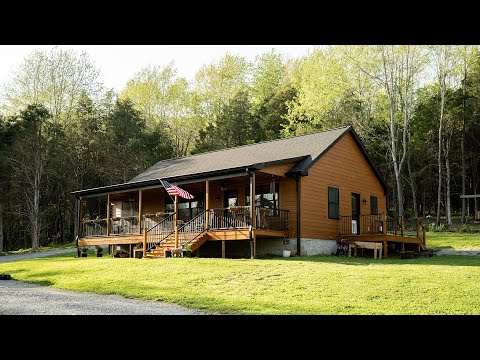
Absolutely. You are not limited to a one-bedroom weekend cabin just because your home is modular.
Zook Cabins offers models ranging from compact one-bedroom homes to full-size houses with three or four bedrooms and multiple bathrooms.
For example:
- The Spruce provides 1 bedroom and 1 bathroom in 656 sq. ft.
- The Settler can provide as many as 4 bedrooms and 2 bathrooms depending on the floor plan.
- The A-Frame Lodge offers configurations with up to 3 bedrooms and 3 bathrooms.
- The Walden Stack fits 3 bedrooms and 3 bathrooms into a two-story 1,290 sq. ft. design.
- The Canyon Lodge offers large family-oriented floor plans approaching 3,000 finished square feet.
Maybe you need a second bedroom for grandchildren. Maybe you work from home and need an office. Maybe you’re building a short-term rental and want multiple private bathrooms. Or maybe you simply want one comfortable bedroom and more open living space. Whatever your needs are, Zook Cabins is here to provide flexibility and freedom to make that choice.
Browse our modular home options, and if you aren’t sure which floor plan fits your needs, give our team a call.
Can A Modular Home from Zook Cabins be Customized?
A modular home does not mean a cookie-cutter home.
Depending on the model, you can choose from different sizes and floor plans and make selections involving flooring, cabinetry, countertops, fixtures, colors, finishes, and other design elements. Zook Cabins wants your new home to feel like your own right away.
Our guide to modern modular homes goes deeper into available sizes, designs, and finishing touches. You can also request a quote if you already have a particular model and personalization in mind.
Do Modular Homes Have Good Resale in Alabama?
Yes. A properly built modular home can have strong resale value in Alabama.
The important thing is understanding that modular homes should not be evaluated like cheaper structures simply because they arrive at the property by truck. A modular home is permanently installed on a foundation and built under residential building-code standards. The quality of the home is determined more by the builder, not the fact that it is a modular home.
A well-maintained three-bedroom modular home on desirable Alabama property with good road access and usable land can appeal to the same type of buyer who would otherwise consider a comparable site-built home.
We recently put together an entire guide to modular-home resale value covering factors like appreciation, appraisals, financing, land ownership, foundations, upgrades, and what future buyers look for.
Your new home needs to work for your family today, but it’s also important to make decisions that still benefit you 10 or 20 years later.
Conclusion
Modular homes don’t have to be complicated. In fact, once you understand the system, Alabama provides a fairly clear path for building one.
Zook Cabins has helped homeowners across the country turn an empty piece of property into a place where families live, gather, vacation, earn rental income, and make memories. We would be excited to take on your Alabama dream as our next project.
Take a look through our completed modular home projects, read what past customers have to say, or simply contact our team with the questions you still have. Then once you’re ready to work with actual numbers, request a free quote.