
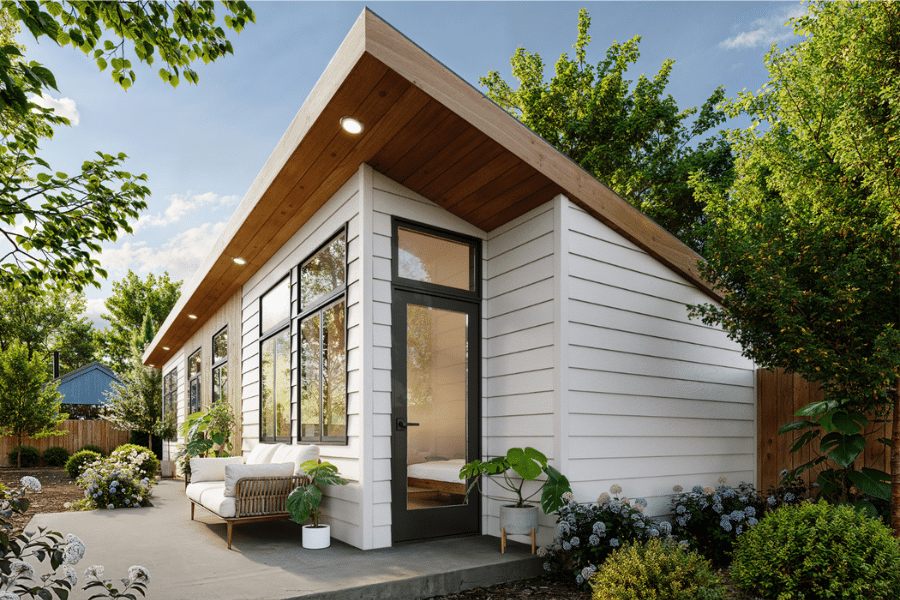
From the historic neighborhoods of New Orleans to the sprawling bayous of St. Tammany, Louisiana offers a unique backdrop for multi-generational living. Whether you call them “mother-in-law suites,” “garage apartments,” or “guest houses,” Accessory Dwelling Units (ADUs) are becoming an increasingly popular way to add value to property and provide housing for family members or renters.
Unlike some states with a single, sweeping ADU law, Louisiana regulations vary significantly by Parish and Municipality. While some areas, such as Shreveport and New Orleans, have adopted specific ADU ordinances, others continue to regulate them under older accessory structure or guest house codes.
This guide dives deep into the ADU regulations for Louisiana’s top cities and parishes to help you navigate the process.
You can explore ADUs designed to fit Louisiana’s regulations and fit to meet all the residential codes!
Are ADUs Allowed in Louisiana?
Unlike states with statewide mandates, Louisiana operates under Home Rule, meaning ADU allowances depend entirely on local zoning laws set by each Parish and Municipality. While most jurisdictions permit accessory dwelling units in single-family zones, homeowners must verify whether full kitchens are allowed, as some areas restrict units to pool houses (bedrooms and bathrooms only) to prevent illegal duplexes.
What Is Considered An ADU in Louisiana?

The Rivara ADU

The Grove ADU

The A-Frame Dwelling

The Sonoma ADU
In Louisiana, an Accessory Dwelling Unit (ADU) is a self-contained secondary residence located on a single-family lot. Because the state operates under Home Rule, terminology varies by Parish, but the legal distinction usually hinges on the presence of a full kitchen (stove/oven), which separates a true ADU from a guest house or pool house. Whether built as a detached cottage, a garage conversion, or a tiny home on a foundation, the structure must meet statewide building codes while adhering to local zoning ordinances, such as Article 21 in New Orleans, which often dictate size limits and setbacks.
Can Park Model ADUs Be Used As ADUs?

Generally, park model tiny homes are not permitted as permanent ADUs in most residential zones in Louisiana because they are classified as recreational vehicles under ANSI A119.5 standards, whereas state law requires legal dwellings to meet the 2021 International Residential Code (IRC). While they may physically resemble cottages, municipalities like St. Tammany Parish and New Orleans generally restrict these “homes on wheels” to designated RV parks or manufactured housing communities. To serve as a legal ADU, the structure must typically be permanently anchored to a foundation and built to Appendix AQ safety standards, effectively distinguishing it from a temporary vehicle.
Because zoning is enforced locally, some jurisdictions may allow park model units under specific conditions, while others do not. For clarity on what is permitted for your property, consult the appropriate local planning or zoning officials listed below.
And if the zoning in your area won’t allow for tiny home ADUs, check out what the rest of the country has to say about tiny home regulations and plan your move to make your dreams come to life.
Can Log Cabins Be Used As An ADU?

Yes, Log Cabins can be used as ADUs in Louisiana, provided they are built as permanent structures. Because Louisiana adheres to the 2021 International Residential Code (IRC), any log home used as a residence must comply with ICC 400 and the specific standards for log construction that govern log grading, thermal envelope performance, and fire resistance.
Can Modern Cabins Be Used As An ADU?

Yes, Modern Cabins can be used as ADUs in Louisiana, but their legality depends on whether they are built as permanent structures or temporary movable units. If the cabin is stick-built on-site or is a certified modular home, it is generally permitted as long as it meets the 2021 International Residential Code (IRC).
For a modern cabin to be legal in most neighborhoods, it must be classified as an industrialized building under the Louisiana Industrialized Building Act, meaning it is inspected at the factory and bears a permanent state decal proving it meets the same standards as a site-built home.
If you’re looking for a modern-style cabin, Zook Cabin offers certified modular cabins that comply with the Louisiana Industrialized Building Act.
What is the Difference Between a Prefab ADU & a Modular ADU?

A prefab ADU in Louisiana is built as a single, complete unit in a factory and delivered to the property fully assembled. A modular ADU, on the other hand, is constructed in multiple factory-built sections that are transported separately and assembled on-site. Both can qualify as ADUs in Louisiana as long as they comply with local zoning rules and applicable residential building codes, which are enforced at the parish or city level. Prefab ADUs typically allow for quicker installation, while modular ADUs offer more flexibility in size, layout, and design.
What is the Minimum Size for an Accessory Dwelling Unit?
No statewide minimum exists, but practically, an ADU must be at least 150 to 190 square feet to meet building codes. Because Louisiana follows the 2021 International Residential Code (IRC), any legal dwelling must generally include a main living area of at least 120 square feet plus space for a bathroom and kitchen, though Appendix AQ allows for smaller tiny homes with lofts.
While the state code sets the floor for safety, local zoning often dictates the ceiling. For example, Shreveport explicitly requires a minimum of 150 square feet, while New Orleans focuses more on maximums (typically capping ADUs at 1,200 sq. ft. or 40% of the rear yard) rather than strict minimums. Homeowners should always verify if their local efficiency dwelling unit ordinances require a larger minimum size, such as 220 square feet, to avoid overcrowding laws.
Can My ADU be Bigger Than My House?
No, your ADU generally cannot be larger than your main house in Louisiana. By legal definition, an Accessory dwelling unit must be subordinate to the primary residence in both size and function. If the second unit is larger than or equal to the main home, zoning officials will typically classify the property as a Duplex (Two-Family Dwelling), which is illegal in most single-family (R-1) zones without a difficult-to-get variance.
While specific caps vary by Parish, most jurisdictions enforce strict size ratios to preserve the neighborhood’s character:
- Shreveport: The ADU is limited to 800 square feet or the size of the primary dwelling, whichever is less.
- New Orleans: Detached accessory structures cannot occupy more than 40% of the rear yard, effectively capping their footprint based on your lot size rather than just the main house size.
- Attached Units: For units attached to the main house (like a mother-in-law suite), the addition is often limited to 50% of the existing floor area to ensure the property still looks like a single-family home.
How Close To My House Can I Build An ADU?
In Louisiana, the minimum distance between your ADU and your main house, known as the separation distance, is typically dictated by a mix of local zoning and the 2021 International Residential Code (IRC). Most municipalities, such as Shreveport, explicitly require a minimum separation of 10 feet between a detached ADU and the primary residence to ensure adequate access for emergency personnel. If you wish to build closer than this, state building codes (IRC Table R302.1) often mandate strictly fire-rated walls and specific window limits for any walls closer than 5 feet to another structure or property line.
Regarding property lines, setbacks are generally stricter for ADUs than for simple sheds. In New Orleans, detached accessory structures must be at least 3 feet from the side and rear lot lines, while Lafayette and Jefferson Parish often require 5 to 10 feet, particularly for two-story units.
Do You Need A Permit For An ADU in Louisiana?

Yes, absolutely. You generally need a permit to build an ADU in Louisiana because the state adheres to the 2021 International Residential Code (IRC), which mandates inspections for any structure intended for human habitation.
Beyond the basic building permit, homeowners typically need various approvals: separate trade permits (electrical and plumbing) pulled by licensed professionals, a zoning compliance certificate, and, crucially for areas like Jefferson Parish, a flood elevation certificate to prove the unit meets Base Flood Elevation (BFE) standards.
Are There Any Incentives or Grants for ADUs in Louisiana?

While Louisiana currently lacks a dedicated statewide ADU grant program, homeowners can leverage substantial financial incentives to offset construction costs, particularly through tax credits and targeted local funding. The most powerful tool for renovations is the State Historic Tax Credit, which offers a 20% to 25% credit on qualified expenses for income-producing properties and can be combined with the 20% Federal Historic Tax Credit for significant savings. Additionally, property owners in Economic Development Districts may utilise the Restoration Tax Abatement (RTA), which freezes property taxes at the pre-improvement level for five years (renewable for another five), ensuring you don’t pay higher taxes on the added value of your ADU for a decade.
For specific local funding, the New Orleans Redevelopment Authority (NORA) has allocated approximately $1.8 million to its Small Landlord program, offering subsidies of up to $50,000 per unit for landlords who agree to keep rents affordable. Meanwhile, in rural parishes, low-income homeowners aged 62 or older can apply for the USDA Section 504 Home Repair Program, which provides grants of up to $10,000 and low-interest loans of up to $40,000 to remove health and safety hazards, a fund often used to renovate dilapidated outbuildings into safe, habitable structures.
Are Zook Cabin’s ADUs Built to Code?

Yes, all Zook Cabin ADUs are built to code and designed to comply with Louisiana’s applicable residential building standards. With years of experience designing and constructing ADUs, our team carefully accounts for parish and city-level requirements, ensuring each unit meets local zoning regulations and adopted building codes. Every ADU is planned with permitting, inspections, and on-site installation in mind so it aligns with the specific rules where it will be placed.
Can an ADU Have Multiple Bedrooms and Bathrooms?

Yes, an ADU can have multiple bedrooms and bathrooms in Louisiana, but practical size limits typically restrict designs to one or two bedrooms. Because the unit must remain subordinate, which is often capped at 1,200 square feet or 50% of the main home’s area, fitting three or more bedrooms is often architecturally impossible without violating zoning codes.
Additionally, adding multiple full bathrooms can trigger scrutiny. For instance, New Orleans zoning restricts the number of bathrooms explicitly in university neighborhoods to prevent what is considered dormitory rentals. To avoid being classified as an illegal duplex or multi-family property, most homeowners stick to a two-bedroom and one-bathroom layout that clearly functions as a secondary guest suite.
If you’re interested in an ADU with multiple bedrooms or bathrooms that fits these requirements, Zook Cabin’s Grove, Luna, and A-Frame ADUs all offer 1- to 2-bedroom options.
Are ADUs A Good Investment?
Yes, ADUs are widely considered a smart investment for many homeowners. A thoughtfully designed ADU can create consistent rental income, increase overall property value, and add long-term flexibility for multigenerational living, guest housing, or future downsizing.
In many housing markets, adding an ADU can raise a property’s value by 10%–30%, and rental ADUs often deliver strong returns because the land and primary infrastructure are already in place. Beyond income potential, ADUs offer built-in versatility, you can adapt the space over time for family use, guests, or rental purposes as your needs change. When you factor in added equity, potential cash flow, and long-term usability, ADUs often provide one of the highest returns among residential property improvements.
What parishes in Louisiana Allow ADUs?
Does Acadia Parish Allow ADUs?
Yes, ADUs are generally allowed. In the unincorporated farming communities of Acadia Parish, there is no parish-wide zoning ordinance that would prohibit you from building an Accessory Dwelling Unit or guest house on your private land. You are free to construct a second structure, but it must be cleared with the Parish Health Unit. Because most of rural Acadia relies on individual mechanical sewer systems, you cannot legally add a second dwelling unless you prove your treatment plant is rated for the extra capacity. You will need to obtain a building permit to secure a permanent 911 address, which is required before Entergy or SLEMCO will install a separate electric meter for the ADU. Without this address, your unit cannot have independent power.
For more information, please contact the Acadia Parish Police Jury at (337) 788-8800 to confirm that ADUs are permitted on your property.
Does Allen Parish Allow ADUs?
Yes, ADUs are permitted, with a focus on flood safety. Allen Parish is largely unzoned, giving landowners significant freedom to build multi-generational housing or detached ADUs without density restrictions. However, if your property lies near the Calcasieu River or other waterways, you must pay close attention to elevation. The permit office will strictly require an Elevation Certificate to ensure your new ADU isn’t built in a designated floodway, particularly near Oberlin and Oakdale. You cannot convert a ground-level shed into an apartment if it sits below the base flood elevation; it must be raised. You must also obtain a no objection letter from the health department regarding sewage before a building permit is issued.
For more information, please get in touch with the Allen Parish Police Jury at (337) 639-4328 to confirm whether ADUs are permitted on your property.
Does Ascension Parish Allow ADUs?
Yes, ADUs are allowed but strictly regulated. Ascension Parish enforces a detailed Unified Land Development Code that permits Accessory Dwelling Units but keeps them small to preserve neighborhood character. Specifically, your ADU is limited in size, often capped at 800 square feet of heated/cooled space, and must typically be located in the rear yard with a minimum setback of 10 feet from the property line. The structure must also match the architectural style of the main home. Be warned: many subdivisions in Ascension have private deed restrictions that are stricter than the parish law, so check your HOA covenants before applying for a permit.
For more information, please get in touch with the Ascension Parish Planning & Zoning at (225) 450-1002 to confirm whether ADUs are permitted on your property.
Does Assumption Parish Allow ADUs?
Yes, ADUs are allowed if they meet elevation codes. There is no parish-wide zoning ordinance banning secondary dwellings or ADUs in the bayou settlements of Assumption. The challenge here is almost exclusively related to flood zones (Zone AE). Because a vast majority of the parish is in high-risk flood areas, converting a ground-level garage into an ADU is rarely permitted. Your guest house will likely need to be raised on piers to meet the FEMA Base Flood Elevation (BFE). You must coordinate with the permit office to get a flood determination letter before you pour any concrete.
For more information, please get in touch with the Assumption Parish Permit Office at (985) 369-7386 to confirm whether ADUs are permitted on your property.
Does Avoyelles Parish Allow ADUs?
Yes, ADUs regulations are very friendly here. Outside of the municipal limits of Marksville and Bunkie, Avoyelles Parish does not enforce strict density zoning that would ban an Accessory Dwelling Unit. You are free to build a guest house, a barndominium, or even place a second manufactured home on your property. The main compliance step is obtaining a Development Permit from the Police Jury. This isn’t to stop you from building, but to ensure you aren’t blocking natural drainage and that your 911 address is properly registered for emergency services.
For more information, please get in touch with the Avoyelles Parish Police Jury at (318) 253-9208 to confirm whether ADUs are permitted on your property.
Does Beauregard Parish Allow ADUs?
Yes, ADUs are permitted. In the piney woods of Beauregard, the parish does not use a comprehensive zoning map for rural areas, meaning you can build an Accessory Dwelling Unit by right. However, specific overlay districts near the DeRidder airport may restrict the height of your structure. You will need to coordinate with Beauregard Electric (BECi) or Cleco at an early stage in the process. They will not install a separate meter for your ADU without a permit on file with the Parish Planning Office proving you met the 911 addressing requirements.
For more information, please contact Beauregard Parish Planning at (337) 463-7019 to confirm whether ADUs are permitted on your property.
Does Bienville Parish Allow ADUs?
Yes, ADU land use is flexible. Bienville Parish is rural and generally unzoned, meaning you don’t have to worry about complex floor-area ratios for your Accessory Dwelling Unit. Your primary constraint is the soil suitability for sewage. Before building a secondary dwelling, you must have the local sanitarian inspect your land to determine if your existing septic system can handle the extra volume. You will need to file for a permit with the Police Jury to get a 911 address, which is mandatory for utility connections.
For more information, please contact the Bienville Parish Police Jury at (318) 263-2019 to confirm whether ADUs are permitted on your property.
Does Bossier Parish Allow ADUs?
Yes, but ADUs are subject to zoning districts. Bossier Parish utilizes a Unified Development Code that permits accessory apartments, particularly in the R-A (Residence-Agriculture) and R-1 districts. If you are planning a detached guest house, be aware that it often requires a conditional use approval if it exceeds a certain percentage of the main home’s size (typically 60%). The goal of the code is to ensure the ADU remains subordinate to the main house. You must submit a plot plan to the engineering department showing that you meet the rear-yard setback requirements.
For more information, please contact the Bossier Parish Police Jury at (318) 965-2329 to confirm whether ADUs are permitted on your property.
Does Caddo Parish Allow ADUs?
Yes, Caddo is a leader in ADU reform. Recent updates to the Unified Development Code (UDC) explicitly allow for detached Accessory Dwelling Units in residential districts. To keep the unit legal, it generally must be located in the rear yard and maintain specific setbacks—typically 5 to 10 feet from the property line. The structure is limited to 60% of the primary home’s size or 1,800 square feet, whichever is less. This is one of the most generous size allowances in the state, making Caddo a great place for building substantial guest houses.
For more information, please contact the Shreveport-Caddo MPC at (318) 673-6480 to confirm whether ADUs are permitted on your property.
Does Calcasieu Parish Allow ADUs?
Yes, subject to hurricane resiliency codes. While zoning generally allows for ADUs in single-family districts, the building department is very strict regarding wind-load ratings and flood elevations following recent hurricanes. You can build a guest house, but it must be built to the same rigorous structural standards as the main home.
Note: New restrictions on short-term rentals are being debated in the Lake Charles area, so verify with the planning department if you intend to use your ADU for Airbnb purposes.
For more information, please contact the Calcasieu Parish Planning & Development at (337) 721-3600 to confirm whether ADUs are permitted on your property.
Does Caldwell Parish Allow ADUs?
Yes, there are few restrictions on ADUs. In the rural landscape of Caldwell Parish, you generally do not face zoning hurdles for building a second structure or ADU. Whether it’s a cabin near the Ouachita River or a guest cottage in the hills, the process is straightforward. You simply need to apply for a basic building permit to ensure your sewage disposal method meets the state sanitary code. The permit office will also verify that your driveway access point is safe and permitted.
For more information, please contact the Caldwell Parish Permit Office at (318) 649-6446 to confirm whether ADUs are permitted on your property.
Does Cameron Parish Allow ADUs?
Yes, but elevation is the deciding factor for ADUs. Cameron Parish allows accessory structures, but because the entire parish is effectively a high-risk flood zone (VE and AE), strict construction rules apply. Ground-floor enclosures are strictly limited to parking and storage. Any habitable ADU must be elevated on pilings to the Design Flood Elevation (DFE). This prohibits garage conversions, but above-garage apartments are a viable and permitted option if engineered correctly.
For more information, please contact the Cameron Parish Planning & Development at (337) 775-5718 to confirm whether ADUs are permitted on your property.
Does Catahoula Parish Allow ADUs?
Yes, ADU land use is unrestricted. Catahoula Parish does not enforce a zoning ordinance that prohibits multiple dwellings on a single tract of land. You are free to construct a guest house or hunting camp on your property. However, you must be mindful of the river basins; if your land is in a designated FEMA Floodway, federal regulations may prohibit new construction entirely.
For more information, please contact the Catahoula Parish Police Jury (LA.gov) at (318) 744-5435 to confirm whether ADUs are permitted on your property.
Does Claiborne Parish Allow ADUs?
Yes, ADUs are permitted. Homeowners in Claiborne Parish, especially those near Lake Claiborne, often utilize guest houses. There is no parish-wide zoning to prohibit this. The primary regulation you will encounter is from the Claiborne Parish Watershed District if you are on the lake, which enforces strict setbacks to prevent pollution. Away from the lake, your main requirement is Health Unit approval for wastewater treatment.
For more information, please contact the Claiborne Parish Police Jury at (318) 927-2222 to confirm whether ADUs are permitted on your property.
Does Concordia Parish Allow ADUs?
Yes, ADUs are allowed in most areas. Outside of Vidalia and Ferriday town limits, Concordia Parish is largely unzoned. You can add a secondary dwelling to your land without a zoning hearing. However, if your property is located along a lake or river, specific camp ordinances regarding spacing and sewage disposal may apply. You must also check with the Police Jury to ensure your new structure doesn’t encroach on levee servitudes.
For more information, please get in touch with the Concordia Parish Police Jury at (318) 336-7151 to confirm whether ADUs are permitted on your property.
Does DeSoto Parish Allow ADUs?
Yes, with some subdivision caveats. DeSoto Parish generally permits ADUs in its unincorporated areas. While the parish itself doesn’t ban them, many of the newer subdivisions in the northern part of the parish (near the Caddo border) have private covenants that are stricter than the law. If you aren’t in a restricted HOA, you are free to build. You must obtain a permit from the Police Jury to secure a 911 address and approval for your septic system.
For more information, please get in touch with the DeSoto Parish Police Jury at (318) 872-0738 to confirm whether ADUs are permitted on your property.
Does East Baton Rouge Parish Allow ADUs?
Yes, but they must meet certain requirements. The Unified Development Code (UDC) for EBR defines these as garage apartments or guest houses. In standard A1 and A2 residential zones, they are permitted, but are typically only allowed for family members or domestic staff. Renting them out to the general public can technically violate the zoning unless you are in a specific overlay district or obtain a conditional use permit. Always check with the Planning Commission to ensure your lot meets the minimum square footage requirement.
For more information, please get in touch with the EBR Planning Commission at (225) 389-3144 to confirm whether ADUs are permitted on your property.
Does East Carroll Parish Allow ADUs?
Yes, there is no zoning ban on ADUs. Located in the fertile Delta, East Carroll Parish does not restrict the number of residential structures on private agricultural land. You are free to build an ADU for family or rental use. The process is administrative: obtain a building permit for utility connection and ensure your sewage system is compliant with state health standards.
For more information, please get in touch with the East Carroll Parish Police Jury (LA.gov) at (318) 559-2256 to confirm whether ADUs are permitted on your property.
Does East Feliciana Parish Allow ADUs?
Yes, ADUs are common on rural estates. With its larger landholdings, this parish has a long history of incorporating guest cottages and secondary structures into residential properties. There is no strict zoning ordinance preventing ADUs. The only real constraint is physical space. You need enough road frontage and acreage to satisfy the Health Unit’s requirements for a second septic line if the first one is at capacity.
For more information, please get in touch with the East Feliciana Parish Police Jury at (225) 683-8577 to confirm whether ADUs are permitted on your property.
Does Evangeline Parish Allow ADUs?
Yes, flexible rural standards apply. Evangeline Parish has no comprehensive zoning code that would prohibit a backyard cottage or ADU. You can even convert existing outbuildings provided they meet basic structural safety standards. The Permit Office mainly checks for flood zone compliance and ensures that you aren’t building on a public right-of-way.
For more information, please get in touch with the Evangeline Parish Police Jury at (337) 363-5651 to confirm whether ADUs are permitted on your property.
Does Franklin Parish Allow ADUs?
Yes, unzoned and permissive. You can build an ADU in unincorporated Franklin Parish without worrying about density restrictions. There are no zoning districts outside of Winnsboro. Your main task is to apply for a placement permit so that the 911 district can assign a physical address to the new structure, which is required for all utility services.
For more information, please get in touch with the Franklin Parish Police Jury (LA.gov) at (318) 435-9429 to confirm whether ADUs are permitted on your property.
Does Grant Parish Allow ADUs?
Yes, ADUs are permitted. Grant Parish does not utilize a zoning map for its rural areas, so landowners are permitted to build secondary dwellings by right. However, because much of the parish borders the National Forest and the Red River, you should be mindful of federal easements. Check with the Police Jury to ensure you aren’t building on a flowage easement that might dictate exactly where on the lot you can build.
For more information, please get in touch with the Grant Parish Police Jury at (318) 627-3157 to confirm whether ADUs are permitted on your property.
Does Iberia Parish Allow ADUs?
Yes, and the code is explicit. Iberia Parish has a zoning ordinance that is surprisingly ADU-friendly. The code typically allows landowners to have one single-family dwelling plus up to two additional dwellings on the same property in agricultural zones. This makes it one of the few parishes that explicitly anticipates multi-generational compounds in its written laws.
For more information, please get in touch with the Iberia Parish Permitting at (337) 369-4438 to confirm whether ADUs are permitted on your property.
Does Iberville Parish Allow ADUs?
Yes, but watch the industrial buffers. While there is no strict ban on ADUs in residential areas of Iberville, the parish pays close attention to buffer zones near industrial corridors. If you are in a residential pocket, guest houses are common. You must ensure the structure meets the parish’s wind and flood codes, which are strictly enforced due to the parish’s location along the Mississippi River.
For more information, please contact the Iberville Parish Planning Department at (225) 687-5190 to confirm whether ADUs are permitted on your property.
Does Jackson Parish Allow ADUs?
Yes, ADUs are allowed. In the rural hills of Jackson Parish, you are free to build a secondary dwelling. The Police Jury does not enforce zoning that limits density on private lots. Your main step is coordinating with the local power company and the Health Unit. Be aware that if you are near Caney Lake, the Watershed Commission has strict setbacks and aesthetic rules that may apply to your guest house.
For more information, please get in touch with the Jackson Parish Police Jury at (318) 259-2361 to confirm whether ADUs are permitted on your property.
Does Jefferson Parish Allow ADUs?
Restricted, ADUs are heavily regulated. In standard R-1 single-family zones, accessory dwelling units are often prohibited unless they are strictly for immediate family members. Even then, installing a full kitchen (specifically a stove) can result in your permit being denied, as it classifies the home as a duplex, which is prohibited in R-1 zoning.
For more information, please get in touch with the Jefferson Parish Planning Department at (504) 736-6320 to confirm whether ADUs are permitted on your property.
Does Jefferson Davis Parish Allow ADUs?
Yes, ADUs are generally permitted. There is no parish-wide zoning ordinance here. Agricultural and residential parcels can generally host multiple structures. If you are adding a rental unit or ADU, you simply need to ensure your sewer treatment plant (modad) is rated for the correct number of bedrooms. The parish is very focused on property rights, so regulatory hurdles are minimal.
For more information, please get in touch with the Jeff Davis Police Jury at (337) 824-4792 to confirm whether ADUs are permitted on your property.
Does Lafayette Parish Allow ADUs?
Yes, and ADUs are encouraged. Lafayette Parish is a leader in modernizing zoning. The Unified Development Code (UDC) allows Accessory Dwelling Units in most residential districts and has recently relaxed rules regarding parking requirements to encourage affordable housing. The ADU can be attached or detached, but it must remain subordinate in size to the main home and meet standard setback requirements (usually 5 feet from property lines).
For more information, please get in touch with the LCG Planning & Zoning at (337) 291-8000 to confirm whether ADUs are permitted on your property.
Does Lafourche Parish Allow ADUs?
Yes, but elevation is critical. In the unincorporated areas along the bayou, ADUs are permitted. However, the parish focuses heavily on flood protection. Because the developable land is often linear along the bayou ridge, you must ensure your ADU doesn’t encroach on the rear setbacks. Most importantly, it must meet the specific height requirements for flood insurance.
For more information, please get in touch with the Lafourche Parish Permits Department at (985) 537-7603 to confirm whether ADUs are permitted on your property.
Does La Salle Parish Allow ADUs?
Yes, ADUs are allowed. This rural parish has no zoning restrictions on ADUs. You may build a secondary structure for family or rental use without a hearing. Standard building permits and electrical disconnect inspections are required, along with Health Unit approval for wastewater. It is a straightforward process for most landowners.
For more information, please get in touch with the La Salle Parish Police Jury at (318) 992-2101 to confirm whether ADUs are permitted on your property.
Does Lincoln Parish Allow ADUs?
Yes, ADUs are permitted. Outside of Ruston’s city limits, Lincoln Parish is unzoned. You can build a guest house or barndominium without density restrictions. Be sure to check with the Police Jury for a building permit, as they do enforce the International Residential Code (IRC) for safety. This ensures your new unit is structurally sound and insurable.
For more information, please get in touch with the Lincoln Parish Police Jury at (318) 513-6200 to confirm whether ADUs are permitted on your property.
Does Livingston Parish Allow ADUs?
Yes, subject to subdivision regulations. Livingston allows what it considers accessory structures through its permitting office, typically requiring 10-foot setbacks from property lines. However, because the parish is one of the fastest-growing in the state, many areas are covered by strict private subdivision covenants. If you are not in a subdivision, the process is simple; if you are, the HOA rules will likely be your biggest barrier.
For more information, please get in touch with the Livingston Parish Permit Office at (225) 686-3021 to confirm whether ADUs are permitted on your property.
Does Madison Parish Allow ADUs?
Yes, ADUs are allowed. This agricultural parish does not have zoning laws that prohibit ADUs. You are free to add a dwelling to your property. The primary governing body is the Police Jury for basic flood and elevation compliance, but land use is flexible. Ensure your septic system is up to code, as the clay soils here can be tricky for drainage.
For more information, please get in touch with the Madison Parish Police Jury at (318) 574-3451 to confirm whether ADUs are permitted on your property.
Does Morehouse Parish Allow ADUs?
Yes, ADUs are permitted. Morehouse Parish has no rural zoning. Whether you are building a cottage for a farm hand or an in-law suite, secondary dwellings are permitted. You must contact the permit office in Bastrop to ensure you meet the state Uniform Construction Code and to get your 911 address assigned for utilities.
For more information, please get in touch with the Morehouse Parish Police Jury (LA.gov) at (318) 281-4132 to confirm whether ADUs are permitted on your property.
Does Natchitoches Parish Allow ADUs?
Yes, ADUs are allowed. Outside the historic district of Natchitoches city, the parish is largely unzoned, and ADUs are allowed. However, if you are building on the Cane River Lake, you must adhere to the specific rules of the Waterway Commission. They enforce strict setbacks to protect the view and water quality, so check with them before pouring a slab near the water.
For more information, please get in touch with the Natchitoches Parish Planning at (318) 352-2714 to confirm whether ADUs are permitted on your property.
Does Orleans Parish Allow ADUs?
Yes, but ADUs are highly regulated. New Orleans has a specific ordinance (CZO Article 21) that permits ADUs in many historic and suburban zones. It’s essential to ensure compliance with owner-occupancy requirements. The property owner must live in either the main house or the ADU; you cannot rent both units out to different tenants. Furthermore, using ADUs for short-term rentals is generally banned in residential zones; they are intended for long-term housing only.
To ensure that these specific requirements are met, reach out to the city of New Orleans’ Planning Commission.
Does Ouachita Parish Allow ADUs?
Yes, ADUs are permitted. The parish permits ADUs in most areas. However, regulations often stipulate that the ADU cannot have a separate electrical meter without being considered a separate residence for tax purposes. The unit must be clearly secondary in size to the main home and usually must be located in the rear yard, respecting standard property setbacks of typically 10 to 25 feet, depending on the zone.
For more information, please get in touch with the Ouachita Parish Permits at (318) 327-1340 to confirm whether ADUs are permitted on your property.
Does Plaquemines Parish Allow ADUs?
Yes, but flood codes are strict for ADUs. Plaquemines allows accessory structures, but due to the parish’s geography, elevation is the controlling factor. Your ADU will almost certainly need to be raised on pilings to meet the high flood elevation requirements. Zoning allows for accessory uses in residential districts, but using them for commercial short-term rentals is heavily regulated and often requires special conditional use permits.
For more information, please get in touch with the Plaquemines Parish Planning at (504) 934-6000 to confirm whether ADUs are permitted on your property.
Does Pointe Coupee Parish Allow ADUs?
Yes, ADUs are allowed. This parish is famous for its False River camps, where multiple structures on a single lot are common. While there is no parish-wide zoning ban, the Sanitarian is very strict about sewage near the oxbow lake. Additionally, you must adhere to setbacks from the water and the road to preserve the community’s camp aesthetic.
For more information, please get in touch with the Pointe Coupee Police Jury at (225) 638-9556 to confirm whether ADUs are permitted on your property.
Does Rapides Parish Allow ADUs?
Yes, ADUs are permitted. The Rapides Area Planning Commission (RAPC) oversees development here, and ADUs are generally allowed as accessory uses. If the ADU is detached, it usually must be located in the rear yard. You must obtain a development permit to ensure you aren’t violating flood maps or subdivision rules, but the planning commission is generally supportive of accessory structures.
For more information, please get in touch with the Rapides Area Planning Commission at (318) 487-5401 to confirm whether ADUs are permitted on your property.
Does Red River Parish Allow ADUs?
Yes, ADUs are allowed. There is no zoning ordinance in Red River Parish preventing the construction of an ADU. It is common for landowners to have second dwellings. Compliance with the state building code and health department regulations for septic tanks is the only major requirement for building a guest house here.
For more information, please get in touch with the Red River Parish Police Jury at (318) 932-5719 to confirm whether ADUs are permitted on your property.
Does Richland Parish Allow ADUs?
Yes, ADUs are permitted. Rural and unzoned, Richland Parish allows you to build an ADU. Whether it is a manufactured home acting as a guest house or a stick-built cottage, the parish generally permits it provided you get a placement permit. This permit is purely for emergency services to ensure they can find the new unit.
For more information, please get in touch with the Richland Parish Police Jury at (318) 728-2061 to confirm whether ADUs are permitted on your property.
Does Sabine Parish Allow ADUs?
Yes, especially near the lake. Famous for Toledo Bend Reservoir, this parish is very familiar with guest camps. There is no zoning ban on ADUs. However, the Sabine River Authority (SRA) has strict easements along the shoreline. If your ADU is near the water, you must get SRA approval first to ensure you aren’t building on their easement.
For more information, please get in touch with the Sabine Parish Police Jury at (318) 256-5637 to confirm whether ADUs are permitted on your property.
Does St. Bernard Parish Allow ADUs?
Restricted. St. Bernard is stricter than many of its neighbors. While the zoning code allows for accessory structures, it explicitly states that accessory buildings generally cannot be used as dwelling units without a variance or conditional use permit. Additionally, there are strict limits on lot coverage; your backyard structures generally cannot cover more than 30-40% of the rear yard area.
For more information, please get in touch with the St. Bernard Community Development at (504) 278-4310 to confirm whether ADUs are permitted on your property.
Does St. Charles Parish Allow ADUs?
Yes, but typically requires a Special Exception. St. Charles allows ADUs, but the process is detailed. In many single-family zones, such as R-1A, adding a second kitchen typically requires special exception approval from the planning board to ensure neighborhood compatibility. The ADU must be subordinate to the main home and cannot typically be used for commercial rental purposes.
For more information, please contact St. Charles Planning & Zoning at (985) 783-5060 to confirm whether ADUs are permitted on your property.
Does St. Helena Parish Allow ADUs?
Yes, ADUs are allowed. As one of the Florida Parishes, St. Helena has no comprehensive zoning. You are free to build a guest house or in-law suite. The parish requires a building permit and strict adherence to septic rules, as the soil in this region often requires advanced mechanical treatment plants to handle the extra waste.
For more information, please get in touch with the St. Helena Police Jury at (225) 222-4549 to confirm whether ADUs are permitted on your property.
Does St. James Parish Allow ADUs?
Yes, ADUs are permitted. The St. James Land Use Plan allows for “dwellings and uses customarily associated with dwellings,” such as garages and outbuildings. You can convert these to living space, but you must ensure the structure meets industrial buffer zones if you are located near the river plants.
For more information, please get in touch with the St. James Planning Permitting at (225) 562-2500 to confirm whether ADUs are permitted on your property.
Does St. John the Baptist Parish Allow ADUs?
They may be permitted with special approval. The Zoning Board of Adjustments often reviews requests for second dwellings. While accessory buildings are allowed, converting them to full living quarters with a stove often requires proving it is for family use rather than commercial rental. Variances are frequently required for full kitchen installations in R-1 districts.
For more information, please get in touch with the St. John Planning & Zoning at (985) 651-5565 to confirm whether ADUs are permitted on your property.
Does St. Landry Parish Allow ADUs?
Yes, ADUs are allowed. St. Landry is largely unzoned outside of Opelousas. You can build an ADU or place a tiny home on your property without zoning interference. The parish government focuses mainly on flood permits and road frontage requirements, but density is generally not restricted on private rural lots.
For more information, please get in touch with the St. Landry Parish Government at (337) 948-3688 to confirm whether ADUs are permitted on your property.
Does St. Martin Parish Allow ADUs?
Yes, ADUs are explicitly allowed. The parish ordinances explicitly define and permit ADUs (both attached and detached) in residential districts, such as R-1 and R-2. This means they are allowed, provided the unit meets standard building setbacks and safety codes.
For more information, please get in touch with the St. Martin Parish Government at (337) 394-2200 to confirm whether ADUs are permitted on your property.
Does St. Mary Parish Allow ADUs?
Yes, ADUs are permitted. ADUs are generally allowed as accessory structures in St. Mary Parish. However, the critical factor here is flood zones. Many areas require ground-floor spaces to be used only for storage, meaning your ADU might need to be built as a second-story addition above a garage to be compliant with FEMA regulations.
For more information, please contact St. Mary Parish Planning at (337) 828-4100 to confirm whether ADUs are permitted on your property.
Does St. Tammany Parish Allow ADUs?
Yes. The Unified Development Code allows one guest house per lot, but your lot typically must be at least 1 acre in size to build a detached unit by right. The unit is strictly limited to 1,000 square feet of habitable space and must be located in the rear yard. If you are on a smaller lot, you will likely be denied unless you can get a variance.
For more information, please get in touch with the St. Tammany Planning Department at (985) 898-2529 to confirm whether ADUs are permitted on your property.
Does Tangipahoa Parish Allow ADUs?
Yes, ADUs are allowed. Tangipahoa allows ADUs, but the parish is tightening its development rules. If you are on a private lot, you can build a guest house, but it must meet the International Building Code (IBC). If you plan to rent the unit out, be careful with partitioning laws, creating a rental unit effectively splits the property usage and may trigger new subdivision requirements.
For more information, please get in touch with the Tangipahoa Parish Planning at (985) 748-3211 to confirm whether ADUs are permitted on your property.
Does Tensas Parish Allow ADUs?
Yes, ADUs are permitted. This delta parish has no zoning restrictions on ADUs. You are free to build a secondary dwelling provided you have access to water and a permitted septic system in the clay-heavy soils of the river basin.
For more information, please get in touch with the Tensas Parish Police Jury (LA.gov) at (318) 766-3542 to confirm whether ADUs are permitted on your property.
Does Terrebonne Parish Allow ADUs?
Yes, but check overlay districts. Guest houses are permitted in rear yards. However, Terrebonne is covered by various overlay districts that protect levees and drainage. You must check your specific property address to ensure you aren’t in a conservation zone that bans permanent habitable structures.
For more information, please get in touch with the Terrebonne Parish Planning at (985) 873-6569 to confirm whether ADUs are permitted on your property.
Does Union Parish Allow ADUs?
Yes, ADUs are allowed. Union Parish allows ADUs and has no parish-wide zoning to stop them. Around Lake D’Arbonne, however, you must adhere to strict lake setback lines enforced by the Watershed Commission. You can build a boathouse with living quarters or a guest cottage provided you do not violate these lines.
For more information, please get in touch with the Union Parish Police Jury at (318) 368-3296 to confirm whether ADUs are permitted on your property.
Does Vermilion Parish Allow ADUs?
Yes, ADUs are permitted. The parish is unzoned for density so that you can build a second home on your property. Because Vermilion is coastal, the elevation certificate is the most important document you will need. If you are south of Abbeville, your ADU likely needs to be elevated on piers to be legal.
For more information, please get in touch with the Vermilion Parish Police Jury at (337) 898-4300 to confirm whether ADUs are permitted on your property.
Does Vernon Parish Allow ADUs?
Yes, ADUs are allowed. Home to Fort Johnson (formerly Polk), the parish is accustomed to rental housing and multi-structure lots. There is no zoning ban on ADUs. Many landowners convert garages or build cabins. You must file for a permit with the Police Jury to ensure 911 addressing and flood compliance.
For more information, please get in touch with the Vernon Parish Police Jury at (337) 238-0324 to confirm whether ADUs are permitted on your property.
Does Washington Parish Allow ADUs?
Yes, ADUs are permitted. This rural parish has no zoning code. You can build a guest house, in-law suite, or rental cabin. The only hard rule is the state sanitary code; you cannot discharge sewage into ditches, so a proper treatment plant permit is required before you can finalize the build.
For more information, please get in touch with the Washington Parish Government at (985) 839-7825 to confirm whether ADUs are permitted on your property.
Does Webster Parish Allow ADUs?
Yes, ADUs are allowed. Webster Parish has no rural zoning. You can place a secondary dwelling on your land without issue. If you are near Minden, checking with the city for buffer zone regulations is important, but generally, the parish allows ADUs by default.
For more information, please get in touch with the Webster Parish Police Jury at (318) 377-7564 to confirm whether ADUs are permitted on your property.
Does West Baton Rouge Parish Allow ADUs?
Yes, ADUs are allowed. The zoning ordinance allows accessory structures. West Baton Rouge is slightly more flexible than East Baton Rouge, allowing guest houses if they meet the setback requirements, typically 5 to 10 feet from the rear and side property lines.
For more information, please get in touch with the WBR Planning Commission at (225) 383-4755 to confirm whether ADUs are permitted on your property.
Does West Carroll Parish Allow ADUs?
Yes, ADUs are permitted. There is no zoning authority in West Carroll that prohibits ADUs. You are free to build. Ensure you check with the local water district, as some rural water systems have moratoriums on new meters, which could force your ADU to share the main house’s connection.
For more information, please get in touch with theWest Carroll Parish Police Jury (LA.gov) at (318) 428-3390 to confirm whether ADUs are permitted on your property.
Does West Feliciana Parish Allow ADUs?
Yes, but aesthetics matter. Accessory dwelling units are permitted but strictly regulated to preserve the area’s scenic character. Regulations often require that the ADU match the architectural style of the main house and be hidden from the public road view to maintain the rural landscape.
For more information, please get in touch with the West Feliciana Planning at (225) 635-3864 to confirm whether ADUs are permitted on your property.
Does Winn Parish Allow ADUs?
Yes, ADUs are permitted. Winn Parish is unzoned. You may build a secondary dwelling without a zoning variance. The primary requirement is obtaining a building permit to satisfy utility companies (like Entergy or Cleco) that the structure is safe to energize.
For more information, please get in touch with the Winn Parish Police Jury (LA.gov) at (318) 628-5824 to confirm whether ADUs are permitted on your property.
Accessory Dwelling Unit Requirements by Municipalities
| Municipality | Contact Information |
| Alexandria | Alexandria Zoning Department |
| Baton Rouge | East Baton Rouge City-Parish Planning Commission |
| Bossier City | Bossier City-Parish Metropolitan Planning Commission |
| Central | City of Central Planning & Zoning Commission |
| Hammond | Hammond Building Department & Permits |
| Houma | Houma-Terrebonne Planning & Zoning |
| Kenner | Kenner Planning Department |
| Lafayette | Lafayette Consolidated Government – Planning & Zoning |
| Lake Charles | City of Lake Charles Planning Department |
| Monroe | Monroe Planning & Zoning Division |
| New Orleans | New Orleans City Planning Commission |
| Ruston | Ruston Planning & Zoning |
| Shreveport | Shreveport-Caddo Metropolitan Planning Commission |
| Slidell | Slidell Planning Department |
| Sulphur | Sulphur Inspections & Permits Department |
Does Alexandria Allow ADUs?
Yes, ADUs are allowed. Alexandria’s Land Development Code explicitly permits Accessory Dwelling Units in most residential districts. The city views them as a way to provide flexible housing options. The unit must be subordinate to the main house and is generally limited in size to ensure it remains an accessory structure rather than a duplex. You must submit a site plan to the Planning Division to ensure you meet the setback requirements, which are typically 5 feet from the side and rear property lines.
For more information, please get in touch with the Alexandria Planning Division at (318) 473-1371 to confirm whether ADUs are permitted on your property.
Does Baton Rouge Allow ADUs?
Yes, but strictly regulated as garage apartments. In the city of Baton Rouge (and the larger EBR parish area), ADUs are permitted in A1 and A2 zoning districts. Still, they are often restricted to use by family members or servants unless you obtain a specific waiver or are in a designated overlay district. Recent updates to the Unified Development Code (UDC) are slowly opening doors for more rental options; however, you must verify that your lot has the minimum square footage required to support a second dwelling unit before building.
For more information, please get in touch with the Baton Rouge Planning Commission at (225) 389-3144 to confirm whether ADUs are permitted on your property.
Does Bossier City Allow ADUs?
Yes, often requires Conditional Use Approval. Bossier City’s Unified Development Code allows for accessory dwelling units, but in standard residential zones (like R-1), you often need to go before the board for conditional use approval. This is to ensure the new unit doesn’t negatively impact neighbors. Detached units must be located in the rear yard and are generally limited to 60% of the main home’s floor area. You cannot simply build a second full-sized home on a single-family lot.
For more information, please get in touch with the Bossier City Metropolitan Planning Commission at (318) 741-8824 to confirm whether ADUs are permitted on your property.
Does Central Allow ADUs?
Yes, ADUs are permitted. The City of Central operates its own zoning code, which is separate from that of Baton Rouge. It allows for accessory buildings and guest houses in residential districts. The key here is that the structure must clearly be accessory, meaning it cannot be taller or larger than the primary home. You must file for a building permit with the city’s dedicated permit office and ensure that your wastewater treatment (often an individual mechanical plant in Central) is sized correctly for the additional bathroom.
For more information, please get in touch with the City of Central Planning & Zoning at (225) 262-5000 to confirm whether ADUs are permitted on your property.
Does Hammond Allow ADUs?
Yes, especially in historic districts. Hammond allows guest houses, particularly to support the university community and historic preservation. In the Historic District, however, the design standards are extremely strict. Your ADU must match the architectural style, roof pitch, and materials of the main home exactly. Outside the historic zones, the rules are more relaxed, but you still need to meet standard rear-yard setbacks and obtain a building permit for electrical connections.
For more information, please get in touch with the Hammond Planning & Development at (985) 277-5649 to confirm whether ADUs are permitted on your property.
Does Houma Allow ADUs?
Yes, ADUs are permitted. Houma (governed by the Terrebonne Parish Consolidated Government) allows accessory apartments and guest houses in residential zones. They are typically required to be in the rear yard and must meet a 10-foot setback from the main house to prevent fire hazards. Because Houma is low-lying, your biggest hurdle will be the elevation requirement. If you are in a flood zone, your ADU cannot be a ground-level shed conversion; it must be raised to the Base Flood Elevation (BFE).
For more information, please get in touch with the Houma-Terrebonne Planning & Zoning at (985) 873-6569 to confirm whether ADUs are permitted on your property.
Does Kenner Allow ADUs?
No. Kenner is one of the stricter municipalities. In standard single-family neighborhoods (R-1), the city generally prohibits second kitchens in accessory buildings to prevent them from being converted into illegal duplex rentals. While you can build a pool house or game room, converting it into a full apartment with a stove often requires a variance from the Board of Zoning Adjustments.
For more information, please get in touch with the Kenner Planning Department at (504) 468-7208 to confirm whether ADUs are permitted on your property.
Does Lafayette Allow ADUs?
Yes, and they are encouraged. Lafayette has one of the most progressive codes in the state. The Unified Development Code (UDC) allows detached ADUs by right in most residential districts. They even relaxed parking requirements recently to make it easier to build. Detached ADUs are typically capped at 750 to 1,000 square feet, depending on the specific zone.
For more information, please get in touch with the Lafayette Community Planning & Development at (337) 291-8000 to confirm whether ADUs are permitted on your property.
Does Lake Charles Allow ADUs?
Yes, but wind and flood codes are strict. Lake Charles allows ADUs in single-family districts, but the post-hurricane building codes are rigorous. Your ADU must meet high wind-load ratings (often 140+ mph) and flood elevation standards. If you plan to use the unit for Short Term Rentals (STRs), check with the planning department first, as the city has implemented specific zones and permit caps for STRs.
For more information, please get in touch with the Lake Charles Planning & Development at (337) 491-1542 to confirm whether ADUs are permitted on your property.
Does Monroe Allow ADUs?
Yes, ADUs are permitted. Monroe allows accessory dwelling units, particularly in older neighborhoods and near the university. The unit must be located in the rear yard and cannot exceed 30% of the rear yard’s total area. You must obtain a certificate of occupancy for the new unit to get a separate electrical meter. The city also checks to ensure adequate off-street parking is available for the additional tenant.
For more information, please get in touch with the Monroe Planning & Zoning at (318) 329-2210 to confirm whether ADUs are permitted on your property.
Does New Orleans Allow ADUs?
Yes, but strictly regulated. New Orleans permits ADUs (also known as carriage houses) in many historic and suburban zones, as outlined in Article 21 of the Comprehensive Zoning Ordinance. However, the Owner-Occupancy Rule is strictly enforced: you must live on the property to rent out the ADU. Furthermore, using an ADU for short-term rentals (such as Airbnb) is generally prohibited in residential districts. They are intended for long-term rentals (30 days or more).
For more information, please get in touch with the New Orleans Safety & Permits at (504) 658-7100 to confirm whether ADUs are permitted on your property.
Does Ruston Allow ADUs?
Yes, ADUs are common. As a college town, Ruston is familiar with accessory cottages and garage apartments. They are permitted in most residential districts to help house students and young professionals. Safety inspections are strict. You must ensure the unit meets all fire separation codes (drywall thickness, distance from the main house) if you plan to rent it out.
For more information, please get in touch with the Ruston Planning & Zoning at (318) 251-8640 to confirm whether ADUs are permitted on your property.
Does Shreveport Allow ADUs?
Yes, Shreveport is very ADU-friendly. The Shreveport-Caddo Unified Development Code allows detached ADUs by right in residential districts. They have removed many barriers, such as removing the requirement for additional parking spaces for the ADU. You can build a unit up to 1,800 square feet (or 60% of the main home, whichever is less), making it one of the best cities for building large guest houses or rental cottages.
For more information, please get in touch with the Shreveport-Caddo Metropolitan Planning Commission at (318) 673-6480 to confirm whether ADUs are permitted on your property.
Does Slidell Allow ADUs?
Yes, ADUs are permitted. Slidell allows accessory buildings for living purposes, provided they do not occupy more than 30% of the rear yard area. This ensures that structures do not completely cover backyards. The unit must be set back at least 5 to 10 feet from the property line. If you are in the Olde Towne district, specific historic preservation rules regarding design and windows will apply.
For more information, please get in touch with the Slidell Planning Department at (985) 646-4320 to confirm whether ADUs are permitted on your property.
Does Sulphur Allow ADUs?
Yes, ADUs are allowed. Sulphur allows accessory dwellings, but they are subject to specific size ratios. The detached unit typically cannot exceed 50% of the gross floor area of the primary dwelling. You must obtain a building permit from the city’s inspection department. If your property is near the industrial sectors, check for any buffer zone restrictions that might limit new residential construction.
For more information, please get in touch with the Sulphur Permits & Inspections at (337) 527-4500 to confirm whether ADUs are permitted on your property.
Searching for an ADU Builder Serving Louisiana?

The best part about understanding Louisiana’s ADU landscape is that you’re ready for the next step: finding the right builder to bring your ADU to life. Zook Cabins serves homeowners across Louisiana, delivering high-quality ADUs to properties throughout the state, whether you’re building in a rural parish or within city limits.
With years of hands-on experience, modern construction methods, and a deep understanding of parish- and city-level requirements, our team is equipped to guide you through every stage of the process. From design and permitting to delivery and installation, we make building an ADU in Louisiana straightforward and stress-free. Want to explore your options? Reach out to speak with a sales expert or request a free quote today. You’ll get transparent pricing, exceptional craftsmanship, and dedicated support from your first question all the way to move-in day.
And if Louisiana doesn’t offer what you are looking for, check out what all the other states in the USA have to say about ADUS: